Overview
On June 30, 2026, SK Hynix, the second-largest memory chip manufacturer in the world, formally submitted an F-1 registration application to the U.S. Securities and Exchange Commission (SEC), announcing plans to list on NASDAQ in the form of American Depositary Receipts (ADRs), with the stock code SKHY. The expected listing date is July 10, 2026.
This issuance scale is approximately $29 billion, which will become the largest ADR listing in history, surpassing Alibaba's $21.9 billion New York listing record in 2014. For investors in cryptocurrency and traditional finance, this is not only a corporate financing event but also a historic moment where a core asset in the AI infrastructure supply chain is directly opened to global retail investors for the first time.
Key Takeaways
SK Hynix will be listed on NASDAQ under the code SKHY, with the expected trading start date of July 10, 2026.
The scale of this ADR issuance is approximately $29 billion, which will set a record for the largest ADR listing in history, surpassing Alibaba’s $21.9 billion.
Every 10 ADRs correspond to 1 share of SK Hynix's South Korean common stock (KRX code: 000660), with a reference issuance price of about $166 per ADR.
SK Hynix is the world's largest HBM (High Bandwidth Memory) supplier, ranking first with a 56.4% revenue market share, and is the largest memory partner for NVIDIA's AI accelerators.
In Q1 2026, net profit was 40.3 billion KRW (about $26.5 billion), with quarterly profit nearly equal to the total net profit for the entire year of 2025.
Underwriters include BofA Securities, Citigroup, Goldman Sachs, and JPMorgan Chase.
The funds raised will mainly be used for the construction of the semiconductor manufacturing complex in Icheon, South Korea and the expansion of advanced packaging capacity.
HSBC analysts have given South Korean stocks a 20% valuation premium, raising the target price from 2.9 million KRW to 4 million KRW.
What is SK Hynix?
SK Hynix was established in 1983 and is headquartered in Icheon, Gyeonggi Province, South Korea. It is a core publicly listed subsidiary of the SK Group. The company mainly operates three major product lines: DRAM (Dynamic Random Access Memory), NAND Flash, and currently the most market-attended High Bandwidth Memory (HBM).
According to the F-1 prospectus submitted by the company to the SEC citing IDC data, as of Q1 2026:
HBM Market: First in the world with a revenue share of 56.4%.
DRAM Market: Second in the world with a revenue share of 29.1%.
NAND Flash Market: Second in the world with a revenue share of 18.5%.
NVIDIA’s CEO Jensen Huang has publicly stated that SK Hynix is NVIDIA’s "largest memory partner," with the company purchasing billions of dollars worth of chips from SK Hynix annually. Major customers also include large-scale computing buyers like Google and Microsoft.
Why choose to list on NASDAQ?
SK Hynix's common stock has long been traded in Korean won on the Seoul Korea Exchange (KRX KOSPI, code 000660), making it inconvenient for most global investors to participate. The core purposes of issuing ADRs on NASDAQ are threefold:
1. Open the valuation ceiling
SK Hynix CEO Kwon Oh-joon clearly stated during the listing announcement, "Listing in the U.S. market, where major technology companies are concentrated, will enable large institutional investors to reassess the company's value fairly." Currently, the forward price-to-earnings ratio of SK Hynix is around single digits, while its competitor NVIDIA's P/E ratio exceeds 40 — this significant gap is largely due to information friction and trading barriers rather than business fundamentals.
2. Inclusion in passive fund tracking
BofA Securities senior analyst Kim Sun-woo pointed out that passive investment funds currently account for more than active funds in global capital flows, with a significant amount of capital concentrated in NASDAQ-listed companies. Once SKHY is listed, it will automatically enter the buying lists of many technology theme indices and ETFs, bringing continuous stable inflows of passive funds.
3. Financing for capacity expansion
The issuance of approximately $29 billion will mainly be used for the construction of a new wafer fab in the Icheon semiconductor manufacturing complex in South Korea, and for a $4 billion advanced packaging facility being built in Indiana, which is expected to start production around 2028.
What is ADR? How does SKHY work?
Many investors find the concept of "ADR" unfamiliar. Simply put, American Depositary Receipts (ADR/ADS) are tradable certificates issued by U.S. depositary banks and listed on U.S. exchanges that represent a specific number of foreign company shares. Investors holding ADRs enjoy the same economic rights as shareholders of the foreign original stocks but do not need to open accounts on foreign exchanges or deal with foreign currency exchange procedures.
For SKHY:
Every 10 SKHY corresponds to 1 share of SK Hynix's South Korean common stock.
The reference pricing is about $166 per ADR (calculated based on the Korean closing price of 2,555,000 KRW on June 24, 2026).
The final issuance price will be determined after the underwriting process, based on the South Korean market prices and market conditions.
After listing, SKHY will be traded freely through all brokers that provide access to trading U.S. stocks.
An important reference is TSMC’s ADR history: TSMC has traded as an ADR on the New York Stock Exchange (code TSM) for many years, and after U.S. capital involvement, its valuation has consistently been re-evaluated compared to peer companies. HSBC analysts believe SK Hynix is likely to replicate this trajectory and have raised their target price by 38%.
Issuance timeline and key milestones
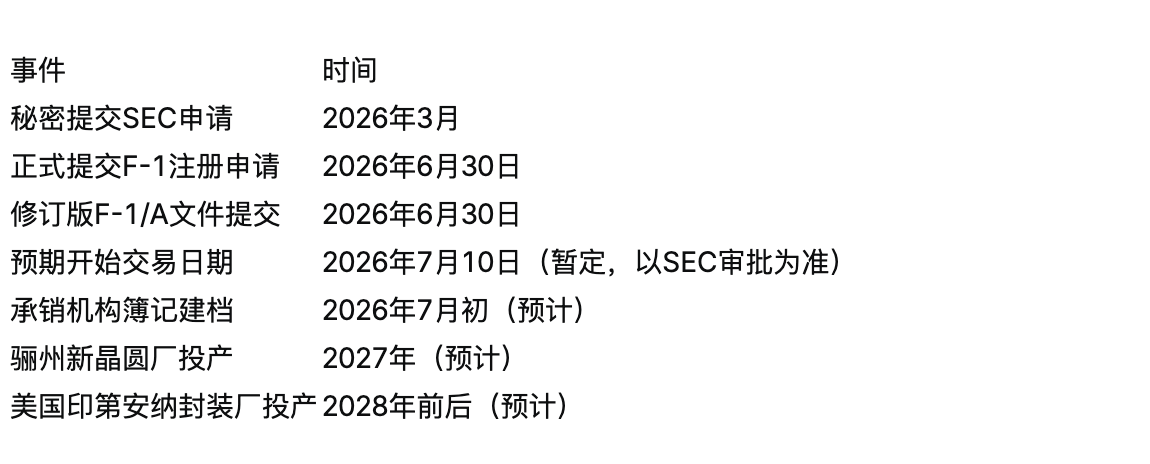
Note: The above dates are the planned dates disclosed in the company's filing documents, and the final dates will be based on SEC approval results and market conditions.
Financial Performance: Why is the market paying close attention?
The growth rate reflected by SK Hynix's recent financial data is the core reason attracting global capital attention.
According to the company's publicly available financial report data:
Full Year 2025: Revenue of 97.1 trillion KRW, operating profit of 47.2 trillion KRW, operating margin of 49%, net profit of 42.9 trillion KRW.
Q1 2026 Single Quarter: Revenue of 52.6 trillion KRW (year-on-year increase of 198%), net profit of 40.3 trillion KRW — the single-quarter profit scale is close to the total net profit for the entire year of 2025.
Q1 Operating Margin: 72%, expanded by 14 percentage points from 58% quarter-on-quarter.
Market Value: As of June 2026, it exceeded 120 trillion KRW (approximately $1.2 trillion), surpassing Samsung Electronics to become the largest publicly listed company in South Korea by market value.
The drive behind this profit growth is highly concentrated: the demand for high bandwidth memory from AI training and inference workloads has exploded, and SK Hynix holds both technological and capacity advantages in HBM.
Risk Factors: What do investors need to know?
Any investment decision needs to rationally consider risks, and SK Hynix's listing also has variables that require attention:
Memory market cyclicality: The memory industry has a clear price cycle, and price crashes have occurred multiple times in the past. The AI demand currently supports high prices, but if capital expenditure in large-scale data centers slows or inventories build up, it will directly impact SK Hynix's revenues.
Competitive pressure: Samsung began shipping its first batch of HBM4 chips to certain customers in February 2026. Micron continues to expand its supply share in the HBM3E field. Competition for market share will intensify with the mass production of next-generation products.
Exchange rate fluctuations: SK Hynix accounts for its operating performance in KRW, and the price of SKHY is directly linked to the KRW/USD exchange rate; fluctuations in exchange rates will affect the actual returns of the ADR.
Geopolitics: U.S.-China tech competition and changes in export control policies may impact SK Hynix's supply chain and customer structure.
MEXC Crypto Pulse Research Team's Exclusive Perspective
The significance of SK Hynix's listing in the U.S. goes beyond just a financing action for a semiconductor company. This is a major reconstruction of the AI infrastructure supply chain at the capital market level — the world's most important HBM manufacturer is opening to global investors in a directly tradable dollar asset form, without requiring them to have Korean stock accounts.
From the perspective of the cryptocurrency market, this event reveals a concerning trend: traditional capital markets are repricing core AI hardware assets using similar logic to the crypto ecosystem — liquidity premium, narrative-driven, and global accessibility. SK Hynix already exists as a trillion-dollar market cap entity in the Korean market, but its valuation still has a significant discount compared to NVIDIA and TSMC, and this discount is largely caused by "entry barriers" rather than "fundamental gaps." The listing of SKHY is essentially a "friction-reduction" operation.
For investors who are accustomed to participating in high volatility, high liquidity asset trading on MEXC, understanding how SKHY operates — ADR discount/premium, exchange rate transmission, Korean market linkage — is a crucial step in building a more three-dimensional investment framework between traditional and digital assets. Beneficiaries of the AI narrative are not just algorithms and tokens but also every chip that provides computational memory for the algorithms to operate.
FAQ
What is the stock code for SK Hynix in U.S. markets?
SK Hynix will be listed on NASDAQ under the code SKHY. The company’s stock code in the Korean market is 000660, traded in KRW on the Korean Exchange (KRX KOSPI).
When will SK Hynix's U.S. stock begin trading?
According to the F-1 application submitted to the SEC, the expected start date for trading is July 10, 2026, but this date is provisional and will depend on SEC approval results and market conditions.
What is the issuance price for SK Hynix ADR?
The reference issuance price is approximately $166 per ADR (based on the closing price of 2,555,000 KRW in South Korea on June 24, 2026). The final issuance price will be determined after the book-building process and may differ from the reference price.
What is an ADR? How does SKHY differ from a typical IPO?
ADR (American Depositary Receipt) is a tradable certificate issued by U.S. depositary banks representing a specific number of shares of a foreign company. SK Hynix is not relisting in the U.S., but is packaging its South Korean common stock in the form of ADR for direct buying and selling by U.S. and global investors via NASDAQ. Every 10 SKHY corresponds to 1 share of SK Hynix's South Korean common stock. This differs from a traditional IPO, as the company is already listed in Korea; this is a dual listing, not a first public offering.
How large is the scale of SK Hynix's upcoming listing?
This issuance will comprise approximately 17.79 million new shares, raising about $29 billion, which will become the largest ADR listing in history, surpassing Alibaba's $21.9 billion New York listing record in 2014 and Saudi Aramco's $25.6 billion IPO in 2019.
What is SK Hynix's position in the HBM market?
According to IDC data (cited from SK Hynix's F-1 application), as of Q1 2026, SK Hynix holds a revenue share of 56.4% in the global HBM market, ranking first; in the DRAM market, it holds a revenue share of 29.1%, ranking second. The company is NVIDIA's largest HBM supplier for AI accelerators.
How can ordinary investors purchase SKHY?
After listing, SKHY can be purchased through all brokers that provide access to U.S. stock trading, including platforms like Futu, Tiger Brokers, and Interactive Brokers. It is recommended to use limit orders on the first trading day to avoid price fluctuation losses due to liquidity differences.
What will the funds raised from this listing be used for?
According to the prospectus, the funds raised will be mainly used for two directions: one is to expand the advanced memory manufacturing capacity at the Icheon semiconductor manufacturing complex in South Korea; the other is to support the construction of a $4 billion advanced packaging facility in Indiana, which is expected to officially start production around 2028.
Disclaimer
This article is written by the MEXC Crypto Pulse team for informational reference only and does not constitute any investment advice. All data in this article comes from public sources, including SK Hynix's SEC filing documents, company financial reports, CNBC, Bloomberg, and other mainstream financial media as of the writing date (July 2026). Investors should conduct their own independent research and consult qualified professional financial advisors before making any investment decisions. Past market performance does not represent future results. Investment in securities carries risks, including the possibility of loss of principal.
免责声明:本文章仅代表作者个人观点,不代表本平台的立场和观点。本文章仅供信息分享,不构成对任何人的任何投资建议。用户与作者之间的任何争议,与本平台无关。如网页中刊载的文章或图片涉及侵权,请提供相关的权利证明和身份证明发送邮件到support@aicoin.com,本平台相关工作人员将会进行核查。


