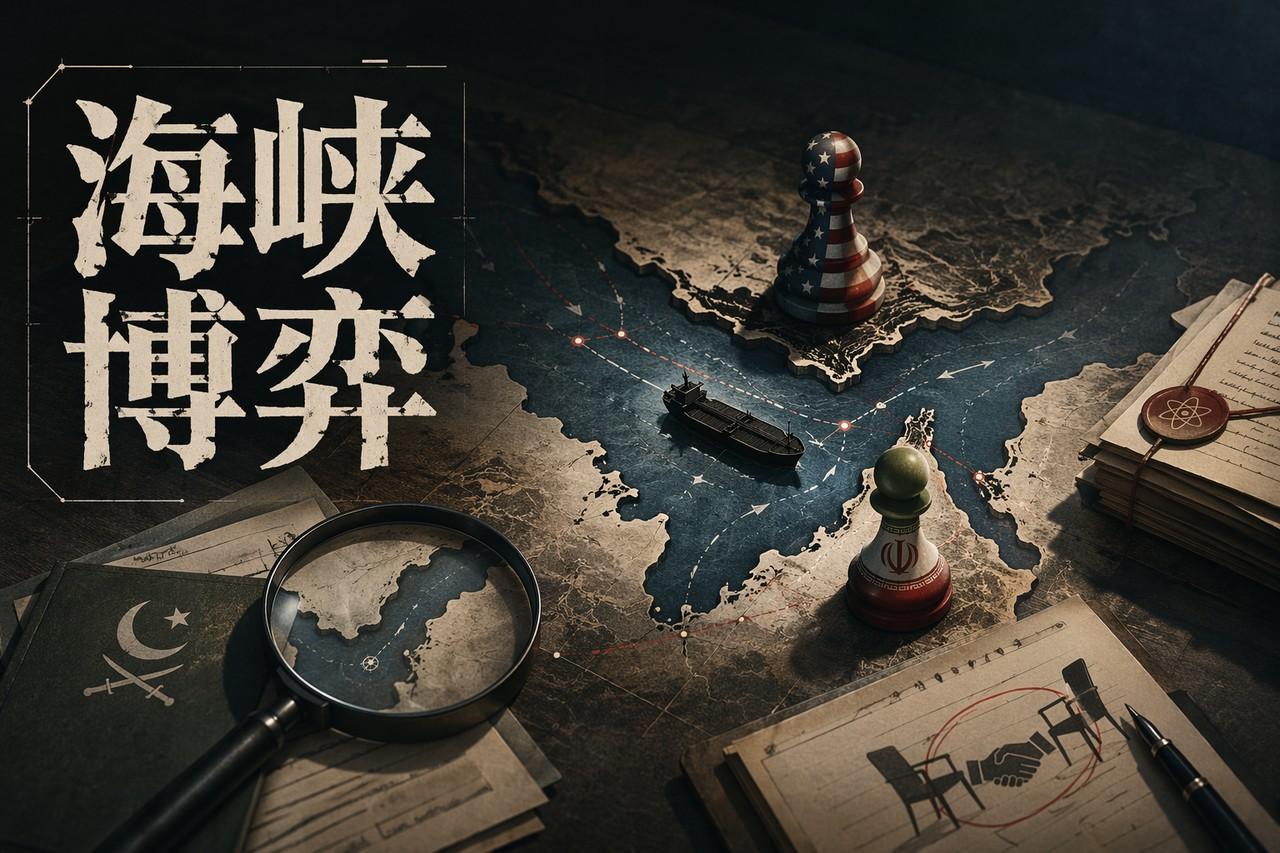
In the recent sudden escalation of the US-Iran confrontation, the Strait of Hormuz has boldly been brought to the negotiating table by Iran: according to Saudi media “Hadass,” Tehran has stated that if the US is willing to pay compensation, Iran could reopen this crucial route which accounts for about one-fifth of global oil transport, but the prerequisite is that the issues of US sanctions and frozen funds must be clarified before any agreement text emerges. Almost simultaneously, the Wall Street Journal revealed that Trump convened the national security team to discuss the possibility of a new round of military strikes against Iran, but after the meeting, he pressed the “pause button” and claimed he would provide “more time” for diplomatic negotiations, only to shift his rhetoric and emphasize that he has not shelved military options. On the surface, it’s a bargaining over shipping routes and compensation, but behind the scenes, it's a high-risk probe surrounding sanctions and security red lines, with a long-ignored role transforming this confrontation from a simple offensive to a multi-party game—Pakistan: its army chief Munir just visited Tehran and met with Iranian Foreign Minister Zarif; according to Xinhua News Agency, the information that Iran and the US need to exchange has been transmitted through Islamabad, quietly allowing Pakistan to assume the role of “messenger,” creating a narrow yet crucial diplomatic maneuver among the already tense US-Iran standoff.
The Strait of Hormuz is being tightened: a wager on 20% of global oil
Pakistan is running back and forth on both ends, conveying information, but what truly tightens this confrontation is the Strait of Hormuz itself. This is one of the world’s most important oil transport routes, with about 20% of global oil trade flowing in and out of this narrow waterway every day. Once obstructed, the crude oil export routes for Gulf oil-producing countries would immediately become congested or even interrupted, causing international oil prices and energy security of various countries to be directly brought to the negotiating table, instead of remaining merely headlines.
Because of this, Hormuz has never been merely a “background geography” in the long-standing standoff and sanctions game between the US and Iran, but rather a tactical frontline often utilized by Iran. Since the US withdrew from the existing nuclear deal and increased economic pressure, every time tensions have escalated with Washington or regional adversaries, Tehran has openly hinted at the possibility of “blocking Hormuz,” and even a mere statement is enough to keep markets and allies on high alert. In this historical context, Iran incorporating the “opening of the strait” into its own conditions this time is not just setting the price but placing the right to freely navigate 20% of the world’s oil on the negotiation table, transforming the issue of maintaining an open waterway into the most substantial chip in current negotiations.
Iran throws out compensation for the Strait: resolve the money issue before discussing the agreement
This time, Tehran did not merely present the threat of “blocking Hormuz” but instead proposed a conditional commitment. According to Saudi media Hadass, the Iranian side explicitly stated that if the US provides compensation, Iran is willing to open the Strait of Hormuz, placing this critical route that handles about one-fifth of global oil trade directly on the list of bargaining chips. On the surface, it appears to be “opening the strait in exchange for compensation,” but in essence, it requires Washington to cover the costs of years of sanctions and frozen assets, transforming the unidirectional economic losses into negotiable items.
Differing from previous approaches, Iran has also locked the agenda sequence: any discussion on the resolution of the US sanctions and frozen funds must take priority before the signing of any agreement. This means that regardless of what the “new agreement” expected by the outside world entails, in Tehran's narrative, it must first pass the “resolution of the money” hurdle, elevating the issues of the sanctions framework and seized assets to preconditions for negotiation, which is also its current core bottom line. It is worth noting that the outside world currently does not know the specifics of the “compensation” Iran refers to, such as how much it is, in what form it will be paid, and within what timeline it will be implemented; these key details are all absent from the public information. However, even in a situation of high information asymmetry, Iran placing “compensation + unfreezing funds” as the sequence ahead of all texts already sufficiently indicates its intention to fully account for the sanction pressures it has passively endured over the past few years, transforming them into the starting price for the next round of US-Iran transactions.
Trump temporarily eases his finger off the military trigger
At the same time that Tehran brings “compensation + unfreezing funds” to the forefront of negotiations, Washington is also doing its own arithmetic. According to the Wall Street Journal, Trump recently convened the national security team in a conference room to specifically discuss whether to take new military action against Iran. Participants weighed potential strike options, the regional situation, and the spillover risks to the US homeland and allies repeatedly, but after the meeting, the US did not announce it had made a formal decision to “take immediate action,” and the trigger was not pulled, but merely temporarily moved away from originally tensed fingers.
More intriguing are the political signals released after the meeting. Trump publicly stated his willingness to provide “more time” for diplomatic negotiations but intentionally did not offer any clear deadlines, neither committing to lasting restraint nor providing Iran with a definitive safety buffer. Accompanying the notion of “time” thrown to the media cameras was another half-statement—if negotiations break down, the US will retain the option to carry out military strikes against Iran. For the outside world, this implies that Washington is not genuinely choosing to downgrade in the Hormuz game; instead, while increasing diplomatic space, it is keeping military deterrence as a background light that remains ever-present, so that Tehran cannot overlook the hand that may be pulled back at any moment while calculating the compensation and sanctions accounts.
Pakistan sets up a secret microphone for US-Iran in Tehran
While Washington keeps the “military option” hanging high, Tehran has instead welcomed a visitor who appears more “low-key”—Pakistan’s army chief Munir. Recently, he appeared in the Iranian capital, meeting with Iranian Foreign Minister Zarif, and although the tone in the official report was calm, it has been imbued with asymmetrical importance. According to Xinhua News Agency, the “information that the US and Iran need to exchange” has already been transmitted through Pakistan, and the true stage of Munir’s visit is not in the official photo ops but in the invisible line he is acting as: on one end is Iran, using the Strait as a bargaining chip, demanding compensation and a loosening of sanctions; on the other is the US, giving “more time” for negotiations verbally while constantly assessing military strike options in practice.
Pakistan is not a new role in this regard. Historically, it has played the communicator and mediator between the US and Iran multiple times, and this round of mediation continues that existing diplomatic tradition. The difference lies in the stage props now being the Strait of Hormuz and the topic of “compensation,” where every word transmitted could be reinterpreted by both sides as rearranging chips between sanctions, frozen funds, and military deterrence. For Iran, every statement sent through Islamabad is a probe into the US's real red line regarding compensation and sanctions; for the US, this channel represents a lower-cost way to test Tehran's sincerity in opening the Strait. Thus far, there are no signs of Pakistan facilitating any specific agreement texts or results within the current scope of publicly available information, but for that very reason, this “secret microphone” becomes particularly crucial—it does not determine the outcome yet subtly influences the direction of one question: whether the next sound over Hormuz will be echoes of negotiations or the roaring of fighter jets.
Strait transactions and the Middle East chessboard: potential next steps
The current situation sees Iran using the Strait of Hormuz along with “compensation + loosening of sanctions” as bargaining chips, while the US employs its sanctions system and a military deterrent that can be activated at any time as its chips, with Pakistan caught in the middle, translating probing statements and bottom lines into a language the other side can understand without ripping apart relations. Looking forward, one possibility is that the current pattern stretches out: under Trump’s ambiguous promise of “more time,” pressure continues to be exerted while messages are conveyed through Pakistan, and Iran insists on negotiating sanctions and frozen funds before discussing the opening of the strait, with both sides reluctant to compromise but also averting a real military collision, thus keeping Hormuz tense but not entirely out of control. Another possibility is that this Pakistani channel cannot dissolve the core divergences: if Washington’s tolerance for “more time” is significantly less than publicly stated, determining that Tehran is merely stalling, while Iran stands firm on matters of compensation and sanctions, the likelihood of the US placing military strikes back on the table will rise, sending Strait safety, Middle Eastern order, and the global energy market into a high-risk zone. What will follow is worth closely monitoring—not only Iran's willingness to continue treating the Strait as a hard bargaining chip but also Trump’s real patience with the delay in negotiations, Iran’s rigidity on compensation and sanctions, and how much Pakistan can maintain this fragile yet critical communication channel; the interplay of these three factors will determine whether Hormuz moves toward limited transactions or dangerous loss of control.
Join our community to discuss and become stronger together!
Official Telegram community: https://t.me/aicoincn
AiCoin Chinese Twitter: https://x.com/AiCoinzh
OKX Benefit Group: https://aicoin.com/link/chat?cid=l61eM4owQ
Binance Benefit Group: https://aicoin.com/link/chat?cid=ynr7d1P6Z
免责声明:本文章仅代表作者个人观点,不代表本平台的立场和观点。本文章仅供信息分享,不构成对任何人的任何投资建议。用户与作者之间的任何争议,与本平台无关。如网页中刊载的文章或图片涉及侵权,请提供相关的权利证明和身份证明发送邮件到support@aicoin.com,本平台相关工作人员将会进行核查。