SpaceX, in its S-1 prospectus submitted to the SEC, has for the first time laid bare its Bitcoin position to the capital markets: 18,712 coins, with a total cost of about $661 million, an average purchase price around $35,000, and with current market value approximately $1.45 billion. This not only places it directly in the list of “the seventh largest corporate Bitcoin holding entity in the world,” but also draws the attention of regulators and auditors. Standing alongside traditional “on-balance-sheet players” like MicroStrategy and Tesla, chain data, however, provides a sobering perspective—CryptoQuant's research director Julio Moreno reminds us that the current price structure of Bitcoin resembles the rebound phase of the 2022 bear market, with resistance near the 200-day moving average around $82,400. Sentiment indicators are showing “extremely pessimistic” signals, indicating a clear dislocation between market trends and sentiment. On another front, wallets suspected to be associated with Garrett have successively injected about $39.5 million USDC into Binance and withdrawn about $40 million USDC, which flowed into derivative platforms including Hyperliquid, while approximately $30 million cryptocurrency assets remain on-chain. This cross-platform and large-scale fund movement brings the past penalties that exchanges like Binance faced due to KYC and AML mechanisms back into the spotlight and directly tests how compliant derivative platforms identify the true source of funds and risk exposure amid “travel rules” and internal risk control models. As institutional participation, high prices, and tightening regulatory expectations intertwine, the compliance boundary in the cryptocurrency industry is being redefined by more refined and penetrating regulatory standards, as evidenced by the disclosures in SpaceX's S-1 and the substantial movement of USDC across platforms.
SpaceX S-1 Includes Bitcoin
In the S-1 registration statement submitted to the SEC, SpaceX has for the first time brought its Bitcoin holdings into the quasi-public capital market “witness stand”: 18,712 coins, with a historical total purchase cost of approximately $661 million, averaging around $35,000 per coin. Based on market prices near the submission time, this asset is valued around $1.45 billion, significantly in a profit position. Unlike earlier instances when companies were vague about their Bitcoin positions in financial statement footnotes, this time, Bitcoin has been directly included in asset composition and related risk disclosures, alongside rockets and satellites, making it an asset category that SpaceX must clearly explain to the SEC and future public shareholders. The S-1, as a registration document prior to a company’s public listing in the U.S., mandates systematic disclosure of assets, liabilities, and risk factors. This means that once on the path to going public, SpaceX’s Bitcoin holdings must be sustainably and normatively “accounted for” within the accounting and information disclosure framework, no longer at the discretion of management to decide whether to make it a “side investment” to disclose.
In comparison, MicroStrategy and Tesla have already disclosed their Bitcoin holdings in public documents, but the former views Bitcoin as part of its business narrative, while the latter has faced controversies multiple times regarding its cryptocurrency investments outside its core automotive business. SpaceX, on the other hand, is seen as more closely akin to a “traditional large tech manufacturing + aerospace infrastructure” entity. At this moment, choosing to systematically disclose its Bitcoin holdings in the S-1 before an IPO provides a model and pressure to a number of tech companies preparing to go public, but still hesitating whether to “on-chain” their investments: failing to disclose means concealing significant assets in front of regulators and institutional investors; opting to disclose implies an acceptance of this asset category being included in mainstream capital market statements and audit inquiries. Furthermore, because the disclosure occurs within the S-1—a document carrying strong regulatory implications—markets interpret it as a new phase sample showing Bitcoin transitioning from “aggressive bets by individual companies” to “inclusion in standardized financial statements,” rather than an isolated statement of management preference.
New Accounting Rules and Corporate Cryptocurrency Asset Red Lines
The reason SpaceX can provide Bitcoin numbers of “cost + fair value” in the S-1 is based on the new accounting standards recently passed by the FASB: allowing companies to measure certain freely tradable cryptocurrency assets at fair value, rather than only being able to recognize impairments when prices dropped without the ability to reverse upon price recovery. Under old rules, once Bitcoin was impaired, it would have remained “damaged” on the books long-term, presenting only one-directional losses without reflecting any profits gained. Management and auditing bodies worried about being accused of “amplifying volatility” or “window dressing profits.” The new rules bring both unrealized gains and losses into the light—reporting volatility may become more direct, but significantly increases information transparency and comparability between different companies.
In this context, SpaceX’s disclosure of its Bitcoin costs and fair value in the S-1 is seen by the market as one of the representative samples of large technology companies normalizing accounting entries post the implementation of new accounting rules. Whether it’s the “first case” still requires verification from academia and media, but it is enough to make boards, audit committees, and CFOs realize: Bitcoin is no longer just a “vague area in footnotes” but must enter the main financial statements, risk disclosures, and audit inquiry lists as a regulated asset category. Standardized accounting, on one hand, reduces the accounting resistance for other companies considering Bitcoin investments—“how to calculate, how to disclose” now follows established guidelines; on the other hand, it raises the red line for governance responsibilities: how much to hold, how to describe volatility risks, and under what circumstances to adjust asset allocations will be tracked and evaluated by investors, rating agencies, and regulatory bodies. Any future, more meticulous regulations targeting cryptocurrency assets will start from this fair value measurement-based asset identification rather than being an exception.
Bear Market Bounce Alert and Trading Platform Risk Control Pressure
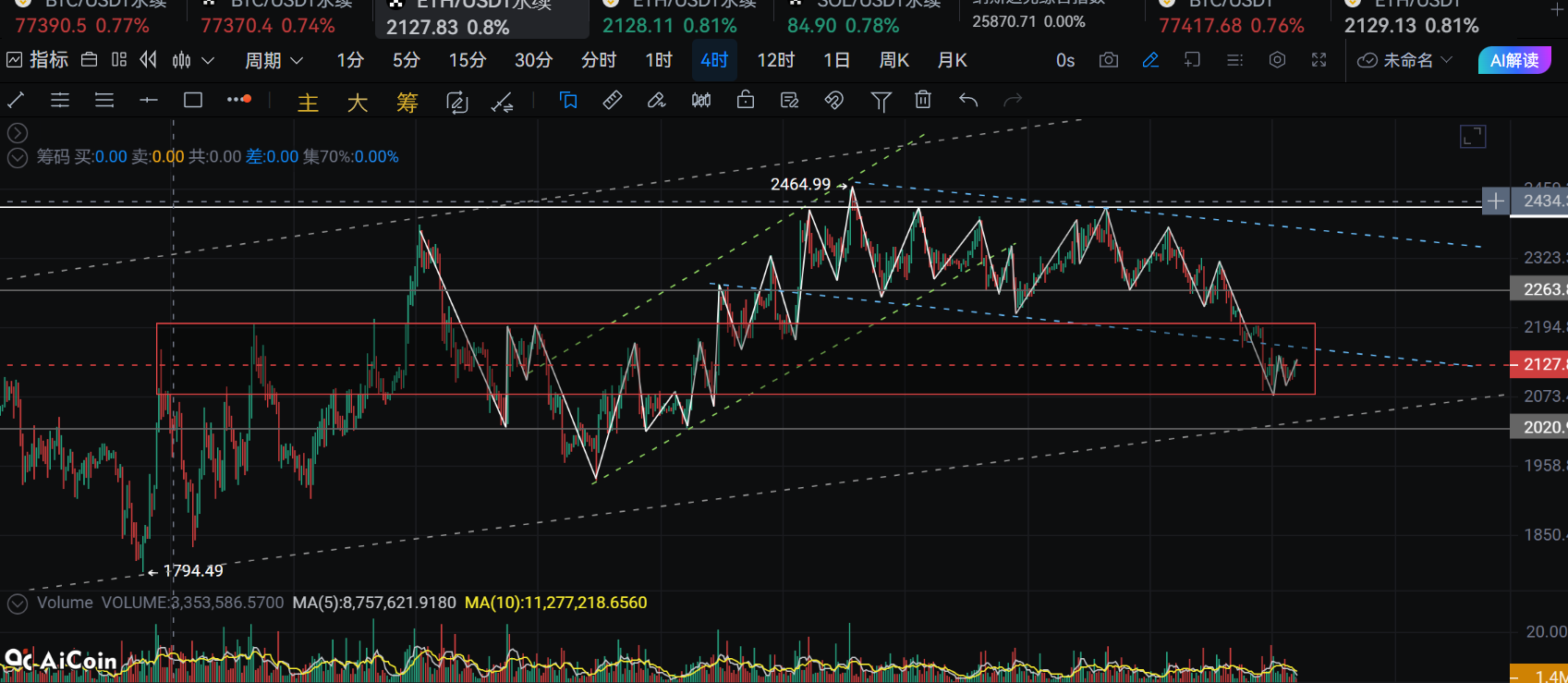
As disclosures and accounting rules gradually clarify, the price structure itself, however, is cooling the spirits of risk control teams. CryptoQuant’s research director Julio Moreno has publicly pointed out that the current trajectory of Bitcoin resembles a rebound in the bear market phase of 2022, rather than the start of a new complete bull market: in March of that year, prices rebounded about 40% from lows before hitting the 200-day moving average, subsequently turning back down. This analogy is merely a market perspective, but coupled with the current Bitcoin encountering noticeable resistance near the 200-day line around $82,400, technical analysts and quant firms generally view this point as a risk area where the medium to long-term trend may “reverse.” For licensed derivative platforms, this moving average is not just a line on a chart; it is also a triggering condition closely monitored in internal risk models: if prices repeatedly test, drop below, or fake breakout, whether parameters such as margin ratios, funding rates, and maximum leverage need to tighten dynamically is directly tied to their ability to withstand the next wave of cascading liquidations.
Under the regulatory frameworks in many regions in Europe and the U.S., compliant derivative platforms must prove their models can withstand such extreme scenarios, thus cannot merely open the “lever up” gates in response to trading demands. Currently, on one side, there’s the influx of institutional capital and the trading heat brought by assets being included in fair value reports, while on the other side, on-chain and sentiment indicators generally describe the stage as “extremely pessimistic”—prices remain near historical highs, yet investor fears over drawdowns and liquidations are amplifying. Historical experience shows that under such sentiment structures, even minor downturns can escalate to widespread liquidations, thereby exposing systemic liquidity risks to regulators. For licensed platforms, how to meet high-frequency trading and contract speculation demands while proving they have adequately safeguarded against excessive leverage, potential price manipulation, and insufficient information disclosure will directly determine their survival space in the next round of regulatory inspections.
Whale USDC Movements and Platform Compliance
From an on-chain perspective, the wallets suspected to be associated with Garrett are not “one-off transactions.” Public data indicates that this address deposited approximately $39.5 million USDC into Binance, then subsequently withdrew about $40 million USDC from Binance, with about $10 million USDC transferred to derivative platforms such as Hyperliquid, leaving approximately $30 million in cryptocurrency assets on-chain. This pathway starting from a single address, traversing through licensed giants to high-frequency derivative platforms, and then returning to self-held positions is etched in real-time on the blockchain, leaving an indelible compliance trace for all "recipients" involved.
The issue lies in the sharp collision between the clarity of on-chain tracks and the ambiguity of responsibility boundaries. For centralized platforms like Binance, which have already faced hefty fines in multiple countries due to KYC and AML shortcomings and are under continuous scrutiny, such levels of USDC inflow and outflow imply that their customer identification, transaction monitoring, and address risk scoring systems are under greater pressure. The “travel rules” promulgated in multiple countries require them to identify and relay identity information during large cross-platform transfers. If the narrative on-chain misaligns with regulatory expectations, they could be questioned about whether they “should have known earlier.” For derivative platforms like Hyperliquid, accepting large amounts of funds from controversial or high-risk addresses touches on another red line: under the premise of existing gray areas regarding licensing, to what extent does the platform need to monitor potential money laundering, manipulation, and extreme leverage behaviors, or even proactively “cut off transactions”? This has evolved from a mere moral issue to a tangible risk of being restricted in services or even facing judicial accountability in the future. In an age where large fund behaviors are magnified in real-time on-chain, any platform that the outside world perceives to be engaging in “selective risk control” in handling these matters may simultaneously face enforcement pressures and a collapse of user trust.
From SpaceX to Whale Funds: Compliance Boundaries Are Being Raised
With SpaceX disclosing the costs and fair values of its 18,712 Bitcoins in the S-1, this non-financial technology company, listed by some statistical firms as the seventh largest corporate Bitcoin holder globally alongside MicroStrategy and Tesla, sets an example using the FASB’s new fair value accounting rules: cryptocurrency assets are no longer just “footnote risks,” but can be written into SEC reports, subject to audit and inquiry as part of capital allocations, thereby raising the overall compliance threshold for large institutions participating in the industry. Meanwhile, CryptoQuant's framework of “more like a bear market rebound,” along with the technical signal of the 200-day moving average encountering resistance around $82,400, is being utilized by risk control teams and some regulatory departments as a tool for observing leverage and systemic risk, while the pathway of wallets suspected to be associated with Garrett depositing around $39.5 million USDC in Binance, then withdrawing about $40 million USDC and transferring to derivative platforms like Hyperliquid, becomes a real sample for assessing whether platforms are genuinely using on-chain data for due diligence and risk management in the context of Binance having faced significant fines for KYC/AML insufficiencies and ongoing advancements in travel rules. In this environment, the entities that can survive will be those capable of creating a closed-loop between accounting disclosure, fair value measurement, asset allocation decisions, and KYC/AML, margin, and leverage models, while participants relying on ambiguous boundaries and lax risk control will be cleared out more quickly. As for the pace of SpaceX's IPO advancement, the SEC’s specific requirements for risk descriptions of cryptocurrency assets in the S-1, and whether this round of market action will be recorded in history as a “bear market bounce” or the “starting point of a new bull market,” will jointly determine whether the next round of rules will be tightened simply or redefined within a more meticulous compliance framework.
Join our community, let’s discuss together, and become stronger together!
Official Telegram group: https://t.me/aicoincn
AiCoin Chinese Twitter: https://x.com/AiCoinzh
OKX benefits group: https://aicoin.com/link/chat?cid=l61eM4owQ
Binance benefits group: https://aicoin.com/link/chat?cid=ynr7d1P6Z
免责声明:本文章仅代表作者个人观点,不代表本平台的立场和观点。本文章仅供信息分享,不构成对任何人的任何投资建议。用户与作者之间的任何争议,与本平台无关。如网页中刊载的文章或图片涉及侵权,请提供相关的权利证明和身份证明发送邮件到support@aicoin.com,本平台相关工作人员将会进行核查。