Written by: Geek Park
Early this morning, I opened the Apple China official website and saw a letter signed by Tim. The first half of the letter talked about Cook's habit of reading user letters every day over the past fifteen years—some people saved their lives with their Apple Watch, while others took perfect selfies with their iPhone at the top of a mountain. Until the middle, he wrote a light remark: "Today, we announce that I will take the next step in my journey at Apple."
Cook is leaving. He will step down as CEO on September 1st and transition to the position of executive chairman. The person succeeding him is named John Ternus.
This name may be unfamiliar to the average person, but for the past decade, every generation of iPhones, iPads, Macs, Apple Watches, and AirPods you’ve used has essentially gone through him. He graduated as an engineer from the University of Pennsylvania's Mechanical Engineering Department, retired from the school swim team in 1997, worked for four years at a small company making VR headsets, and joined Apple's product design team in 2001, where he has stayed ever since.
My first reaction upon seeing the announcement was not "Who is Ternus?" but rather another thought—this is the second time in Apple's history that the CEO is being changed, and the key is once again being handed to someone who is "the least like themselves".
Cook was also not the "natural continuation" of Jobs
Let’s rewind to August 2011. Jobs stepped down due to illness, and the designated successor was Tim Cook.
Looking back today, this seems like a natural choice—Cook had been COO for six years and was one of Jobs's most trusted assistants. But if you place yourself back at that point in time, you will find that this choice was actually quite counterintuitive.
That was Apple's most "Jobsian" era: the iPhone 4 had just been released, the iPad was starting to redefine personal computing, and the App Store had become the foundation of a new industry. Everyone was asking the same question: would there still be a next "one more thing" without Jobs at Apple?
The most natural successor should be someone like Jobs—obsessed with products, meticulous about details, and capable of standing on stage to utter those few words that would turn the industry upside down. At that time, there were two people within Apple that fit this profile: Jony Ive (design) and Scott Forstall (iOS). Either one would be "more like Jobs" than Cook.
Jobs did not choose them. He chose a quiet, non-attention-seeking Alabama man whose resume was filled with stories of supply chain optimization.
Jobs’s choice this time was not to find someone who could continue to tell his story, but rather someone who could keep the machine he left running smoothly. In 2011, Apple was not lacking in product insights—Jobs had left a product line that was clear to the point of perfection. What was truly scarce was someone who could make this precision machine earn ten times more money amidst globalization, trade frictions, and supply chain games each year.
The fact proved that Jobs made the right choice. When Cook took office, Apple's market value was about 350 billion dollars; today that number is 4 trillion. He stuffed the new product lines of Apple Watch, AirPods, and Vision Pro into this machine, transformed the factory in China into Apple's lifeblood, and secured round after round of crucial exemptions for Apple during Trump's tariff wars. His fifteen years as CEO marked both the most profitable and the most "non-Jobsian" years for Apple.
There is a detail that is often overlooked: Jobs chose Cook not to continue the Jobs era but to end it.
Now, Cook is making a nearly symmetrical move.
Internally at Apple, there is actually no shortage of candidates for "Cook 2.0." Jeff Williams—former COO, whose resume is almost a replica of Cook's, a master of supply chains, calm and steady. He had always been seen as the most likely successor to Cook.
But ultimately, it was not him who stood up, it was Ternus.
These two are almost mirror images: Williams is 62 years old, Ternus is 50; Williams comes from operations, Ternus is a hardware engineer; Williams excels at running processes, Ternus is more willing to bypass middle management and work directly with engineers in the lab on details.
In Apple's official announcement, Cook's comment about Ternus was this: "John Ternus has the mind of an engineer, the soul of an innovator, and the heart to lead with integrity and with honor."—the eight words "the brain of an engineer, the soul of an innovator" are clearly not describing a person "like Cook."
What Cook did this time is the same as what Jobs did back then: to choose someone who could fill the gaps left unresolved in his era, rather than someone who could continue him.
The machine Cook left for Apple is already running very well today—400 billion in annual revenue, a gross margin stable above 45%, and Services business reaching new highs every quarter. This machine is not lacking in operations, scale, or cash.
What is it lacking? It lacks someone to redefine products.
After Jobs departed, Apple's hardware innovations leaned more on iteration rather than definition. iPhone generations upgraded, but none made people "stunned for a second." Vision Pro, after its release in 2024, has seen continued poor sales, with the industry agreeing that it has not found a true use case. The two lines of Apple Watch and AirPods have long entered a period of "annual updates."
Moreover, more critically, Apple has already publicly fallen behind in AI. Apple Intelligence has missed several deadlines, with the major upgrade of Siri ultimately having to rely on Google Gemini; the executive in charge of AI was replaced last year with a veteran from Google; Jony Ive left in 2019 and sold his startup for 6.4 billion dollars to OpenAI in 2025—what was supposed to belong to Apple is now helping Apple's most dangerous competitor create hardware.
This machine does not need a more operational CEO. It needs someone who can regain the authority to define products. The reason Cook chose Ternus is exactly in line with the logic behind Jobs’s choice of Cook: not to find someone who could continue my chapter, but to find someone who could turn the page to the next chapter.
But Ternus's challenge is harder than Cook's back then
Though both reverse selections are logically similar, the challenge facing Ternus is much harder than what Cook faced back then.
When Cook took over in 2011, the question he needed to answer was: can the products left behind by Jobs continue to sell more and earn more? The answer only required him to push the supply chain, channel, and pricing logic he was best at to the extreme. He achieved that without any suspense.
The question Ternus needs to answer is: in an era where AI rewrites everything related to terminals, is Apple still the company that defines the next terminal?
This is not a question that can be solved by a supply chain, nor is it one that can be solved solely by hardware engineering. It involves model capabilities, data strategies, soft and hard integration, product imagination—any one of these legs being weak makes it impossible to move forward. Ternus understands the hardware leg, but he hasn’t publicly demonstrated the models and product definitions.
If you only look at his resume, there are a few concerning points. What is the biggest original product under his belt? The Touch Bar—one of Apple's most acknowledged failures in design over the past decade. He often plays the role of "product improver" rather than "product definer": the transition to self-developed chips for Macs is being pushed according to a pre-set route, and the definition of Vision Pro has little to do with him. There are voices within Apple saying he resembles more of a "maintainer" rather than a person like Jobs or Ive who dares to hit the brakes and overturn existing plans.
But from another perspective—if the next true new terminal is not a large model or a screen, but rather a hardware that needs to be completely reimagined in terms of form, interaction, and way of wearing (AR glasses, embodied robots, something yet to be named), then Ternus could be the right person. If the moat of Apple in the AI era is ultimately not the model, but the few millimeters of stacking in hardware, the few grams of weight, or the few hours of battery life, then an engineer who has walked from the product design team to SVP is more suited to make that judgment than an AI scientist.
Whether this judgment is correct or not will only be revealed at the moment Ternus leads Apple’s AI glasses, home robot, or any truly new terminal to market.
Fortunately, he is not facing this challenge alone. Cook remains as executive chairman to support the "diplomacy"—handling tariffs, policies, and big customers, things he excels at. Chip guru Johny Srouji was promoted to the newly created chief hardware officer position, conveniently taking over the hardware engineering department previously overseen by Ternus. Tom Marieb is directly managing day-to-day operations. These people, along with the newly hired AI head from Google, are the crucial supports that Ternus will rely on.
But ultimately, the one who has to press the launch button is still him alone.
August 31st is Cook's last day as CEO of Apple. On September 1st, Ternus takes over.
There will not be a dramatic handover like Jobs’s—such a moment of "I point at a person and say you come" is probably unique in Apple’s history. This transition is more like what Apple excels at: precise, seamless internal shifts. Cook's statement in the letter that "this is not goodbye" is actually quite accurate—he will continue to manage those relationships and issues that Ternus cannot yet handle as executive chairman.
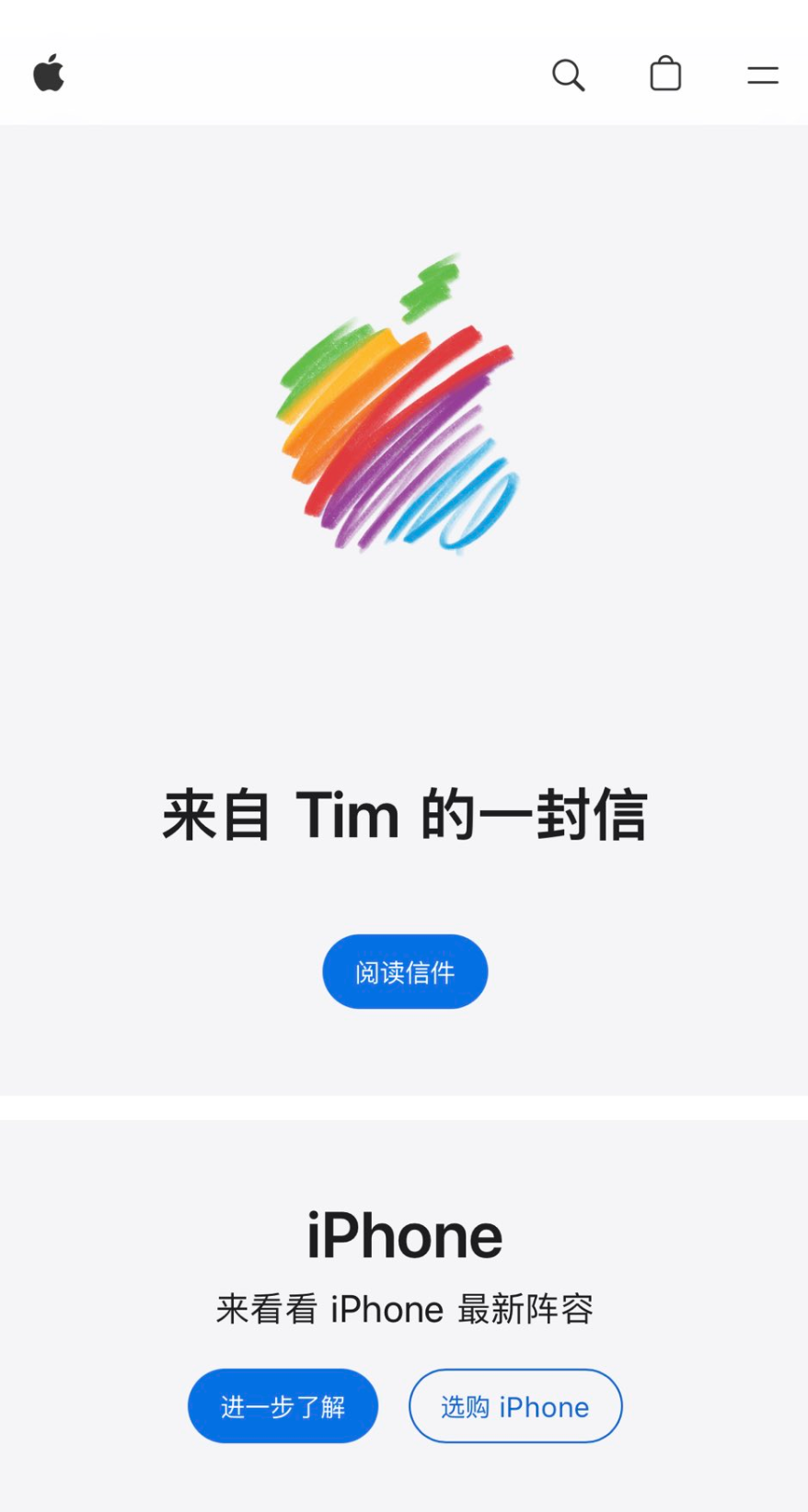
But for someone who has been part of Apple for over a decade, this moment still carries weight. That Tim who disappears into the keynote within 15 seconds of every launch event, that Tim who slowly talks about Services growth during earnings calls, that Tim who bargained tariffs with Trump on stage and backstage—starting September 1st, will truly retreat to the background.
That engineer who has stayed in Apple's labs for 25 years is now taking the stage.
What Jobs left for Cook was a product machine that needed to be scaled up; what Cook leaves for Ternus is a product machine that needs to be redefined. Between the handover of the two generations of CEOs, there is a gap of fifteen years. The shape of the next generation of Apple will likely be slowly drawn out during this time difference.
免责声明:本文章仅代表作者个人观点,不代表本平台的立场和观点。本文章仅供信息分享,不构成对任何人的任何投资建议。用户与作者之间的任何争议,与本平台无关。如网页中刊载的文章或图片涉及侵权,请提供相关的权利证明和身份证明发送邮件到support@aicoin.com,本平台相关工作人员将会进行核查。


