The analysis of the indicators in previous issues has gained recognition from many friends, and several people have responded that indicators like MACD and EMA have obvious lagging characteristics, which are not sensitive enough for retail investors who engage in quick in and out trades. Today, I bring you a core tool focused on left-side trading — the TD indicator, commonly referred to in the industry as the magical nine turns, which can help you capture market turning points earlier than most market participants.
Our research institute has been deeply engaged with this set of indicators for a long time and has developed a dedicated bottom-fishing strategy based on it, which performed exceptionally well in the last bull market. However, it also has clear shortcomings: it is only good at bottom-fishing and performs limitedly in a continuous downtrend bear market.
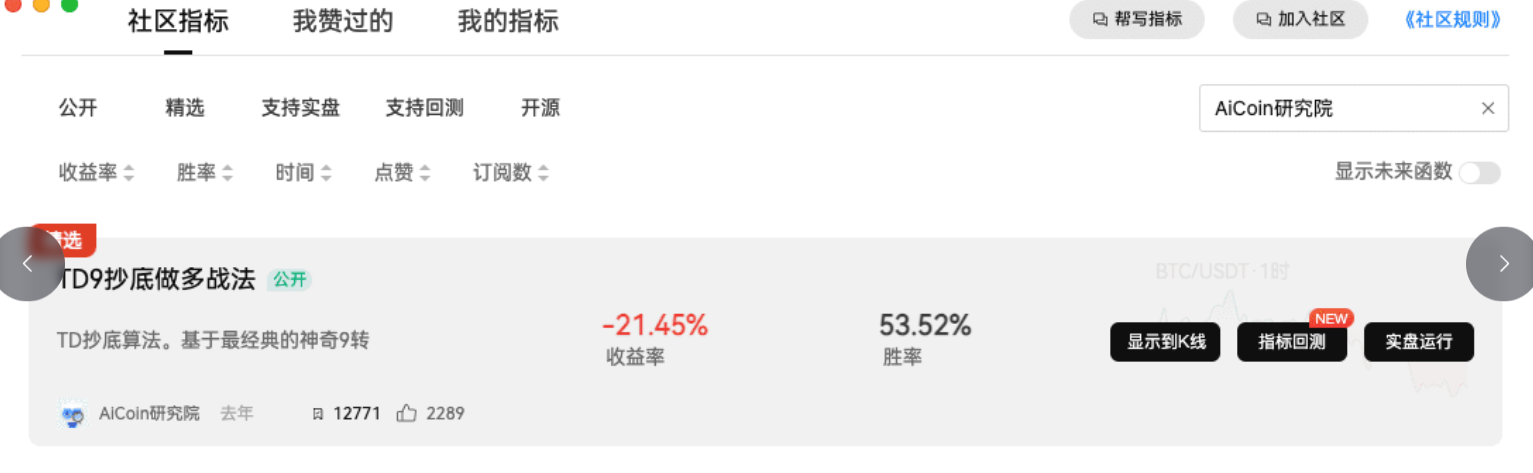
However, during the rising phase of the market, the TD indicator can achieve ultimate left-side trading, outperforming most conventional strategies. The current market is in the bearish bottom range, and the downward momentum is basically exhausted, making this set of indicators about to return to the spotlight! Today, I will guide you through practical disassembly to thoroughly master the use of the TD indicator.
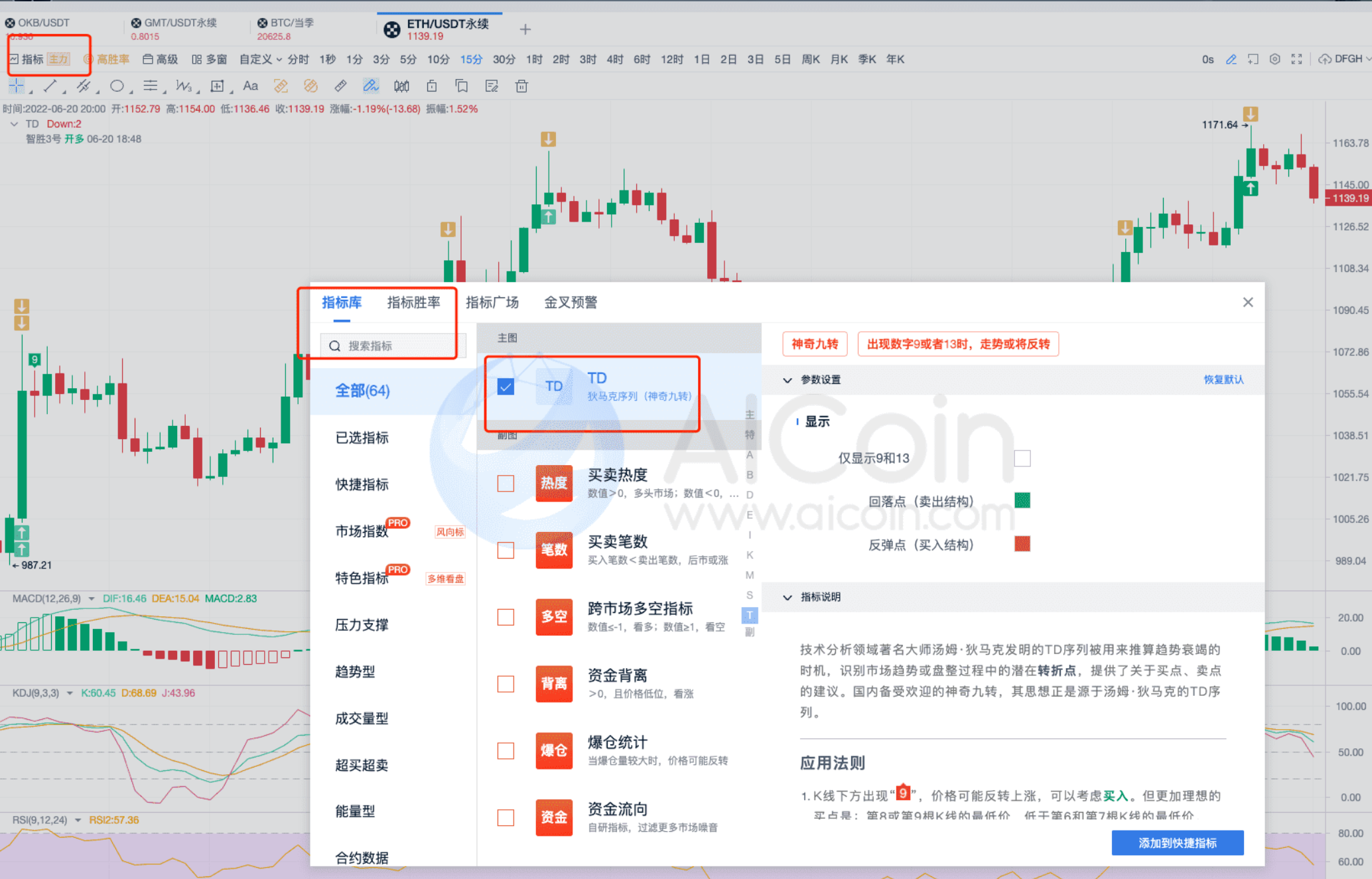
First, let’s get to know the TD indicator, formally known as the DeMark Sequence, which serves the core purpose of determining the timing of price trend exhaustion, accurately capturing market turning points, and identifying buy and sell ranges. Domestic investors commonly refer to it as the magical nine turns.
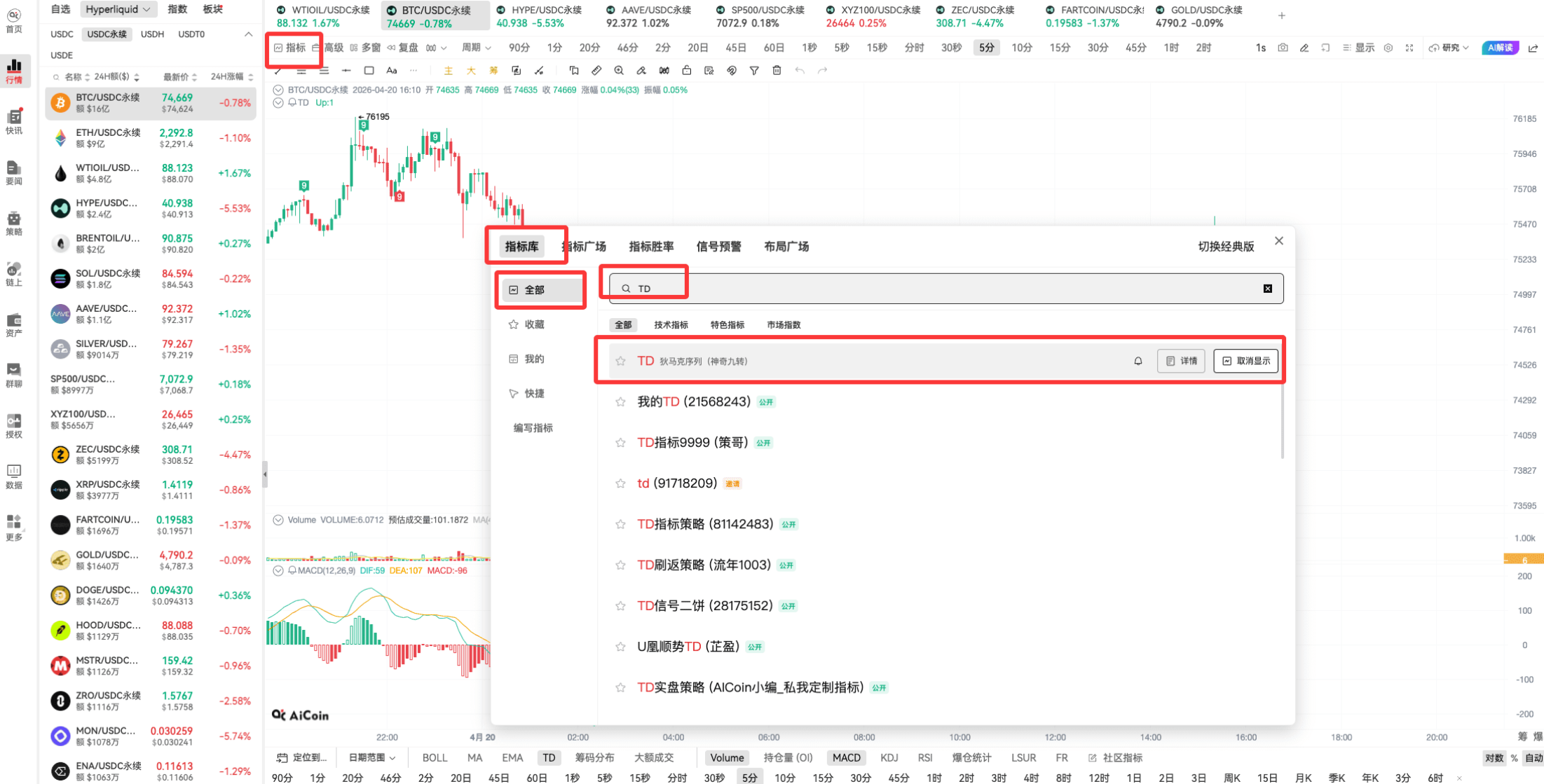
Theoretical definitions are too dry, so let’s directly look at the practical forms. You can, like me, bring up this indicator on the PC client, searching for and loading it onto the candlestick interface.
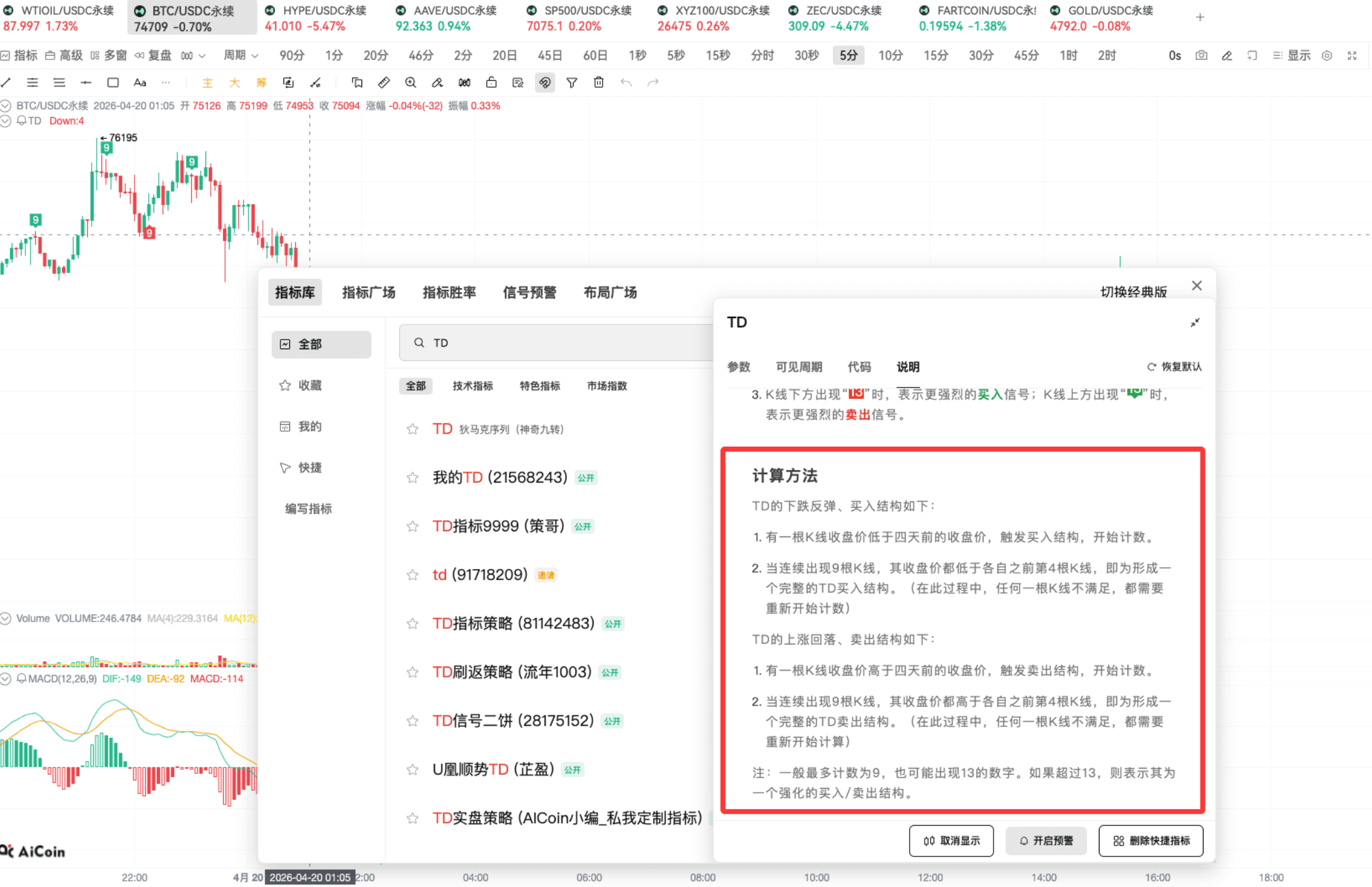
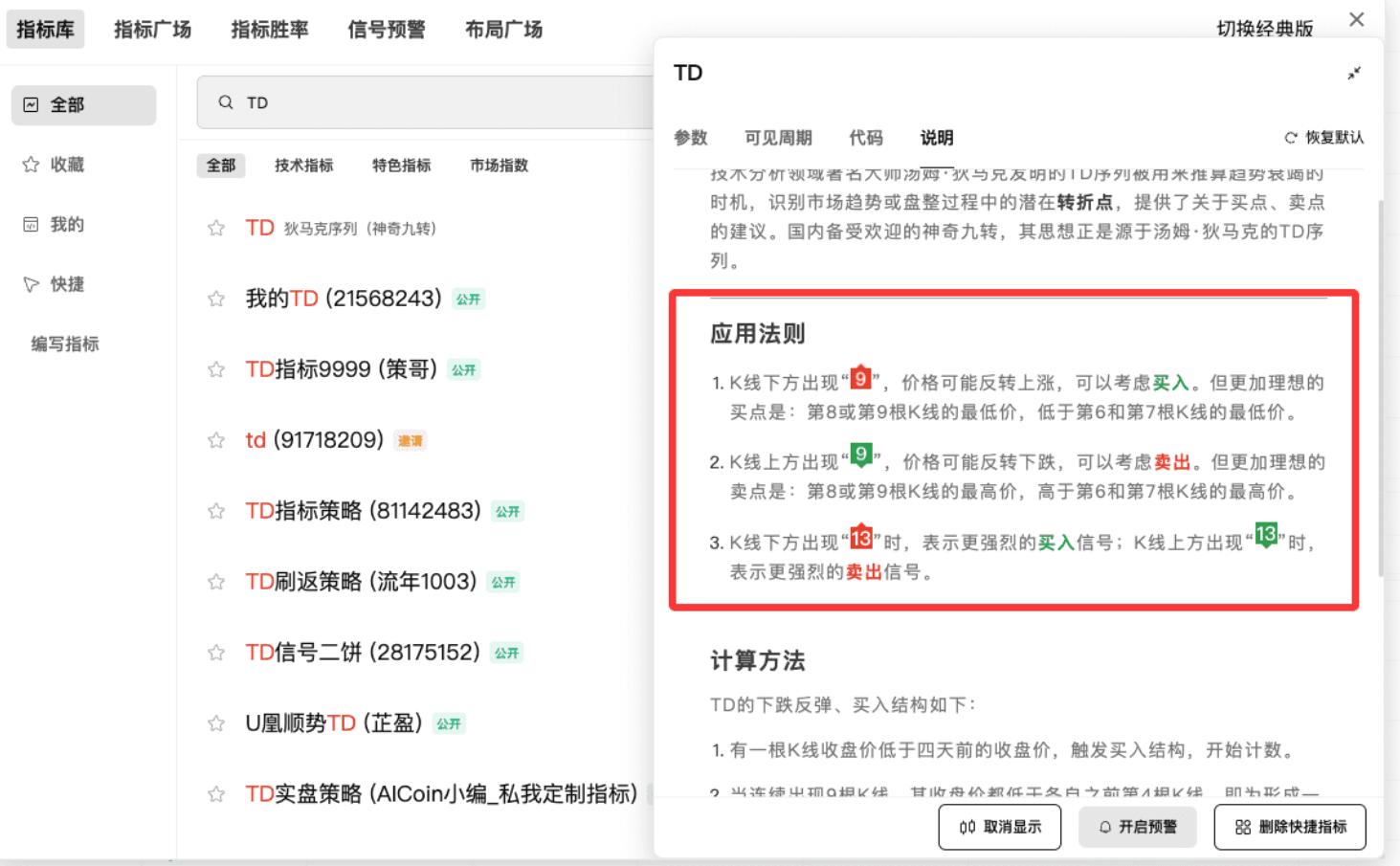
You do not need to memorize the complex calculation logic; the core logic can be summarized in one sentence: when prices decline continuously to a critical value, they will rebound; when prices rise continuously to a high point, they will retreat. The key to identifying this critical point is seeing 9 turns. In extreme market conditions, it extends to 13 before reversing.
The TD indicator is a standard left-side trading tool that allows for early bottom-fishing and betting on market bottoms during the downward process, combining practicality and sensitivity. Beginners just need to remember the core rule: turn upon seeing 9.
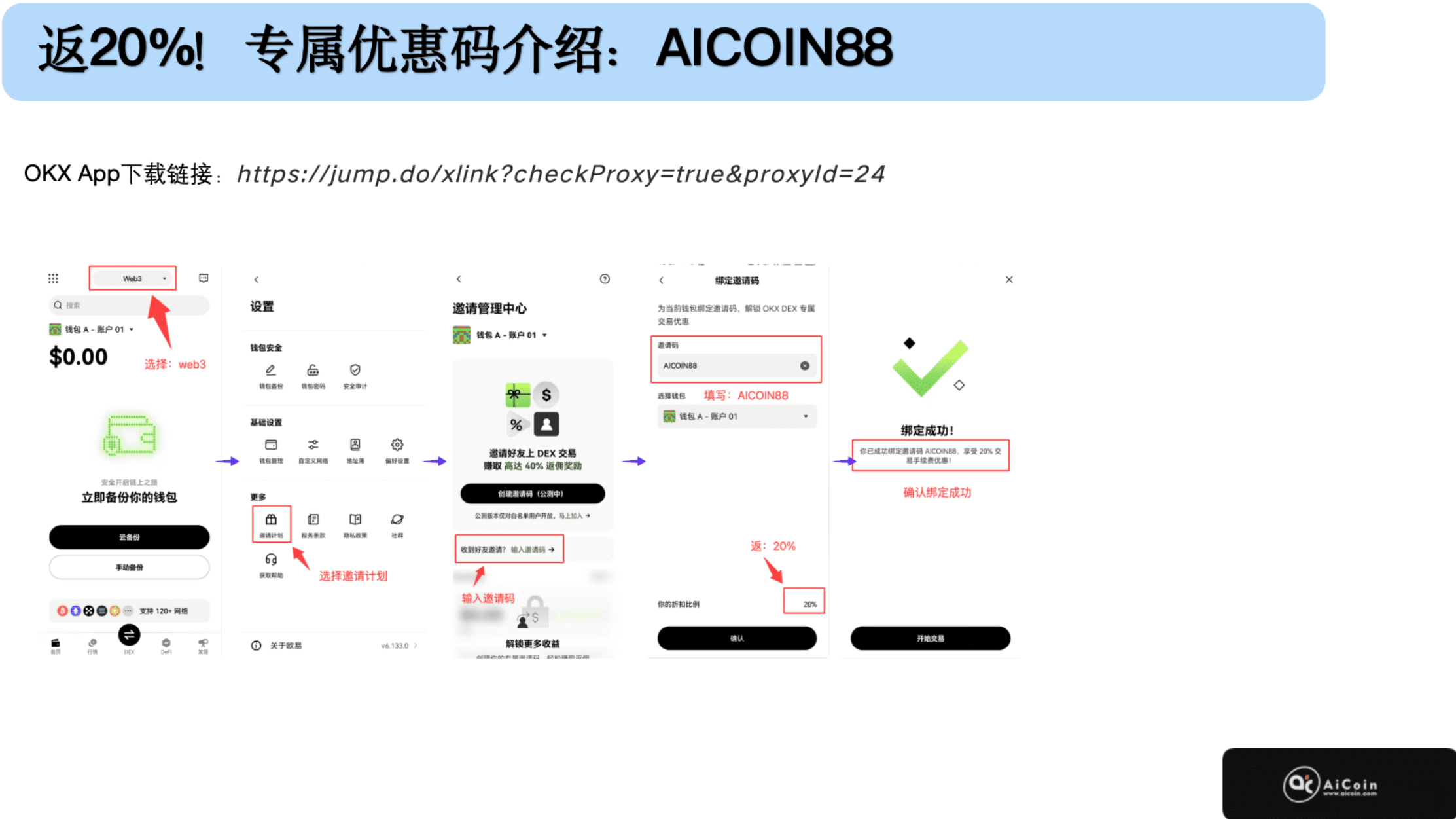
Invitation code: AICOIN88 Invitation link: https://web3.okx.com/ul/joindex?ref=AICOIN88
There are many methods for analyzing support and resistance. After activating a PRO membership, the distribution of chips can accurately locate support and resistance levels, while major orders can intuitively reflect the strength and weakness of the market, and I will teach each one sequentially; Fibonacci is also included in the research institute's live streaming plan to ensure everyone masters diverse investment techniques.
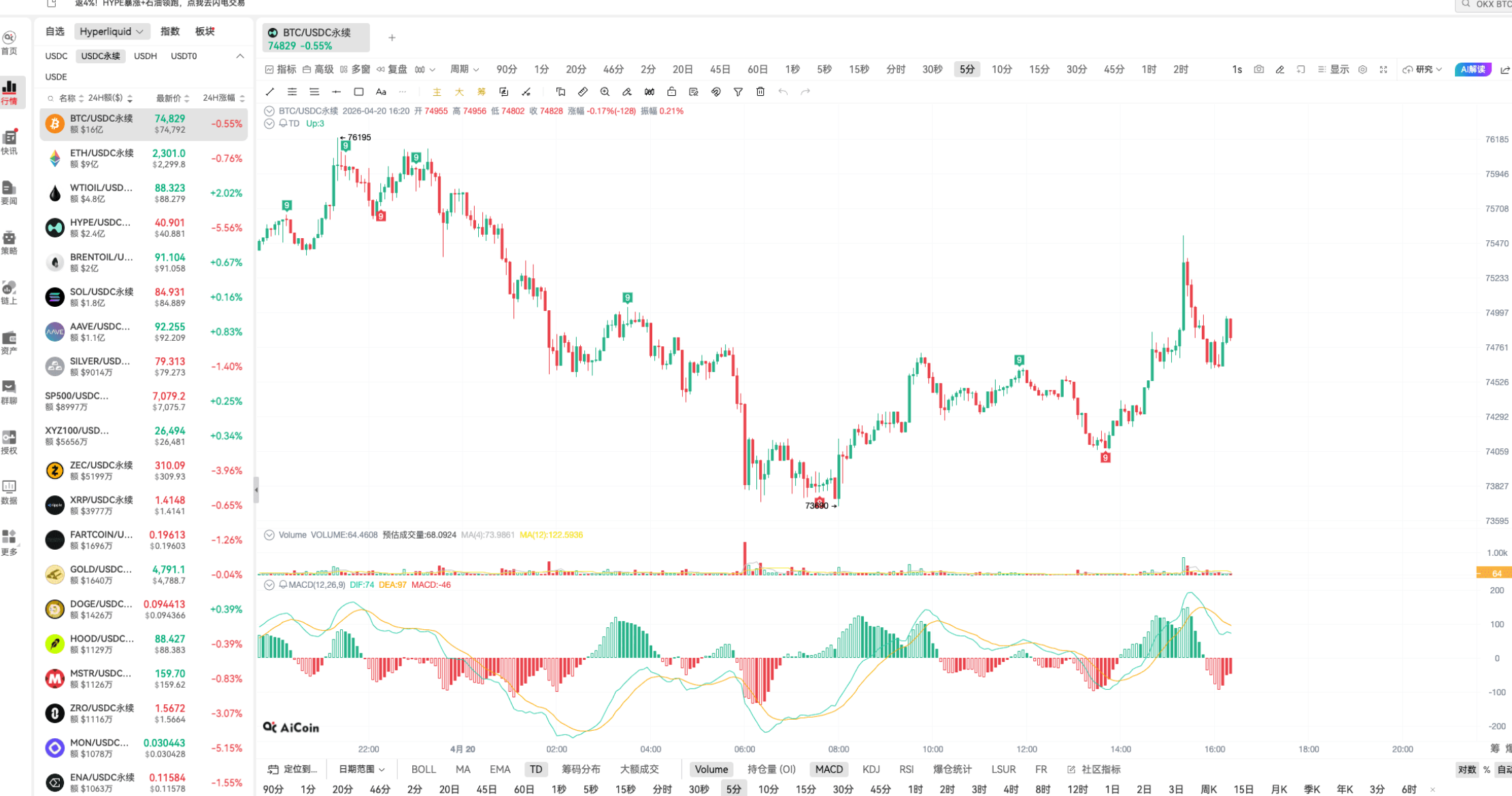
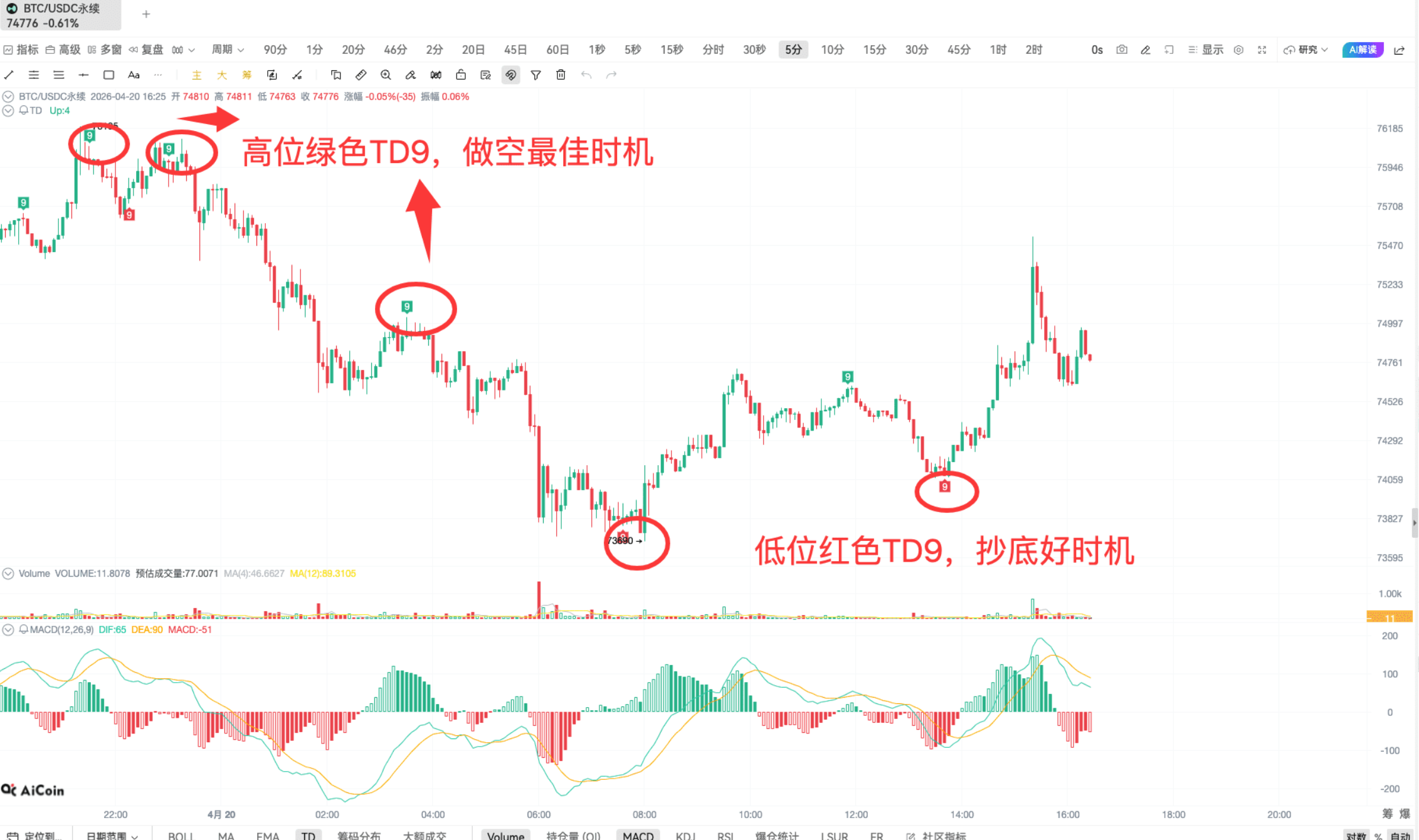
Next, I will explain in conjunction with practical candlestick examples, taking the BTC perpetual contract on the Hyperliquid platform with a 5-minute cycle as an example, and the core usage to memorize directly:
- When red TD9 appears → bottom-fish to go long
- When green TD9 appears → top-exit to go short
Just looking at BTC's trend, it is clear that the TD9 signals almost all align with the highs and lows of the market. In a crash, those wanting to bottom-fish may fear getting caught halfway up; waiting for the TD9 signal to enter can significantly increase the success rate, and after entering, there is a high probability of quick profits, avoiding the anxiety of prolonged floating losses.
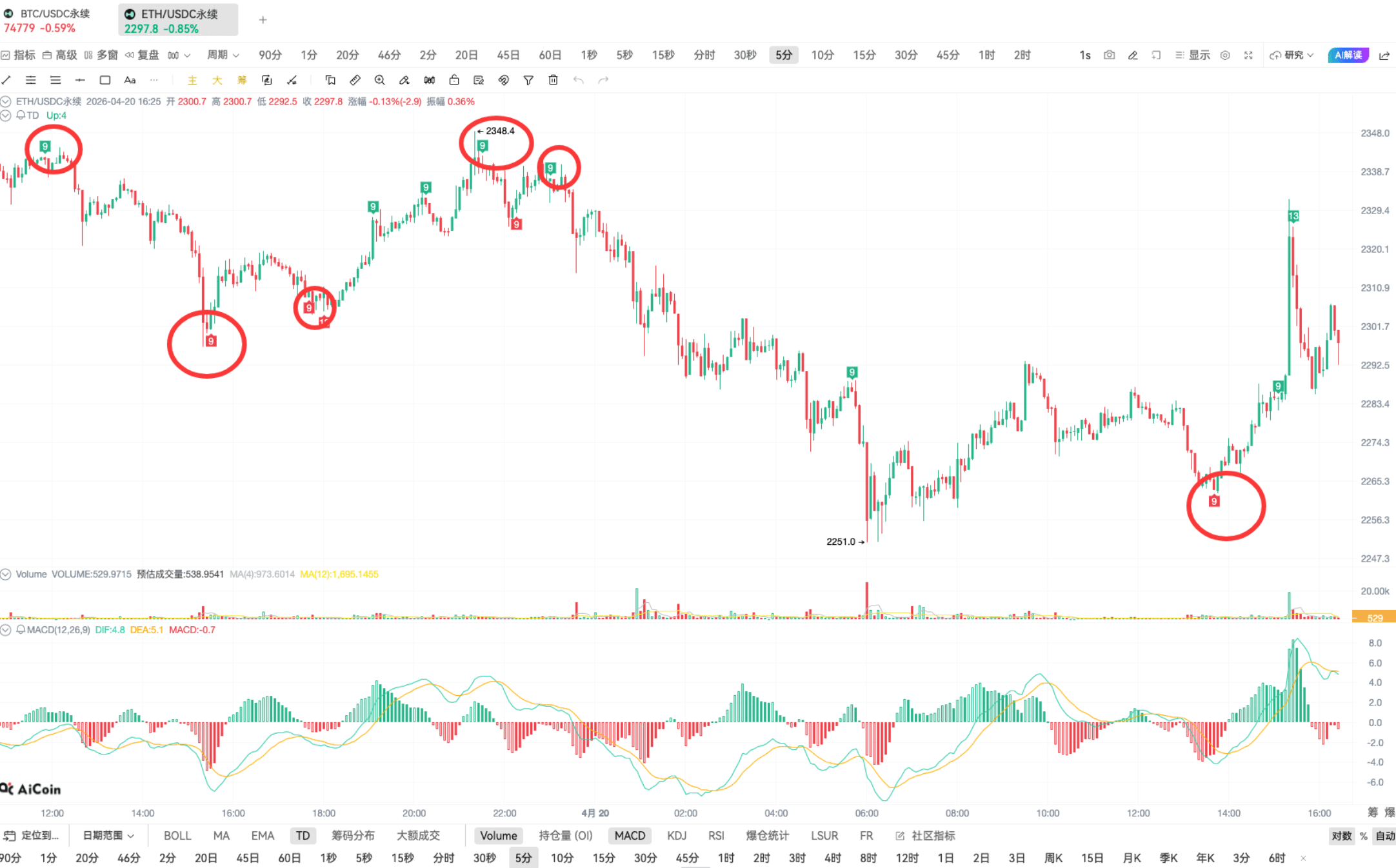
This universal algorithm is not only applicable to BTC; the practical success rate for ETH is also very high. Bottom-fishing with low red TD9 and shorting with high green TD9 leads to full signal validity.
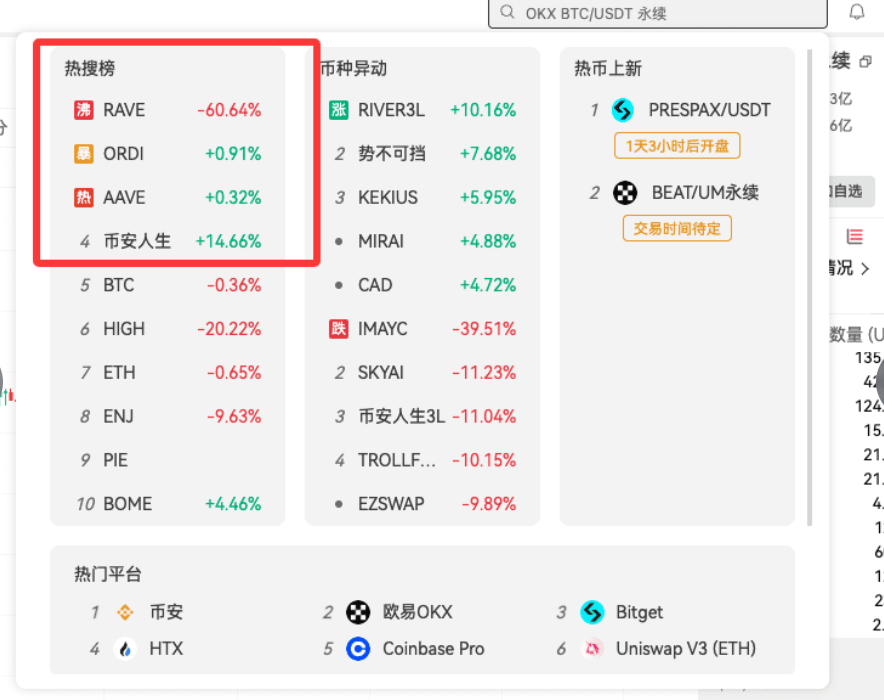
Altcoins are also applicable. We see the top four coins on the trending searches. Extending the cycle to look at the overall trend, expanding the sideways range reveals dense TD signals (figure 12), with low red TD9 and high green TD9, perfectly achieving high selling and low buying in volatile markets.
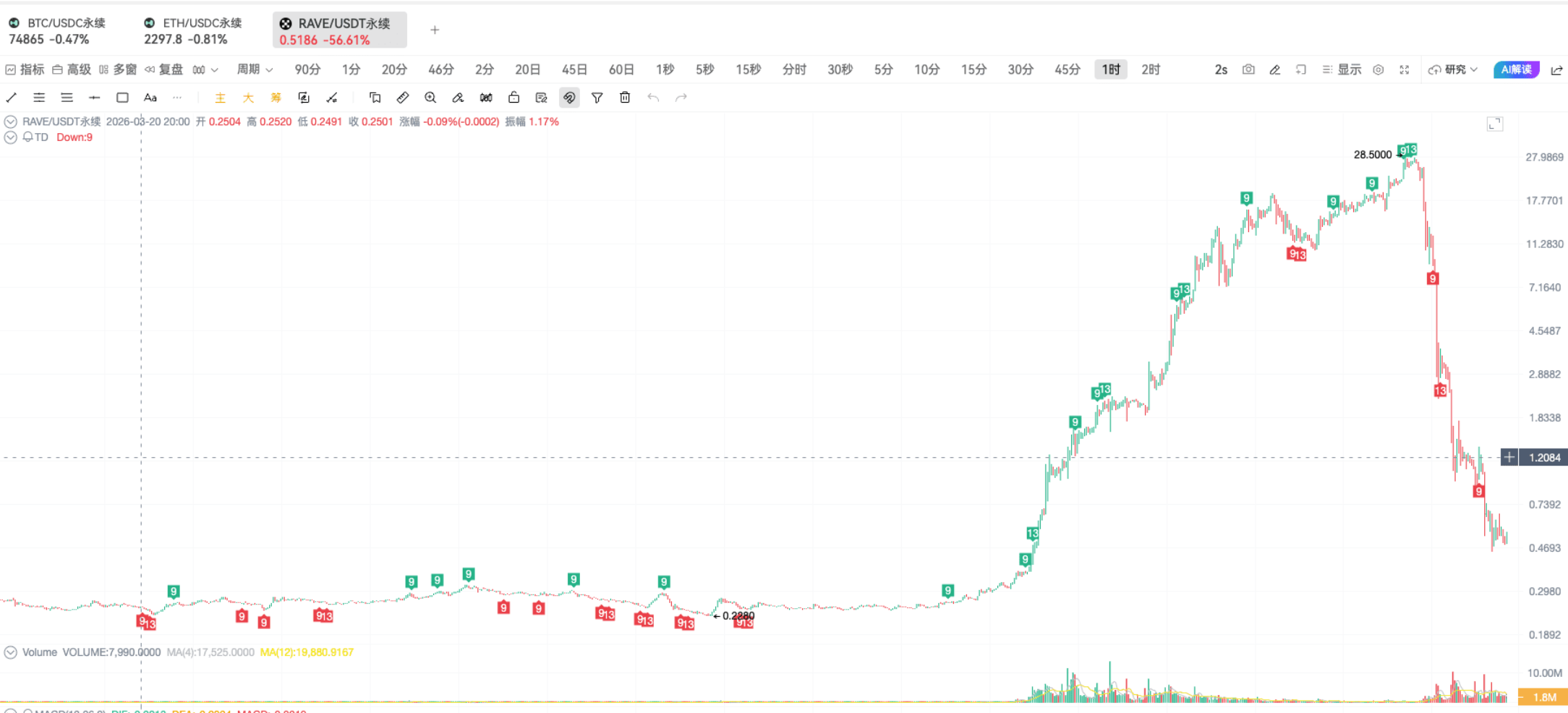
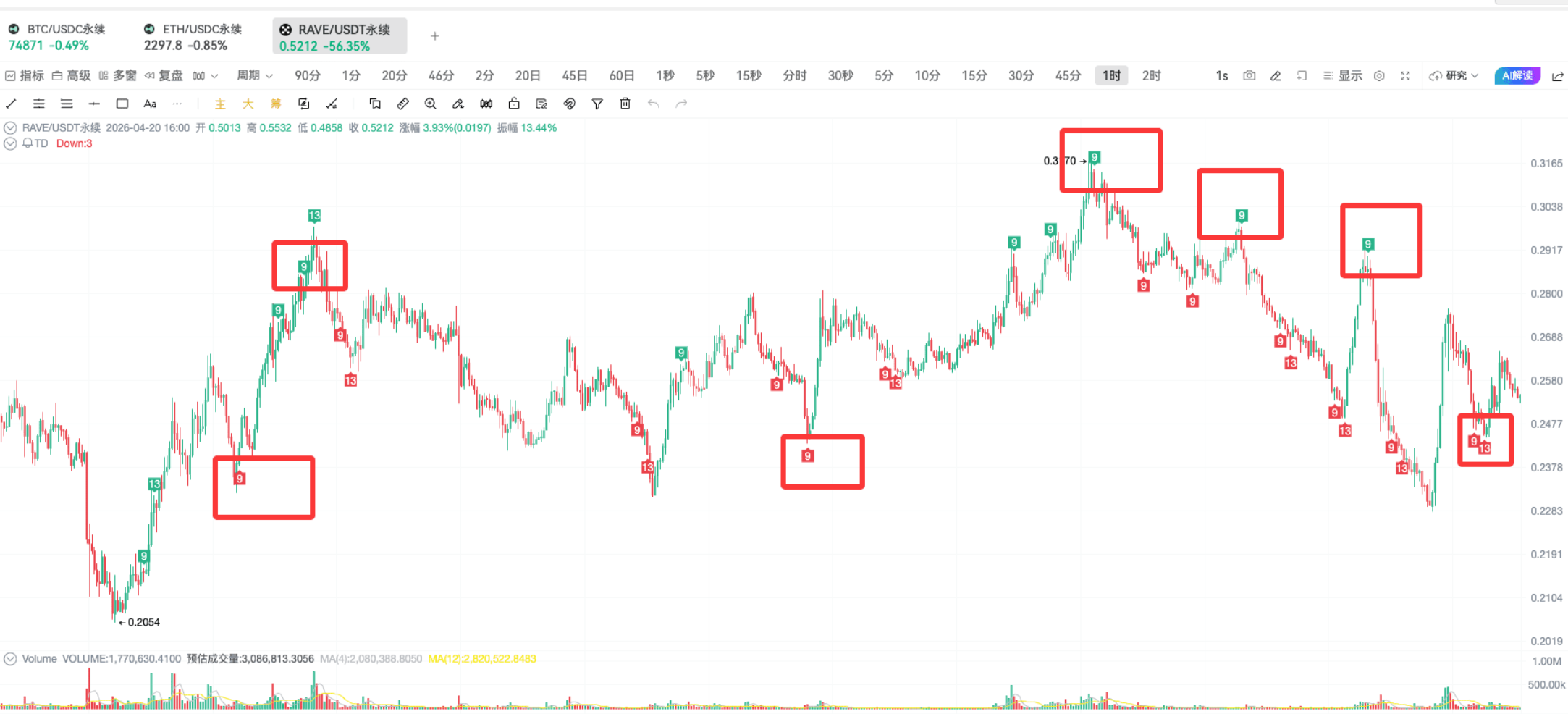
However, in a one-sided upward market, sell signals TD9 will continue to appear, which is the core shortcoming of the TD indicator: it is easy to sell out in a one-sided market, but it can effectively avoid the risk of aggressive dumping by market makers.
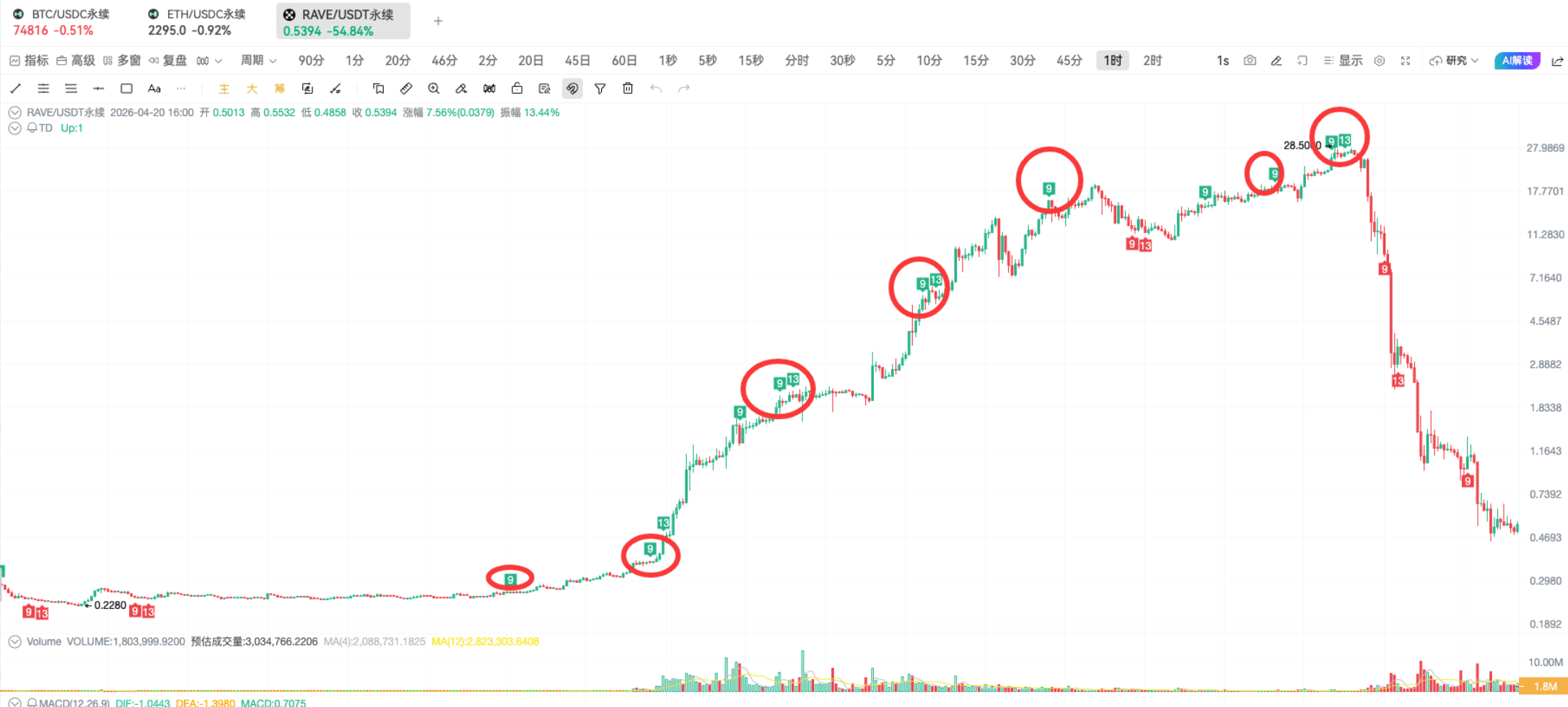
In summary, the TD indicator is more suitable for bottom-fishing and top-exiting as well as high selling and low buying in volatile markets.
In response to everyone's questions, the research institute's practical experience summary: TD13 corresponds to extreme markets, TD9 is an opening signal, and TD13 can serve as an adding signal. The process from 9 to 13 will face floating losses, and when 13 appears, it indicates that the market has entered an extreme one-sided condition. By adding positions, it can dilute costs, making it easier to break even and profit.
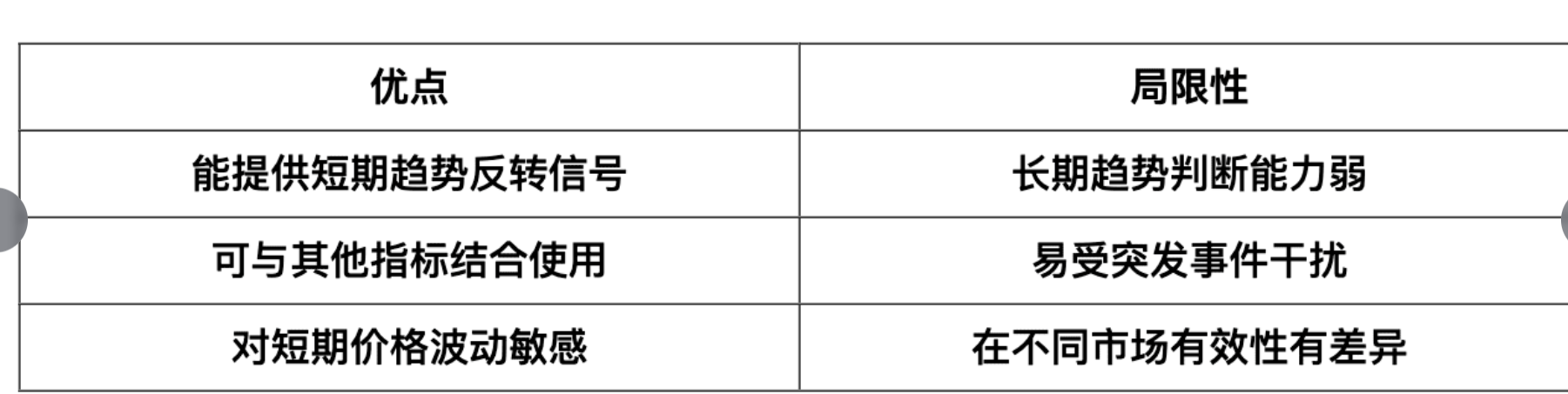
At the same time, it must be remembered: TD is a short-term indicator and is not suitable for long-term trading in large cycles. It is recommended for short-term operations on periods below one hour.
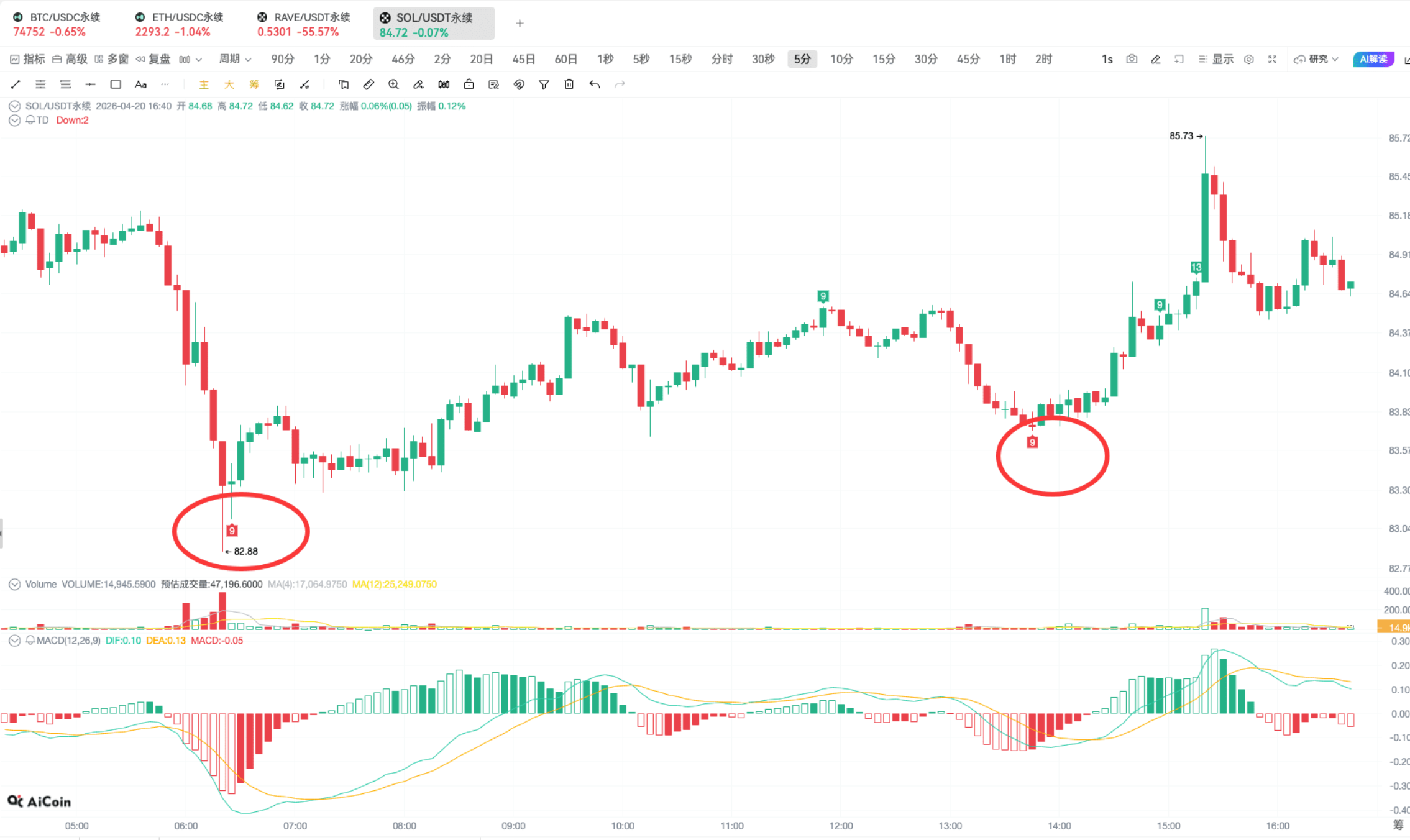
Now looking at the trend of SOL, the recent red TD9 signals are still performing well. Even in a bear market, by relying on the TD indicator to control the trading rhythm, one can proceed steadily without blindly investing in fixed cycles without timing, but instead enter the market based on the TD reversal principle. This logic applies to various assets including US stocks and cryptocurrencies.
I will next share an advanced strategy: using TD indicator + Fibonacci in combination to further enhance the trading success rate, precisely locking in entry and exit points, eliminating issues of hesitation in placing orders and anxiety concerning holdings.
Using the BTC 5-minute candlestick as an example, overlaying the Fibonacci retracement lines, when the 0.618 support level appears with a red TD9, it is a reliable entry point; if the 0.382 or 0.5 support levels show a red TD9, subsequent upward momentum will be even stronger.
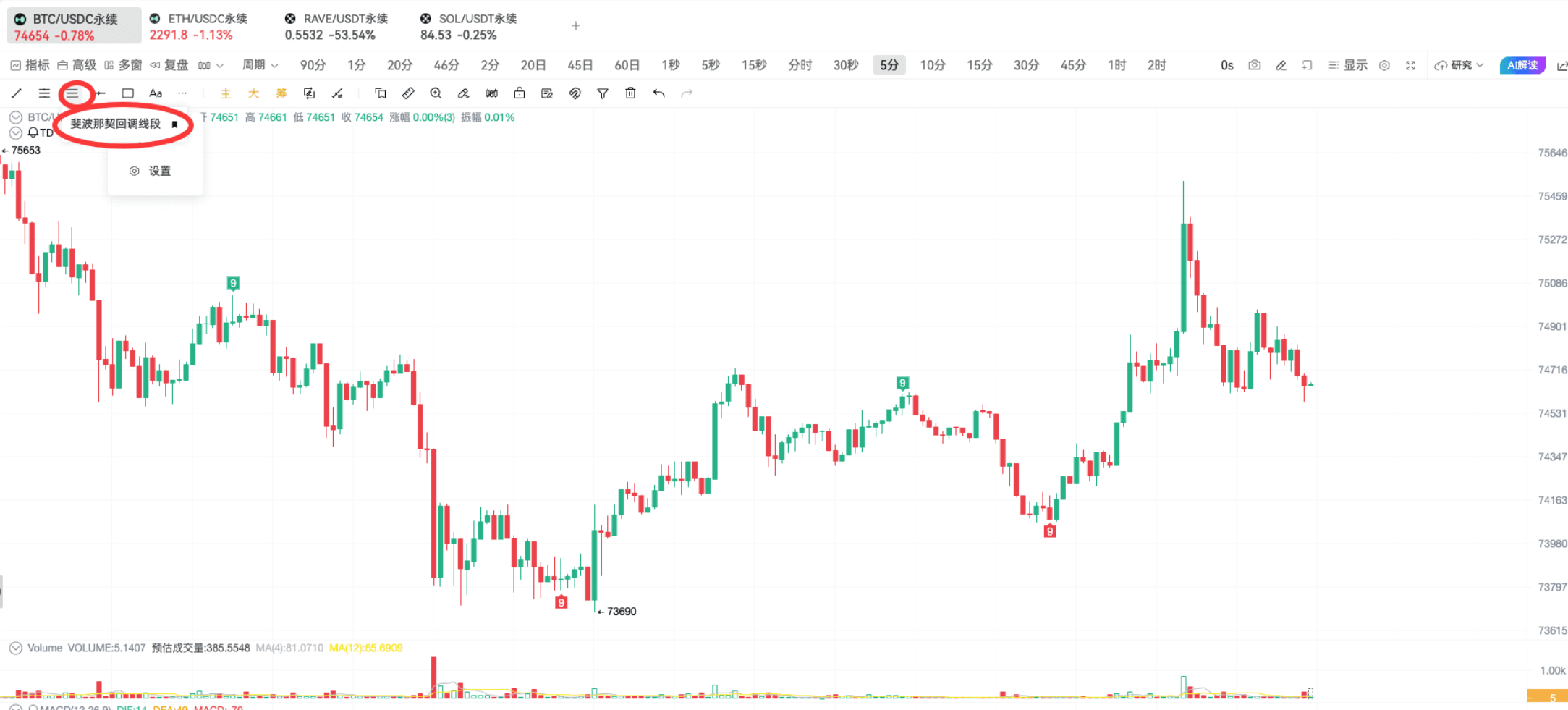
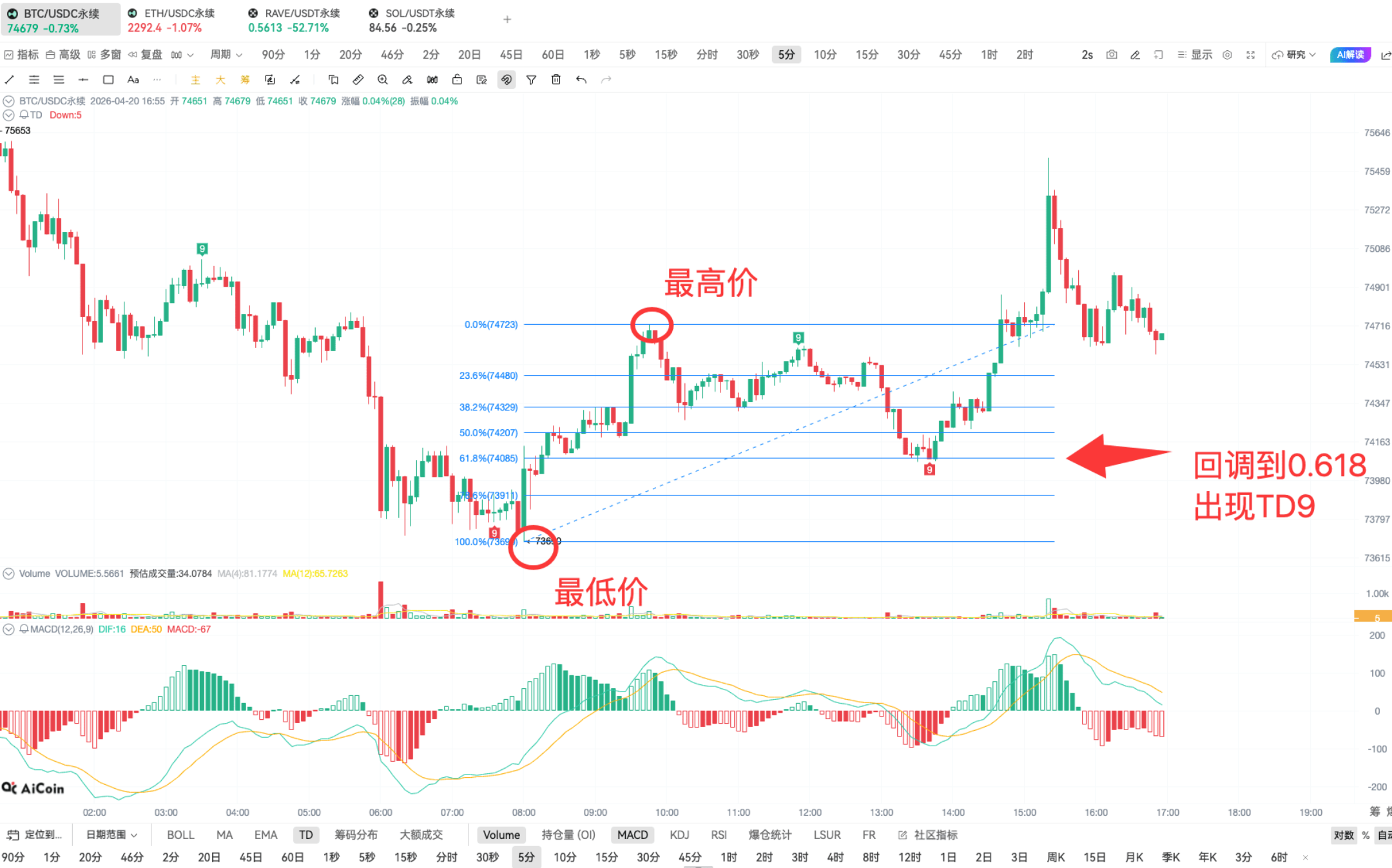
After the market rises, readjust the Fibonacci segment, focusing on three key support levels. Once a red TD9 appears, it represents a high-quality opportunity for the next bottom-fishing.
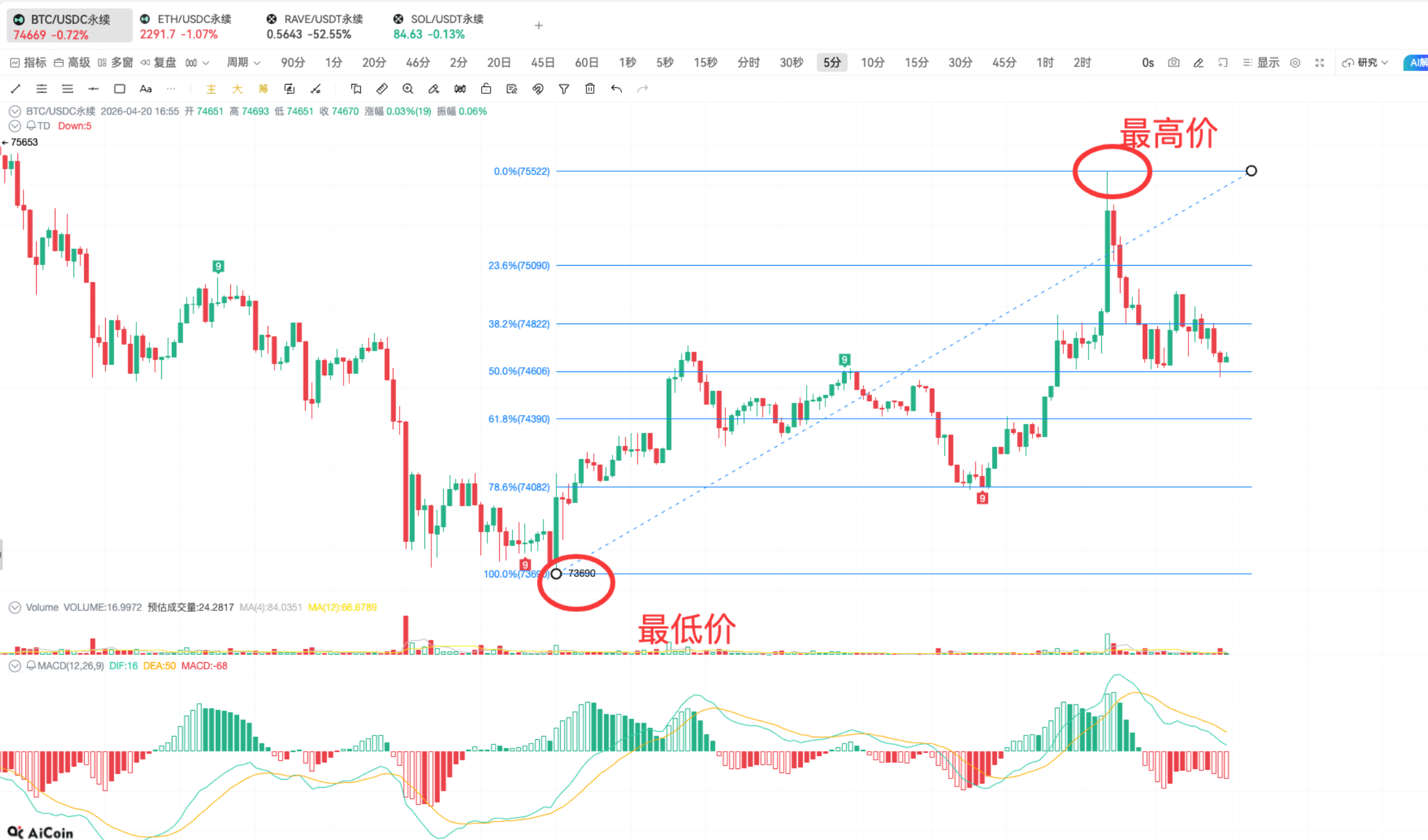
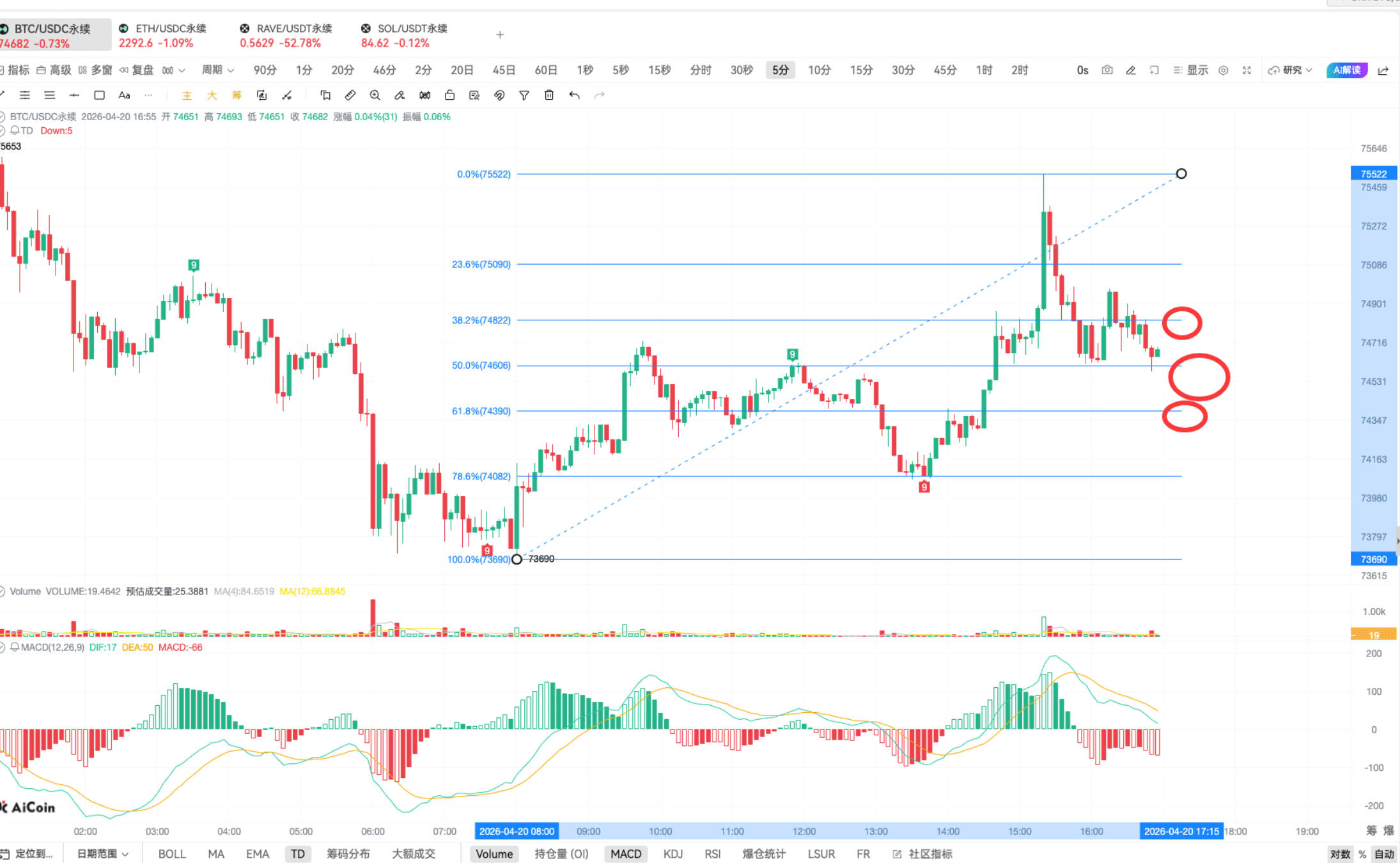
Zooming in on the current K-line shows that the latest value has reached TD6; just wait for the signal to be realized.
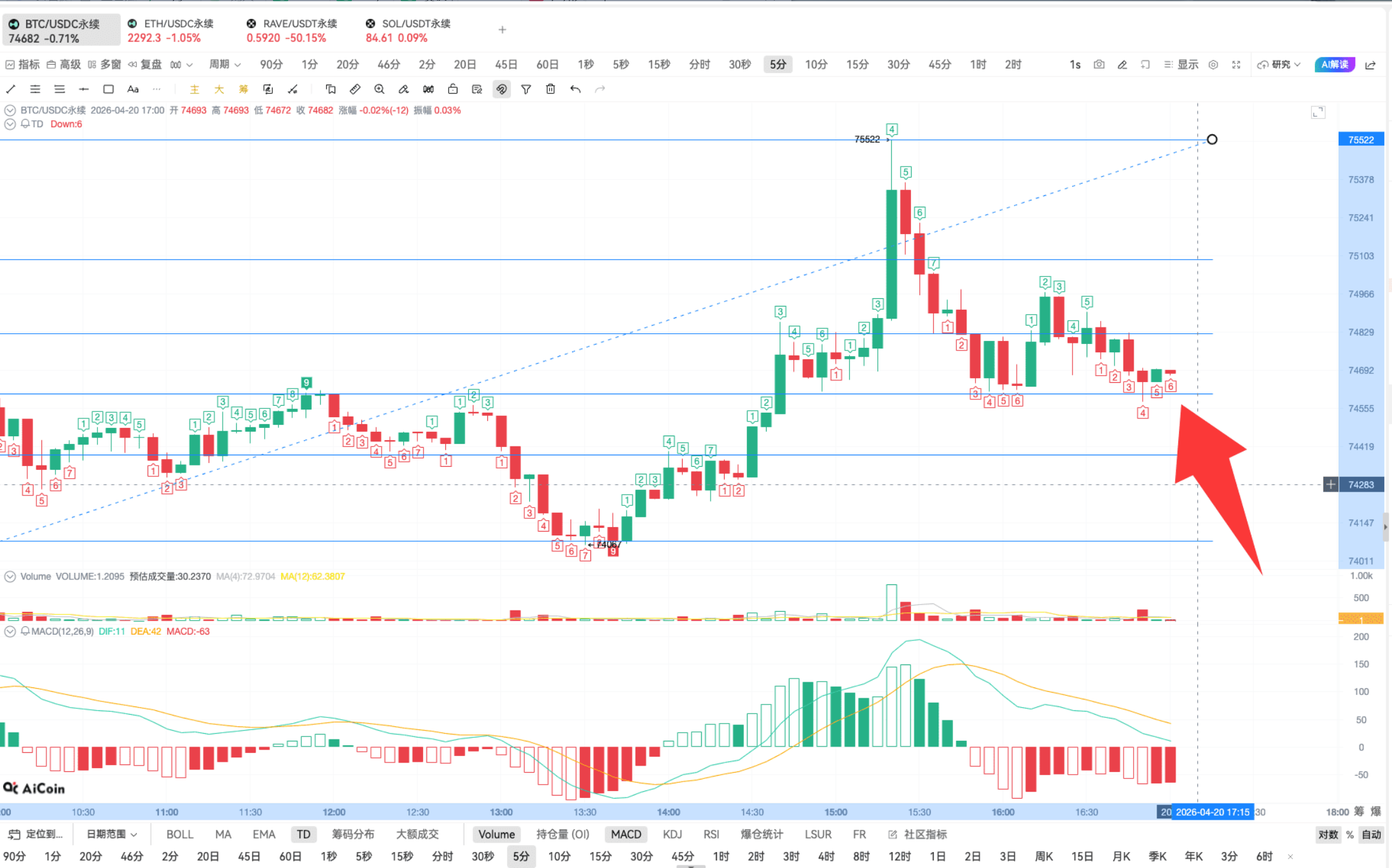
Finally, I will emphasize the core point again: the TD indicator is only suitable for assisting in entry and exit but cannot be used for trend judgment, primarily focusing on short-term trading, which is a principle that must be remembered when using it. I hope everyone can skillfully use this set of indicators to accurately bottom-fish and top-exit, seizing on-chain trading opportunities.
This article only represents the author's personal views and does not represent the platform's position and views. This article is for information sharing only and does not constitute any investment advice to anyone.
免责声明:本文章仅代表作者个人观点,不代表本平台的立场和观点。本文章仅供信息分享,不构成对任何人的任何投资建议。用户与作者之间的任何争议,与本平台无关。如网页中刊载的文章或图片涉及侵权,请提供相关的权利证明和身份证明发送邮件到support@aicoin.com,本平台相关工作人员将会进行核查。