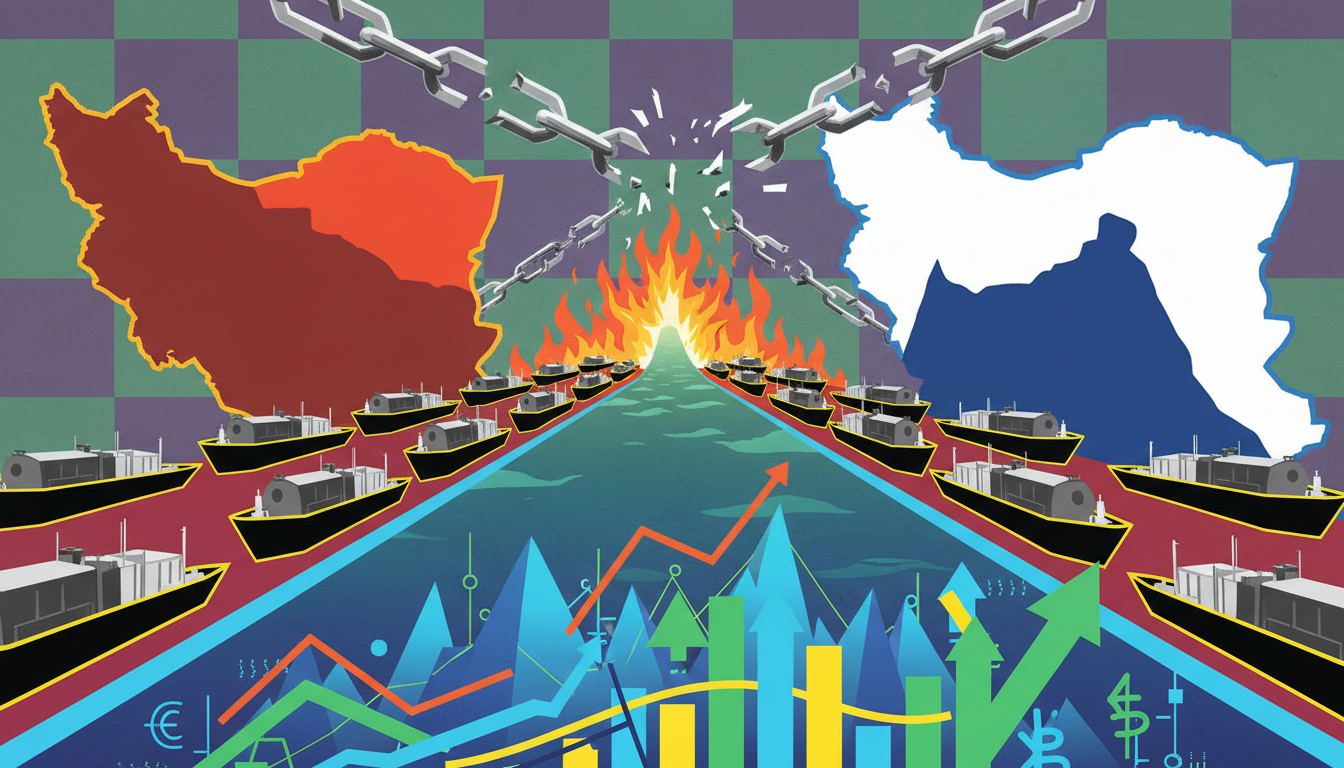
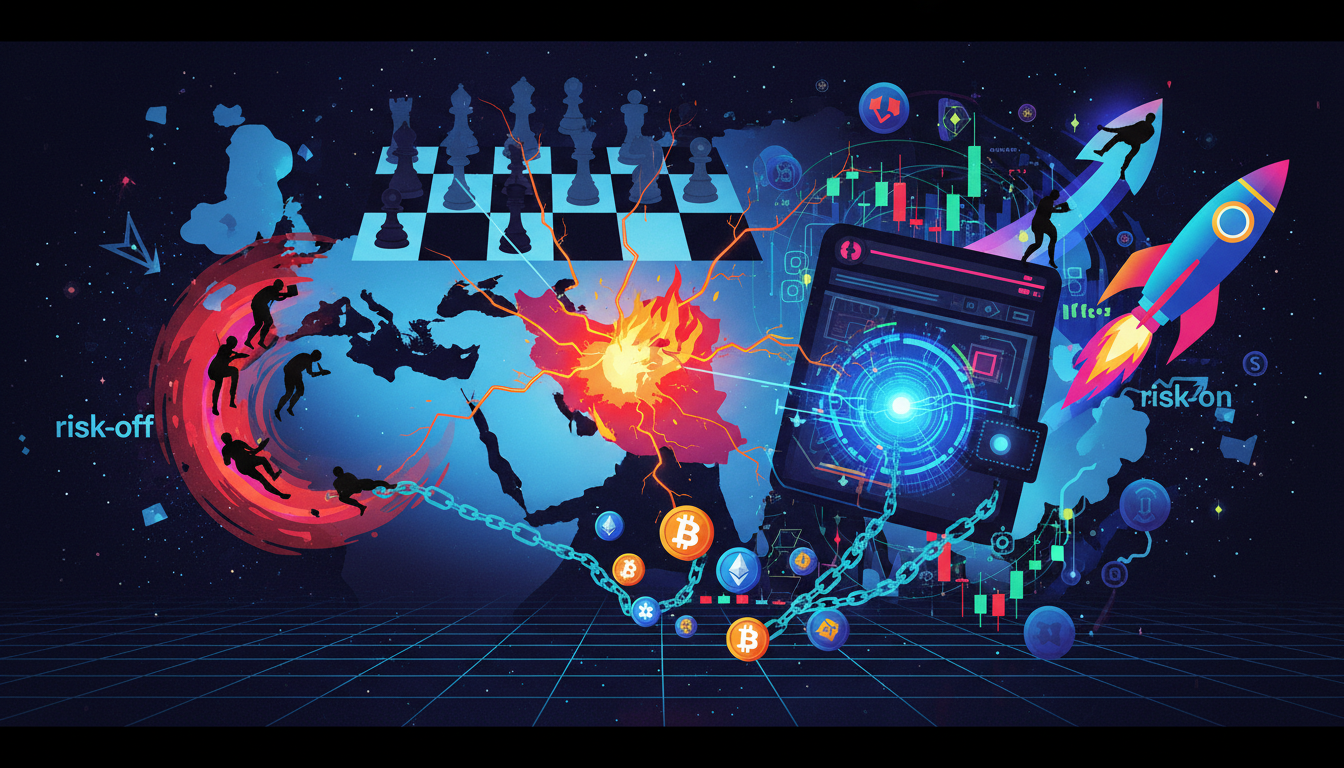
On April 18, Iran's Tasnim News Agency publicly denied agreeing to a new round of negotiations with the United States, a statement that sharply contrasts with the optimistic signals previously released by Trump suggesting “negotiation representatives may meet over the weekend” and “an agreement is imminent.” With the situation in the Middle East remaining tense and market sensitivities heightened, investors are reevaluating the correlation paths between oil prices, stock markets, and risk assets including Bitcoin. Meanwhile, the official data of Bitget's first project preSPAX in its IPO Prime phase reports a subscription of 4,633 people and a subscription amount exceeding 70,061,640 USD, providing a quantifiable insight into how geopolitical tension influences risk appetite across the Middle East and global funds through the crypto market.
Iran's Public Denial of Negotiation Commitment Triggers Expectation Reversal
On April 18, Iran's Tasnim News Agency published an article explicitly denying that Iran had agreed to begin the next round of negotiations with the United States. This wording did not reveal any agenda details but formally denied the interpretation that “the negotiations were all set,” drawing external expectations of US-Iran détente back into the reality of a tug-of-war. Considering this is the most authoritative denial signal from Iran so far, it directly disrupts the market's technical optimism regarding “the tensions naturally cooling in the short term.”
In contrast, Trump had previously issued several positive statements, claiming that US negotiation representatives might meet over the weekend and expressing an optimistic assessment that “an agreement is imminent.” Even though external parties could not ascertain the specific timeline or sources of internal intelligence, this optimism from American political figures was internalized by some market participants in a short time as a trading premise of “Middle Eastern risks being manageable.” Now, Iran's official media is providing directly opposing information, not only breaking this premise but also making the market aware of the fragility of unilateral political statements.
Amidst this conflicting rhetoric, geopolitical uncertainty is amplified again. Some funds are beginning to reassess the potential tail risks of escalation in the Middle East, which leads to a rise in risk-averse sentiment. For oil prices, gold, and crypto assets highly correlated with macro liquidity, such expectation reversals are often first reflected in heightened volatility—investors are simultaneously worried that escalating conflicts will increase energy costs and inflation, while also observing that under "black swan cover," funds could surge into hedging and speculative targets, thereby creating more severe short-term fluctuations in prices.
Oil Field Export Resumption and the Counterbalance and Amplification of Iraq's Role
Alongside the tense signals from Iran, the Iraqi side has released another key variable. The Iraqi National News Agency reported that it will resume exports from all oil fields. In the context of rising geopolitical risks, this statement hedges some market concerns over shortages of crude oil from the supply side, and is interpreted as Iraq attempting to rebalance the dynamics between price and output, thereby strengthening its role in the energy landscape. For pricing mechanisms, this implies that the tug-of-war between Middle Eastern risk premiums and production recovery will become more complex.
The resumption of exports from Iraq has a dual effect on oil prices. On one hand, from a supply logic standpoint, more crude oil flowing to the market theoretically alleviates supply anxiety caused by Iranian-related risks and potential transportation safety issues, exerting some pressure on crude oil prices or at least curbing their unilateral upward momentum. On the other hand, the market may interpret this as a pragmatic action of "increasing exports while prices are high"—in a context of overall high risk appetite, the new supply could instead be viewed as evidence that "high oil prices will last longer," amplifying price volatility from an expectation standpoint.
The fluctuations in energy prices will transmit through inflation and risk appetite chains to the pricing of crypto assets. High oil prices imply rising costs for businesses and living expenses for residents, compressing the valuation space of traditional financial assets, while also prompting central banks to adopt a more cautious stance on monetary policy, further influencing market assessments of the liquidity environment. For Bitcoin and major coins, rising inflation expectations often reinforce their “fiat currency hedge” narrative, attracting some funds into them; yet simultaneously, high-interest rates and a high-uncertainty environment may suppress risk appetite, leading to a rebalancing of crypto's share in overall asset allocation, resulting in more frequent repricing and severe shifts in market conditions.
Rebalancing of Middle Eastern Funds Between Risk and Safety
For a long time, Middle Eastern funds have exhibited a relatively clear preference structure in global asset allocation: centered on the region's most advantageous oil resources, locking in cash flows through holding assets related to the energy industry chain; at the same time, heavily invested in gold, certain USD-denominated assets, and quality overseas equities, forming a sovereign and family capital portfolio that balances yield with hedging functions. Within this framework, crypto assets occupy a more marginal experimental and structured allocation position rather than being at the absolute core.
The uncertainty surrounding the prospects of negotiations between Iran and the United States is quietly altering the internal weights of these preferences. Once the market perceives that “the political resolution path” is not smooth, some institutions and high-net-worth funds in the Middle East will need to redraw lines between "continuing to bet on traditional energy and the dollar system" and "moderately hedging geopolitical and sanction risks through decentralized assets." Iran's denial of the negotiation commitment exacerbates external concerns over the continuation of sanctions and the spillover of conflicts, and this psychological pressure will intensify some funds' interest in tools like gold and certain digital assets that are "weakly correlated with a single sovereign credit."
In the context of both Iraq and Iran, the two major oil-producing countries simultaneously releasing different signals, the logic of regional and global fund redistribution between energy stocks and crypto assets has also become more nuanced. On one hand, Iraq's restoration of exports will attract traditional funds that prefer cash flow and dividends to continue increasing their positions in energy companies and related bonds; on the other hand, for funds that are more concerned with tail scenarios and institutional risks, Bitcoin and its derivative assets are viewed as "the greater the political noise, the higher the hedging value." In the multiple games involving oil prices, exchange rates, and liquidity expectations, the oscillation of Middle Eastern funds between risk and safety is becoming partially visible through on-chain and exchange data.
Risk Appetite Reflected in Bitget's preSPAX Subscription Data
Official data released by Bitget shows that its IPO Prime first project preSPAX received 4,633 subscriptions, with total subscription amounts exceeding 70,061,640 USD. In the current macro environment of geopolitical tension and fluctuations in energy prices, such a scale of participation and capital volume is not only a successful case of a single platform product marketing but also serves as evidence that global (including the Middle East) investors still maintain considerable interest in high volatility and highly elastic crypto assets.
In a phase of frequent risk events and rising risk aversion sentiment, such a high level of subscriptions does not necessarily indicate "widespread optimism," but at least demonstrates that some funds are willing to proactively bear price volatility in exchange for potential excess returns amidst uncertainty. For investors in Middle Eastern and other resource-exporting economies, facing domestic budgets highly reliant on energy and a political and diplomatic outlook mixed with black swan risks, participating in such projects to diversify asset allocations and seize structural opportunities is becoming an increasingly common strategy.
From the exchange's perspective, projects like the preSPAX IPO Prime exhibit a significant leverage effect in attracting regional funds and amplifying derivative liquidity. On one hand, high-profile subscription activities can significantly boost the platform's active user count and capital retention in the short term, enhancing its brand penetration in key regions like the Middle East; on the other hand, the hedging, leverage, and arbitrage demands surrounding new projects will further increase trading volumes in futures, options, and other derivatives, allowing exchanges and early-positioned market makers and institutional users to earn richer commissions and spread revenues. In a cycle where geopolitical issues intensify asset reallocation, this model will accelerate the positive feedback loop between quality platforms and regional funds.
How the Crypto Market Prices the New Round of Middle Eastern Games
If we place Iran's denial of negotiations and Iraq's expected increase in supply on the same macro chart, we can see that the current crypto market is facing a dual variable with “risks of escalating geopolitical conflicts” and “signals of energy supply buffering.” The former enhances tail risks and demand for safety, while the latter somewhat curbs extreme concerns over “oil prices spiraling out of control.” This mismatch of information and intertwined narratives makes it easier for the market to exhibit divergent directional judgments in pricing, translating into high-frequency fluctuations in prices.
Looking back at previous rounds of Middle Eastern conflicts and drastic fluctuations in oil prices, Bitcoin and major coins often exhibit a typical path of "first responding to sentiment, then reverting to liquidity logic": at the onset of news, prices tend to show exaggerated risk-on spikes or panic sell-offs, followed by a tug-of-war as events unfold and the market reassesses global liquidity and policy paths, with price focus shifting from emotion-driven to the cost of funds and the structure of institutional holdings. This pattern is observable during historical nodes, such as the Iraq War and the escalation of conflicts in Syria, where short-term volatility is matched with medium-term returns to macro lines.
In this round of events, the uncertainty surrounding Iran's negotiations with the United States, combined with Iraq's signal of restored exports, may lead the crypto market to potentially reenact the scenario of “short-term risk-on spikes and medium-term volatility intensification.” On one hand, if subsequent news further leans toward conflict escalation or intensified sanctions, major coins like Bitcoin could experience a phase of high-volatility upward movements under the combined effects of risk narratives and derivative short squeezes; on the other hand, once geopolitical risks are proven to be merely “high noise, low ground,” funds may revert to core pricing driven by interest rates, inflation, and ETF fund flows, completing a new round of capital exchange and valuation reconstruction through frequent ups and downs over a longer time dimension.
Finding Tradeable Certainty in Uncertainty
In summary, Iran's denial of consent to a new round of negotiations, as expressed through Tasnim News Agency, combined with Iraq's National News Agency's claim of restoring all oil field exports, generates complex and intertwined impacts on oil prices and crypto asset sentiment. On one side are heightened geopolitical tensions and sanctions expectations, driving risk aversion and hedging demand; on the other side are new supplies and tangible interests that exert some pressure on the extreme movements of crude oil prices. This situation of “two forces pulling against each other” directly reflects in Bitcoin and other crypto assets as rising volatility and frequent switching of narrative focus.
It is essential to emphasize that the specific agendas and timelines for US-Iran negotiations remain lacking, and the optimistic statements from politicians like Trump are unlikely to provide quantifiable guidance on policy paths. In such a context of information asymmetry and high noise, if the market overly interprets isolated statements or short-term actions, it can easily make irrational decisions driven by emotion such as "chasing highs for safety" or "panic liquidations," amplifying account value fluctuations. For crypto investors, a more prudent approach is to return to verifiable data and sustainable logic, rather than betting on any party's verbal promises.
From the perspective of ongoing observation, the core and volatility ranges of energy prices, the cross-border flows of regional and sovereign funds, and the subscription data for IPO Prime and Launchpad projects from major exchanges like Bitget are key windows for understanding how this round of Middle Eastern games permeates crypto asset pricing. Only by identifying clear and sustained trend changes across these dimensions can the market shift from “passively following geopolitical news for short-term trades” to “actively utilizing structural discrepancies for positioning,” seeking a few tradeable certainties amidst uncertainty.
Join our community to discuss and grow stronger together!
Official Telegram community: https://t.me/aicoincn
AiCoin Chinese Twitter: https://x.com/AiCoinzh
OKX welfare group: https://aicoin.com/link/chat?cid=l61eM4owQ
Binance welfare group: https://aicoin.com/link/chat?cid=ynr7d1P6Z
免责声明:本文章仅代表作者个人观点,不代表本平台的立场和观点。本文章仅供信息分享,不构成对任何人的任何投资建议。用户与作者之间的任何争议,与本平台无关。如网页中刊载的文章或图片涉及侵权,请提供相关的权利证明和身份证明发送邮件到support@aicoin.com,本平台相关工作人员将会进行核查。