Original |Odaily Planet Daily(@OdailyChina)
Author|Golem(@web3_golem)
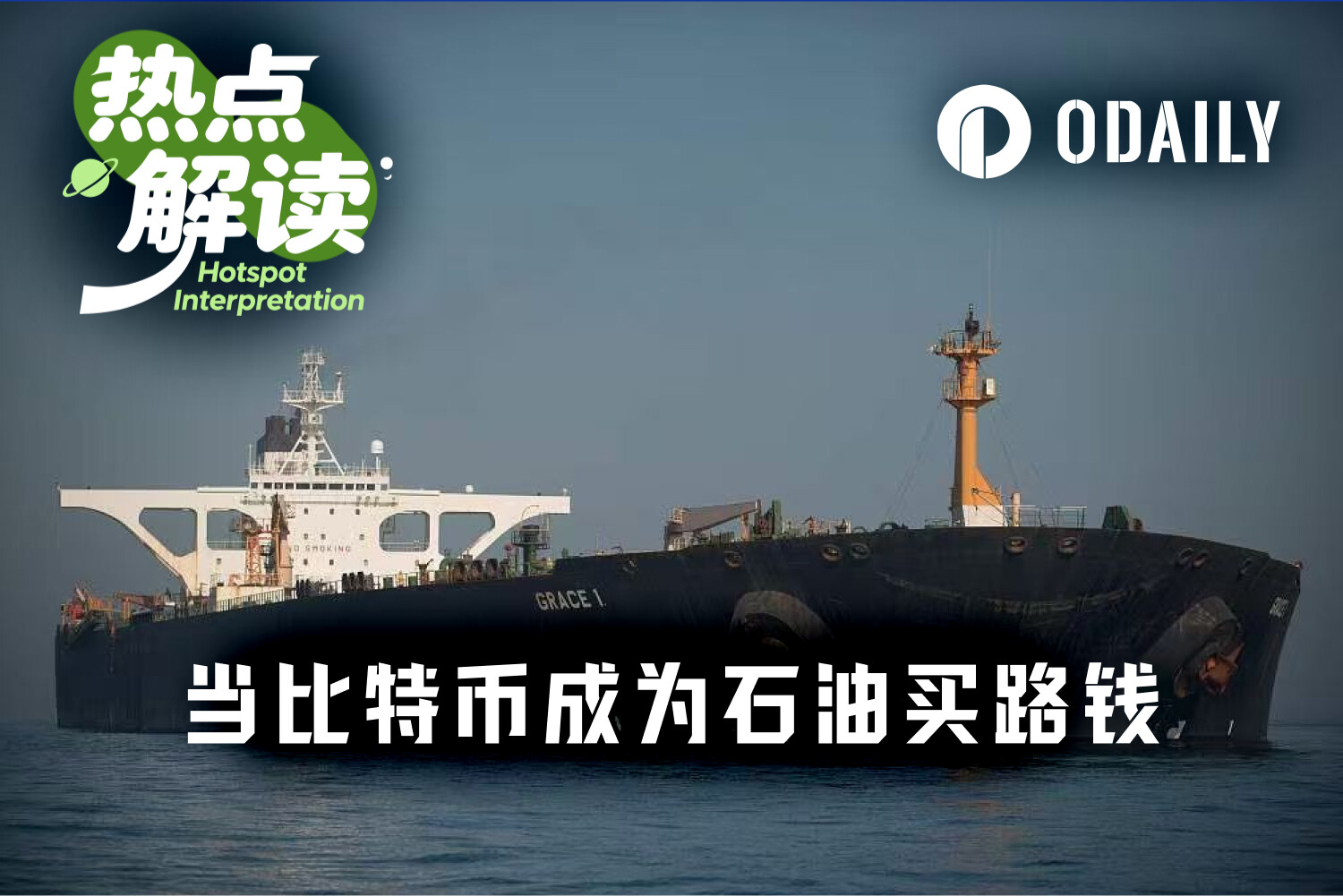
Some news, once released, can spark a flurry of thoughts, like this one from April 8—Iran plans to impose passage fees for tankers crossing the Strait of Hormuz during a two-week ceasefire, charging $1 per barrel, payable in Bitcoin.
The reaction from the crypto market was swift. When Iran announced it was ready to charge tanker passage fees in Bitcoin, the price of BTC temporarily surged to $73,000. Though Bitcoin's price has fallen back to around $70,000 today, for believers in Bitcoin, the symbolic meaning has long outweighed the “few points of increase”—Satoshi Nakamoto's vision of “electronic cash” for Bitcoin was triggered in an extreme scenario.
Extreme tools finally meet extreme scenarios
After Iran announced this news to the world, I imagined an extremely absurd yet incredibly real moment.
At the narrow blue throat in the Persian Gulf that controls over 20% of the world's crude oil supply, tankers queue up for passage. Above them are machine guns mounted on helicopters swirling around; nearby, Iranian warships are ready to fire at any non-compliant vessels. At this moment, a captain of a supertanker carrying 2 million barrels of crude oil stands on the deck, staring at the screen with the salty sea breeze in his face. He cannot hear the waves of the Persian Gulf; instead, he anxiously waits for a massive Bitcoin transaction to be “mined and packaged” by miners, a process that takes about 10 minutes. Only when these Bitcoins successfully arrive at the address of the Islamic Revolutionary Guard Corps can his ship pass safely.
When the most vital industrial blood of human civilization—oil—needs to be released by both the physical strait and the online Bitcoin network simultaneously, a certain dislocated sense of epicness brings a brain climax.
Over the years, a topic people love to debate is the actual use of Bitcoin. But regardless of the outcome of the debate, the oldest narrative of “peer-to-peer electronic cash” that first appeared in the Bitcoin whitepaper has been denied. Because Bitcoin not only has significant price volatility but also has exceptionally low settlement efficiency; not to mention it pales in comparison to traditional banking settlement systems. Even considering the costs and efficiency issues of cross-border payments, the first choice remains stablecoins, effectively excluding Bitcoin from payment use cases.
However, in extreme scenarios, traditional banking settlement systems and stablecoins become useless. What is an extreme scenario? It is when a country is kicked out of SWIFT, and its foreign exchange reserves in overseas banks turn into a series of numbers that can be seen but not touched, and even stablecoins can be frozen by the issuer. Iran is currently facing such an extreme scenario where, no matter how fast banking and stablecoin settlements are, they ultimately do not end up in Iran's pockets. (Odaily Note: Tether froze 42 addresses of Iran in 2025; in March 2026, Circle and Tether coordinated to freeze approximately $2.49 million in stablecoin assets related to the Iranian exchange Wallex.)
If you were Iran, facing a “global police” that can freeze all your foreign assets and cut off all your banking connections at any time, efficiency and volatility no longer matter; the right to settle autonomously becomes everything. Hamid Hosseini, spokesperson for the Iran Oil, Gas, and Petrochemical Exporters Union, made it very clear to a Financial Times reporter why Bitcoin was chosen as the settlement tool: the reason for using Bitcoin was to ensure that it cannot be traced or confiscated due to sanctions.
Hosseini's statement is only half true; the flow of Bitcoin can also be tracked on-chain. The U.S. has actually tracked and confiscated Bitcoin in multiple international cases. However, these actions are all post-event and require time, and due to the decentralized nature of the Bitcoin network, at least the U.S. government cannot track and prevent the transaction between Iran and the tanker at that moment. Achieving this is already enough for Iran.
This also proves that perhaps Bitcoin was never designed to serve “peaceful times”. When the world begins to fragment and trust collapses, this set of consensus based on mathematics and code becomes the last “financial reserve” for marginalized groups. The “dragon-slaying technique” written by Satoshi Nakamoto over the years found its use in the smoke of the Persian Gulf.
Collecting Bitcoin across the Gulf, is it just empty talk?
However, let's not rush to pop the champagne for Bitcoin; let us return to reality, the “optional” scenario of collecting Bitcoin across the Gulf might not actually happen. On the morning of April 9, just a day after Hosseini announced the collection of Bitcoin from passing tankers, the Strait of Hormuz was closed again. This naturally raises the suspicion: was Hosseini just talking empty rhetoric from the start?
Arthur Hayes expressed the same doubt, stating on X platform that he would only believe Iran is collecting passage fees in Bitcoin when he sees actual Bitcoin transaction records on the chain; otherwise, it is more likely to be a mockery of the Western financial system.
Even if we take a step back, if the Strait of Hormuz were not closed today, and the Iranian Islamic Revolutionary Guard Corps collected a ton of Bitcoin, they certainly wouldn't just leave it there; for purchasing food, medicine, and arms, Iran would ultimately need to sell that Bitcoin for fiat currency. But under the current OFAC sanctions against Iran, which global exchange or institution would dare to help Iran sell these Bitcoins? The U.S. may not catch you immediately, but the reckoning will come later.
So combining reality, Hosseini's statement is likely also a psychological tactic; it may not necessarily aim to collect Bitcoin but just to issue a strong warning to the U.S. The signal Iran wants to convey is that U.S. sanctions are ineffective, and in extreme scenarios, without relying on dollar settlements, SWIFT, or stablecoins, it could still roam freely in the international financial system.
Ultimately, many times, what matters in geopolitical statements is not whether they can be implemented but what signals they can send to the other side, what psychological pressure they can create, and what expectations they can alter; even if the matter does not come to fruition, it has already completed its communication task. For instance, on the eve of the U.S.-Iran announcement of a two-week ceasefire, Trump made an empty threat to wipe out Iranian civilization in one night, and had Trump not made such a strong threat, it's hard to say if the U.S. and Iran could have reached a ceasefire.
Thus, Bitcoin can play the role of an assassin in this game, or it can just be a smokescreen. As crypto supporters, there's no need to be overly disappointed; the correct attitude should be to neither over-speculate nor underestimate.
Because one thing is certain, Bitcoin has been firmly pulled into the “geopolitical arena.” When Bitcoin is wielded as a weapon and threat by sovereign states, it proves that it has not been forgotten.
This is enough to comfort the heart; the world is cooling down, but Bitcoin miners are heating up.
免责声明:本文章仅代表作者个人观点,不代表本平台的立场和观点。本文章仅供信息分享,不构成对任何人的任何投资建议。用户与作者之间的任何争议,与本平台无关。如网页中刊载的文章或图片涉及侵权,请提供相关的权利证明和身份证明发送邮件到support@aicoin.com,本平台相关工作人员将会进行核查。


