Original Title: "Death Markets" and Attack Ads: Prediction Rivalry Turns Nasty
Original Author: Yash Roy, Bloomberg
Original Translation: Saoirse, Foresight News

This is an advertisement placed by the U.S. prediction market platform Kalshi at a bus stop in Washington in March, with the slogan "We don’t engage in death markets," emphasizing its compliance under federal regulation to attack its competitor Polymarket's overseas unregulated operations and sensitive contracts related to military conflict. Photographer: Daniel Acker / Bloomberg
As competition in the prediction market industry heats up, coupled with intense regulatory scrutiny from Washington, Kalshi and Polymarket are throwing heavy accusations at each other and fiercely fighting back.
The two platforms have frequently clashed in the past, but recent tensions have escalated drastically—Kalshi has launched a highly targeted advertising campaign, and its employees have publicly criticized Polymarket, with both sides’ rhetoric intensifying.
Benjamin Freeman, who oversees the political and election market business at Kalshi, posted on social media on Monday: "Polymarket's irresponsible, dangerous, and possibly illegal actions are threatening the survival of legitimate prediction markets in the U.S."
This accusation quickly sparked intense mutual tearing between the two companies.
In a statement, Polymarket responded: "We welcome competition, but we believe discussions should be based on facts. Misleading the public only undermines the interests of the entire industry and its participants."
Kalshi spokesperson Elisabeth Diana fired back directly: "It's ridiculous to hear this from a company where the majority of trading volume is unregulated overseas, and the platform rules even allow for the existence of 'death markets'."
(Note: Death Markets refers to a term used in the prediction market industry for trading contracts that directly or indirectly bet on events related to human deaths, military conflicts, assassinations, and other life-related incidents, also known as "assassination markets.")
As this internal conflict broke out, it coincided with a critical period for Polymarket and Kalshi as they compete for the leading position in the rapidly growing prediction market industry. This industry has provided Americans with a new way to bet on various events, such as sports events and election outcomes. According to user-organized data from Dune Analytics, both startups have recently set new weekly trade volume records, with a combined nominal trading volume approaching $6 billion.
Prediction Market Trading Volume Reaches Billions
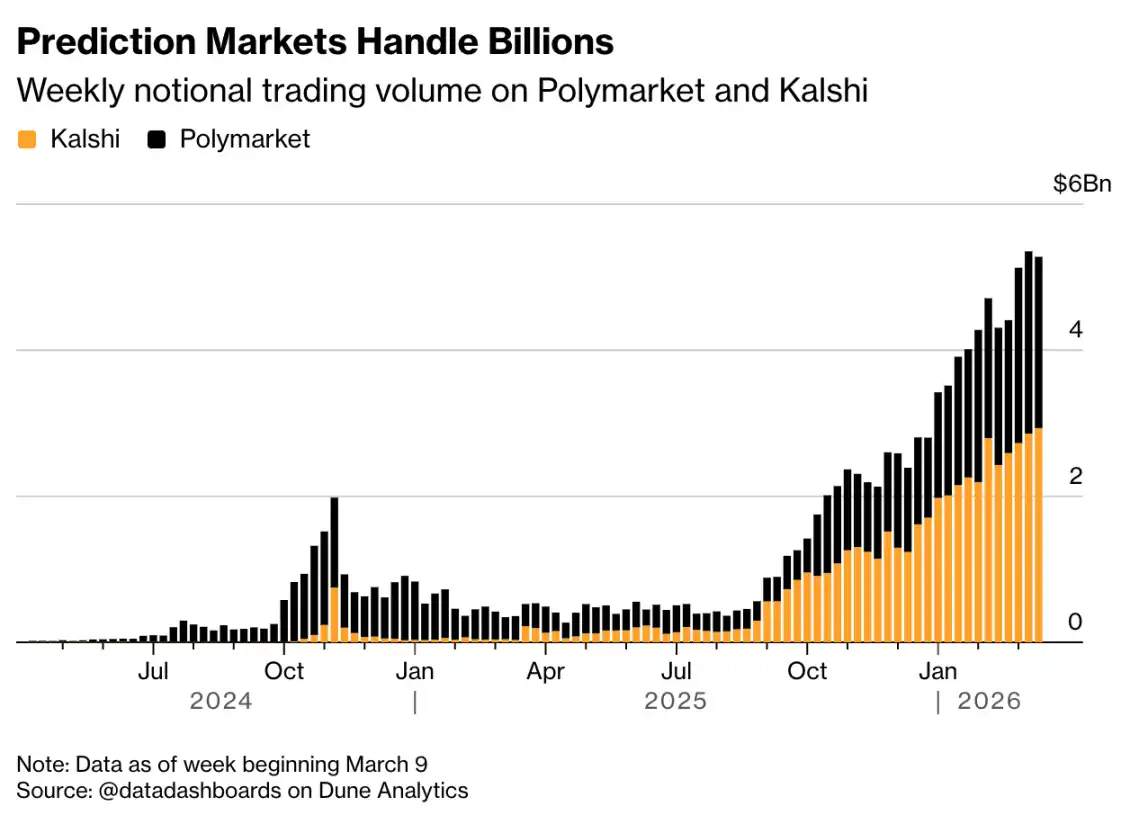
Weekly nominal trading volume of Polymarket and Kalshi. Note: Data up to the week of March 9, source: @datadashboards on Dune Analytics
The core of the dispute between the two lies in the fundamental differences in their platform establishment models and operational rules. Kalshi is headquartered in the U.S. and regulated by the Commodity Futures Trading Commission (CFTC); meanwhile, Polymarket's main trading platform is based overseas.
Polymarket leverages its overseas operational advantages to offer contracts related to military conflicts, including those concerning Iran, while Kalshi has pointedly claimed such products are both unethical and illegal.
One of Kalshi's advertisements states bluntly, "We don’t engage in death markets."
Since early this week, Kalshi's set of marketing advertisements in the form of a "platform rules checklist" has begun appearing at bus and subway stations in Washington.
One of the rules states: "Rule One: We strictly prohibit insider trading because Kalshi is a federally regulated U.S. trading platform." To industry observers, the implication of this statement is quite evident: Polymarket's main platform is not under the jurisdiction of U.S. regulatory authorities.
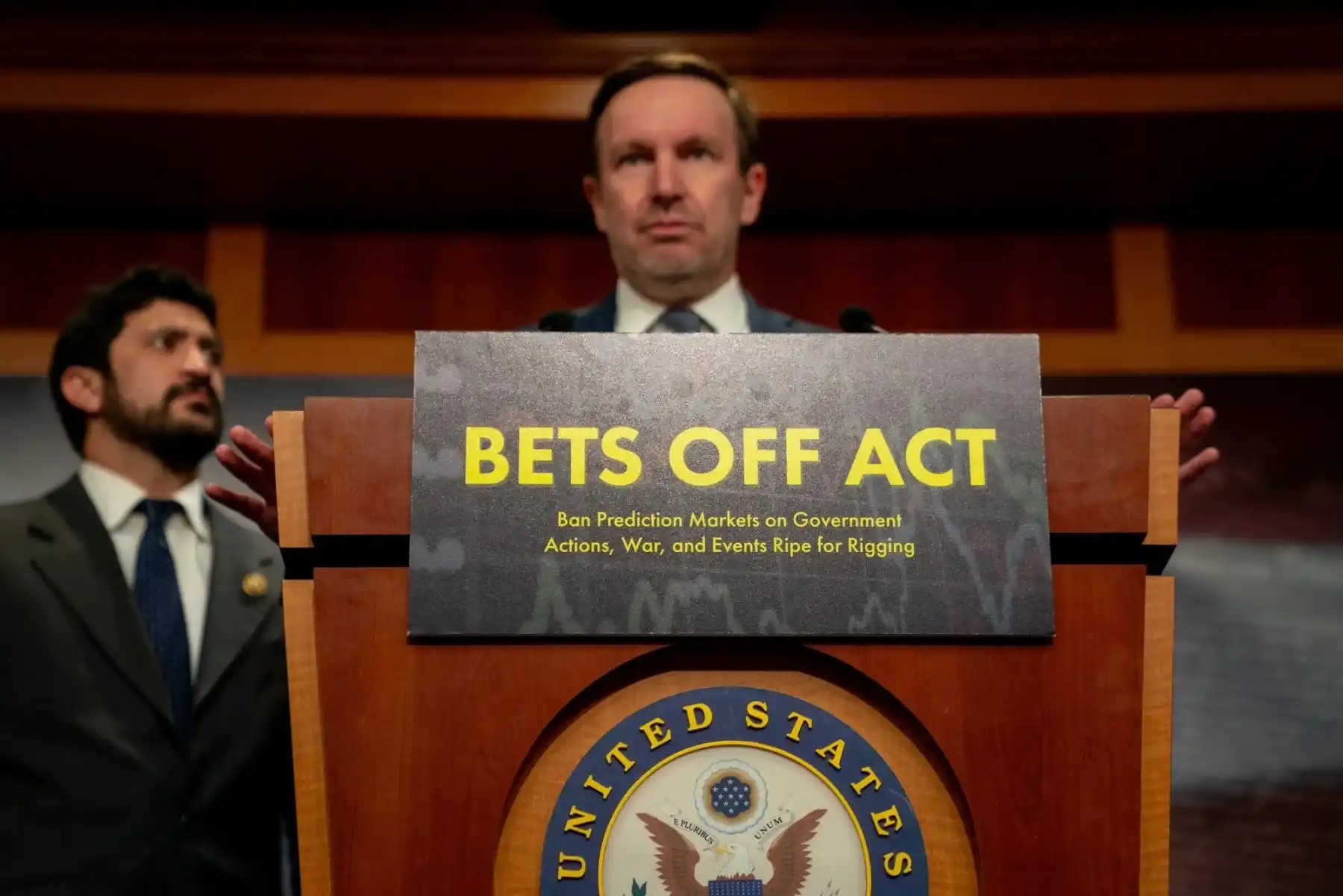
The "BETS OFF Bill" identification, Congressman Greg Casar and Senator Chris Murphy speaking at a press conference on the "BETS OFF Bill prohibiting sensitive operations and federal functions trading.” Photographer: Stephanie Reynolds / Bloomberg
Previously, there were accusations that individuals were using insider information to improperly bet on U.S. military actions in Iran and Venezuela, and Congress has shifted focus towards insider trading issues in prediction markets. In response, Kalshi has taken a firmer stance, imposing fines and suspending trades on users it finds to be in violation; Polymarket has been relatively lax, but with increasing regulatory scrutiny, it recently also announced its own insider trading rules.
Kalshi spokesperson Diana stated: "We want to clearly communicate these significant differences. Currently, many people in the market confuse Kalshi with Polymarket, muddling our different paths to regulatory compliance."
In addition to the overseas main platform, Polymarket also has a U.S.-regulated platform, which is still in the testing phase. The company stated in a statement that both of its platforms enforce "the same strict market integrity standards, including prohibiting insider trading and market manipulation, proactively monitoring trading, and maintaining continuous communication and collaboration with regulatory agencies and law enforcement."
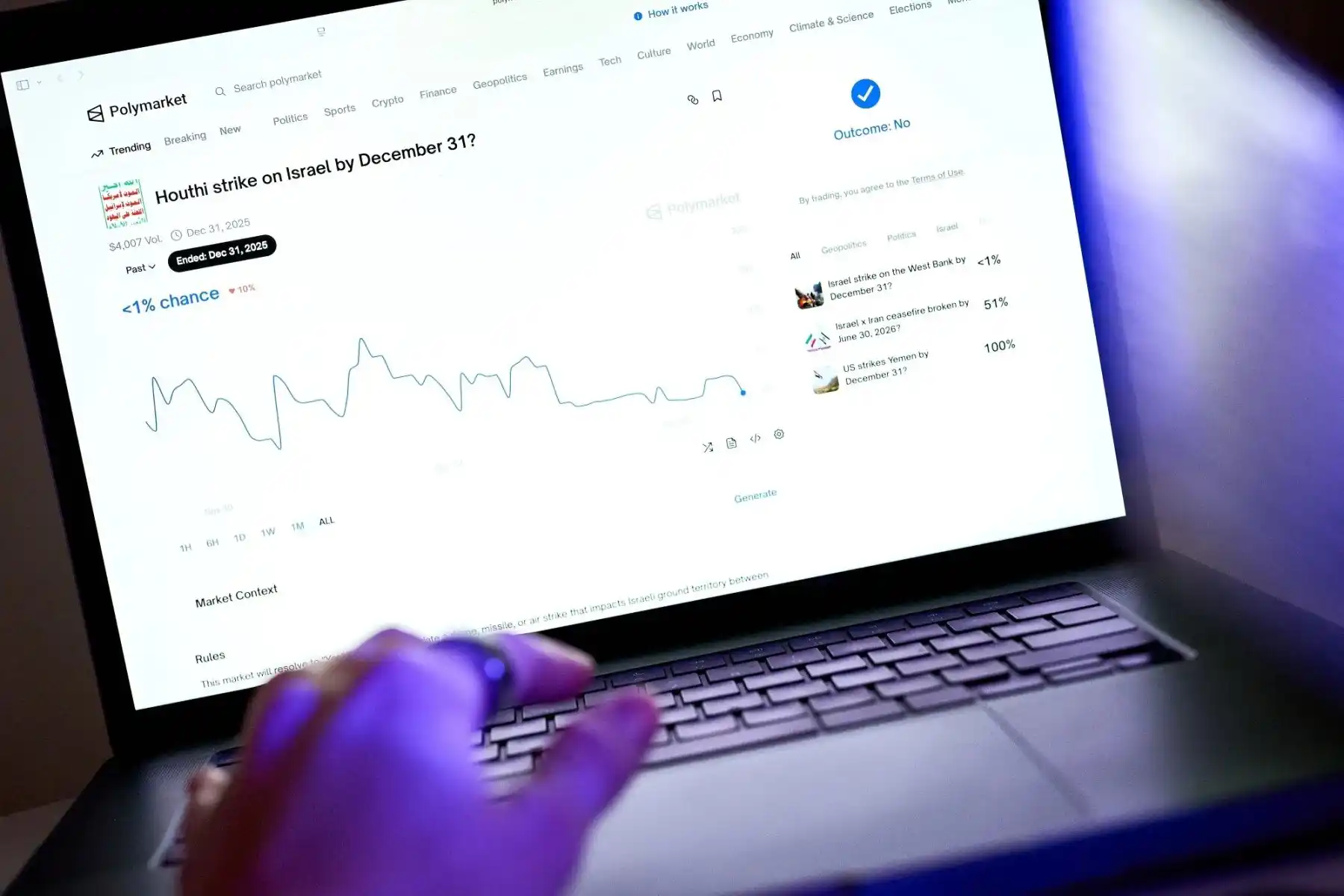
Polymarket’s website features trades regarding whether the Houthis will attack Israeli territory. Photographer: Gabby Jones / Bloomberg
Just a few months ago, Kalshi co-founder Luana Lopes Lara attempted to ease tensions between the two competitors. In a social media post last October, she expressed hope for the industry to move beyond "destructive infighting" and develop together.
Now it seems that vision has largely fallen apart.
This discord has become even harder to reconcile, especially after Kalshi advisor and former CFTC commissioner Brian Quintenz joined the debate. In response to reports of prosecutors investigating insider trading, Brian Quintenz hinted on social media this week that such investigations should focus on Polymarket. When contacted by Bloomberg News, he declined to comment further.
免责声明:本文章仅代表作者个人观点,不代表本平台的立场和观点。本文章仅供信息分享,不构成对任何人的任何投资建议。用户与作者之间的任何争议,与本平台无关。如网页中刊载的文章或图片涉及侵权,请提供相关的权利证明和身份证明发送邮件到support@aicoin.com,本平台相关工作人员将会进行核查。


