Author: @TradesMax
The core conflict in Monday's trading was quite clear:
On one side, Federal Reserve Chairman Powell sent signals leaning towards dovish, at least not in a rush to shift to hawkish, providing some support for the bond market and risk sentiment;
On the other side, the conflict in the Middle East continued to escalate, oil prices climbed back above $100, and market concerns about "high oil prices + high interest rates + slowing growth" remained unresolved.
The result was that after a strong open, U.S. stocks weakened throughout the day, ultimately closing in a typical defensive manner.
Pre-market Testing
Initially, the pre-market was not too bad. After a series of pullbacks last week, U.S. stock futures experienced a mild rebound; traders focused on two things:
First, there had already been a significant decline, and there was a possibility for a technical recovery in the short term;
Second, Trump's pre-market discussion about engaging with a "more rational Z government" in Iran led some capital to momentarily trade on the notion that "the situation might not continue to escalate rapidly." This pre-market rebound was essentially a test of risk appetite.
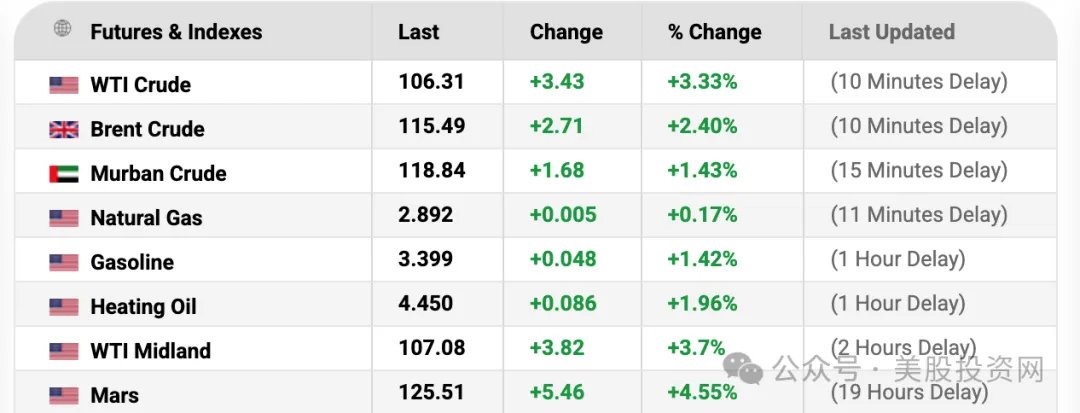
However, this test of risk appetite was extremely fragile, as the most core macro asset—oil—did not provide supporting signals. Pre-market WTI crude oil futures had already approached $102 again, while Brent crude oil rose to around $116.
Oil traders continued to pay a high-risk premium for potential blockages in the Strait of Hormuz. With oil prices not showing a significant decline, the futures rebound lacked strong macroeconomic support, destined to be short-lived.
Opening Surge
The Dow, S&P 500, and Nasdaq all surged at the open, with the S&P 500 climbing nearly 0.9%. This indicated that the market was initially attempting to address the previous continuous decline as a "correction for overselling." However, this rebound did not last long.
U.S. stock investment websites noted that after the S&P 500's initial surge, it quickly gave back gains and then entered a phase of volatility and weakness. In other words, Monday did not start off with a plunge, but first showed an attempt to stabilize, which was later interrupted by stronger macro variables.
Key Variables During Trading
In his speech that day, Powell clearly communicated a signal of "not shifting to hawkish": he emphasized that current U.S. monetary policy "is in an appropriate position," and that facing the supply-side energy shocks driven by war and oil prices, the Federal Reserve would not rush to react. Until assessing the long-term impact of the conflict on the economy, the Fed would remain "on the sidelines."
This statement had an immediate calming effect on the U.S. Treasury market, with 10-year Treasury yields quickly falling back to around 4.34%. However, a highly concerning cross-asset divergence signal emerged: oil prices were surging, while Treasury yields were falling (indicating bonds were being bought).
According to classic macro trading frameworks, rising oil prices typically push long-term inflation expectations up, leading to bond sell-offs and rising yields. However, the performance on Monday was exactly the opposite. This revealed a shift in the logic of Wall Street's main funds—bond traders were no longer simply trading "inflation rebound," but rather began pricing in the risk of "high oil prices negatively impacting the real economy and triggering a recession."
Faced with this recession expectation, Powell's verbal reassurances appeared weak. He admitted that it was "too early" to evaluate geopolitical impacts, meaning the Federal Reserve was merely holding its ground and had not genuinely begun a new easing cycle.
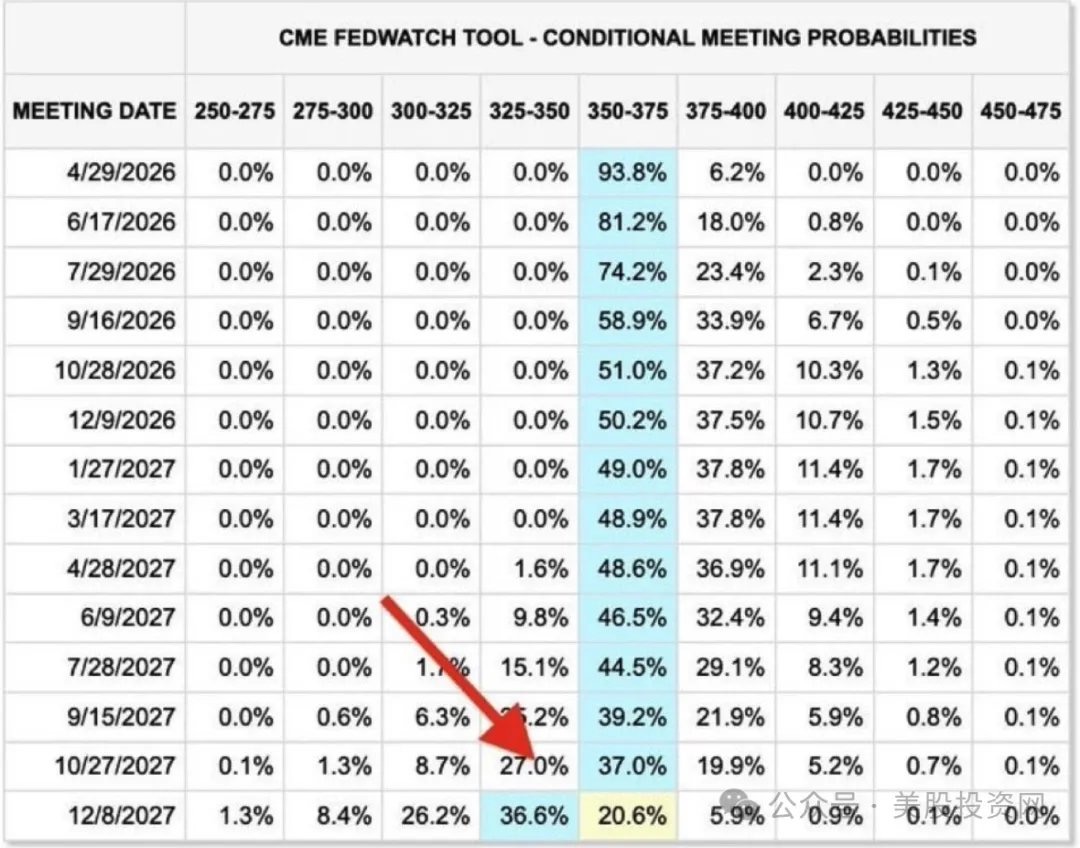
According to the latest pricing in the interest rate swap market, funds had clearly withdrawn from bets on rate cuts within the year, and even began to reprice the possibility of another rate hike this year.
Oil Prices in Control
The real force pushing the index down from its highs was still the situation in the Middle East. On Monday, Trump continued to release negotiation statements while reiterating that if the Strait of Hormuz issue was not resolved, the U.S. might strike Iran’s oil wells, power generation facilities, and key export infrastructure.
In the afternoon, as Trump issued another hardline threat to "thoroughly destroy" Iran’s oil and gas facilities, combined with a strong response from the Iranian parliament regarding the fee bill for the Strait of Hormuz, the market gave up any remaining resistance completely. The market narrative switched from "Fed dovishness" to "oil shock," causing stock indices to trend downward.
From a larger framework, Monday's market also provided a new signal worth noting: verbal reassurances are increasingly losing their ability to change price direction on their own.
Finance Minister Besant stated that the global oil market currently has ample supplies and that control over the Strait of Hormuz would gradually be restored, ensuring freedom of navigation; U.S. escorts or multinational escorts remain options. However, based on asset price reactions, traders did not significantly lower risk premiums as a result. Oil prices did not show a notable decline, and U.S. stocks did not rebound meaningfully.
This indicates that what the market truly lacks is not statements, but regulatory actions that can materially lower risk premiums. The market is shifting from simple headline trading to a focus on "whether a decisive move will be taken."
Sector Performance
In terms of sector performance, technology stocks were the heaviest burden on the market throughout the day, with the Philadelphia Semiconductor Index plummeting over 4.2%. Aside from the valuation pressure brought by high oil prices, the impact of Google's new storage technology potentially significantly reducing hardware dependency led to a plunge in the spot price of memory modules, triggering deep panic on Wall Street regarding the AI hardware cycle possibly peaking. High-duration, high-valuation storage chips bore the brunt, with Micron ($MU) plunging nearly 10%, and Western Digital ($WDC$MU$WDC) dropping 8.6%.
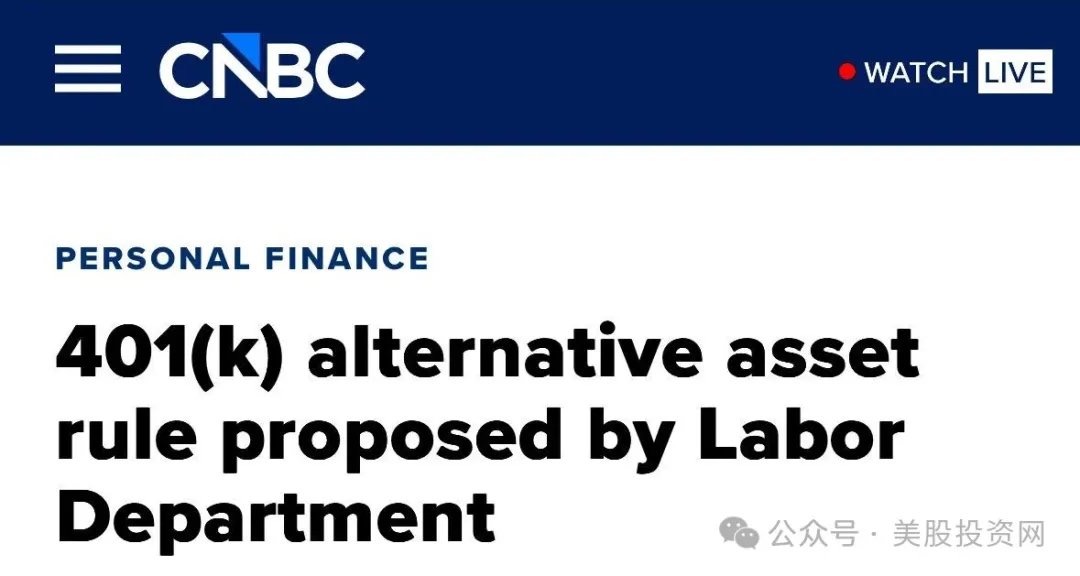
A relatively brighter direction was seen in the financial sector (up 1.1%). The core driver came from the U.S. Labor Department releasing a significant guideline draft—clarifying that fiduciaries could include alternative assets in 401(k) retirement plans. (This policy exposure is expected to benefit assets like Bitcoin in the future).
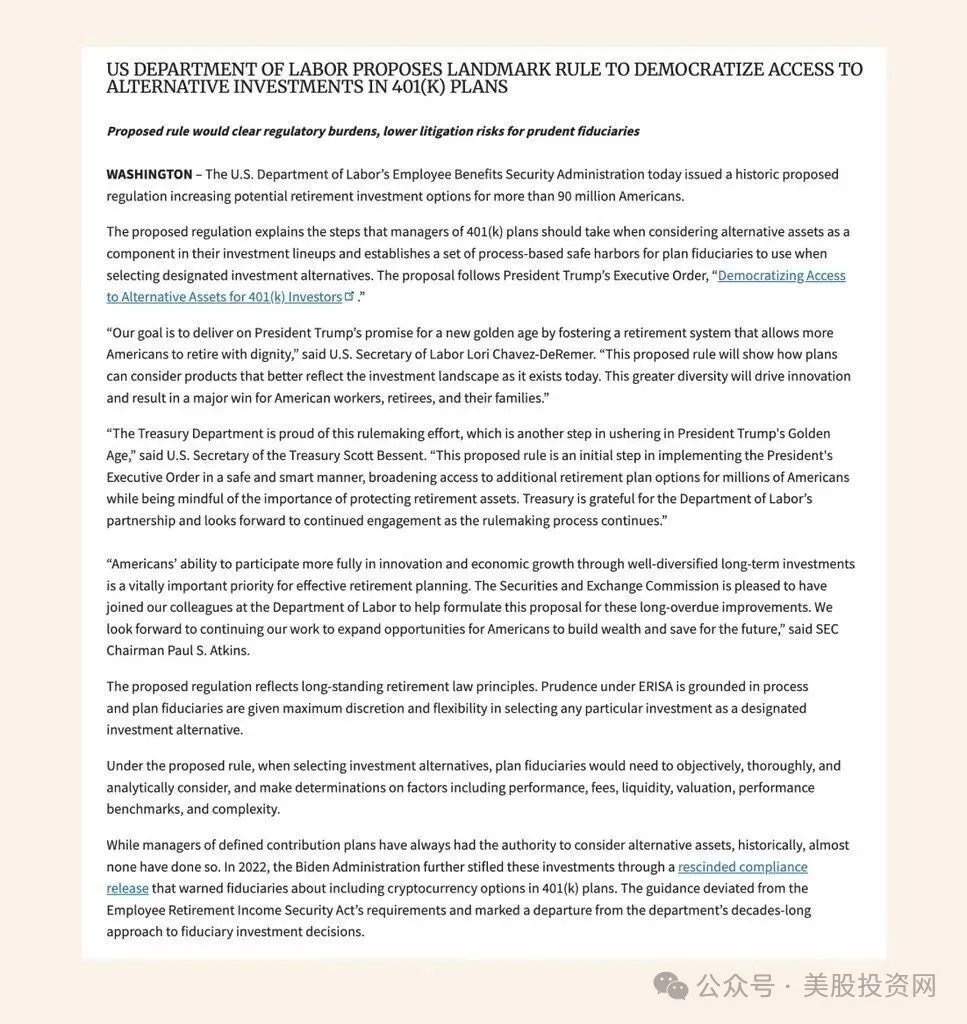
This means that tens of trillions of dollars in pension funds are about to open doors to private equity and credit. Asset management giants responded with soaring shares, with Blackstone Group ($BX) rising 3.3% and KKR ($KKR) up 2.1%.
Additionally, spurred by big player Bill Ackman's optimistic outlook, Fannie Mae ($FNMA) and Freddie Mac ($FMCC$FNMA$FMCC) soared over 51% and 47%, respectively, staging a rare short squeeze.

By the close, the Dow rose 0.11%; the S&P 500 fell 0.39%; the Nasdaq dropped 0.73%; and the Russell 2000 fell about 1.5%.
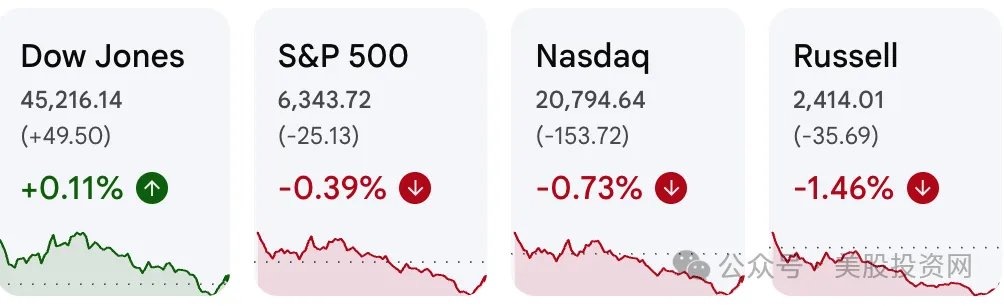
The U.S. stock investment website observed that the S&P 500 is currently down about 9.1% from its year-to-date high, with major indices including the Dow, S&P 500, and Nasdaq having retreated over 10% from their respective highs, indicating that the market is still in a technical adjustment phase, and the restoration of risk appetite is far from stable.
The divisions on Wall Street are further intensifying. Wolfe Research suggests holding onto defensive positions; Morgan Stanley believes the sell-off is nearing its end, and that concerns over growth have been overstated; the Goldman Sachs team remains relatively optimistic, arguing that as long as the conflict does not spiral out of control, the S&P 500's 12% profit growth benchmark for this year remains intact. U.S. stock investment website analysis suggests that Monday's trading conveyed a reality: Powell may briefly hold down the "more hawkish Fed," but cannot suppress "more expensive oil" out of thin air. Until a clear resolution emerges in the Middle Eastern conflict, market pricing power does not lie with the Federal Reserve, but with expectations regarding oil market supply.
Before the earning season kicks off in mid-April, which will truly reveal corporate earnings, maintaining sufficient cash positions and avoiding high-valuation tech companies lacking cash flow support remains the safest strategy at present.
免责声明:本文章仅代表作者个人观点,不代表本平台的立场和观点。本文章仅供信息分享,不构成对任何人的任何投资建议。用户与作者之间的任何争议,与本平台无关。如网页中刊载的文章或图片涉及侵权,请提供相关的权利证明和身份证明发送邮件到support@aicoin.com,本平台相关工作人员将会进行核查。


