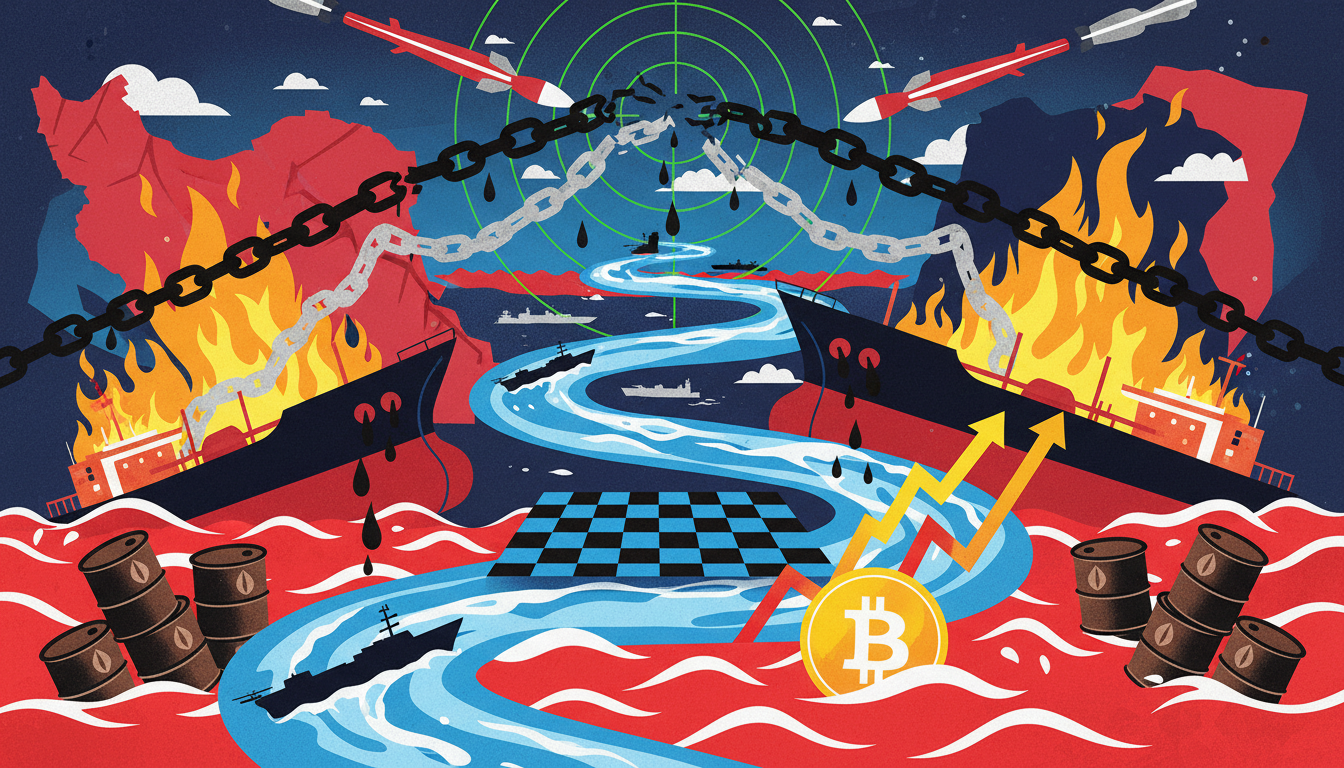
On March 22, 2026, in East 8 Time, the cross-chain lending protocol Venus was attacked, and assets on the chain were rapidly transferred and "converted." The attacker sold the stolen 2,178 BNB, 20 BTC, and 1.466 million CAKE in succession, ultimately obtaining 2,257.3 ETH, roughly worth 4.72 million USD at that time, and subsequently transferred it to the Ethereum network. Behind this seamless operation lies a much larger cost calculation: on-chain data shows the attack cost as high as 9.92 million USDT, with only about half the value being "recovered" on-chain. In the context of the greed and fear index dropping to 10 and the market being in extreme panic, this seemingly "unprofitable" attack placed security, arbitrage, and emotions on the same table.
High Cost, Half Recovery: How the Hacker Worked This Out
On the surface, this attack appears to be a “high-cost, low-recovery” transaction. The on-chain data's 9.92 million USDT attack cost corresponds to a directly visible return of only about 4.72 million USD equivalent to 2,257.3 ETH, resulting in a recovery rate of about 50%. From the perspective of static asset inflow and outflow alone, this seems more like a failed speculation than a traditional impression of a "zero-cost excessive profit" hacker attack.
A recovery rate of about 50% is not common in the history of attacks. Typical arbitrage-type attacks often premise on “low risk, predictable price difference,” striving to amplify returns in an extremely short time and control exposure. In this event, the attacker left a clear trail of asset migration and significant loss range on-chain, which, compared to one-off trades characterized by "precise dissection of contract logic and quick emptying of funds," seems more like a highly designed structural arbitrage—though we can only see the halved "shrinkage" of the visible part at this point.
Analyst Yu Jin mentioned that from the performance of on-chain data, this seems closer to an “arbitrage-type attack” rather than mere destructive behavior. The core of this narrative is that the attacker does not seem to regard the on-chain "loss" as actual loss, but more likely as part of the entire cost expenditure of the arbitrage closed loop—though this closed loop likely extends to an off-chain exchange system, beyond the verifiable scope of the chain. This is why the event seems difficult to understand from a cost-benefit perspective, yet highlights the complexity of its “arbitrage structural design.”
From BNB to ETH Cross-Chain: A Delicate Design of Fund Pathways
If we break this attack down into a timeline of fund movement, we can clearly see multiple transfer segments from BNB, BTC, CAKE to ETH. The attacker first sold or exchanged the 2,178 BNB acquired from Venus in batches, then handled the 20 BTC and 1.466 million CAKE, gradually consolidating the originally dispersed positions in multiple assets into 2,257.3 ETH through several matches and exchanges. In an environment of sharp price fluctuations and pressured market liquidity, this rhythm of "splitting and throwing out, unifying and converging" carries a strong flavor of professional speculation.
Choosing ETH as the final holding asset and cross-chain to Ethereum is the second key node of this path. ETH possesses deep global liquidity, rich DeFi scenarios, and a more mature derivatives market, making it easier to hedge, split, and transfer afterward compared to continuing to hold BNB, BTC, or CAKE. Furthermore, after crossing to Ethereum, the assets are no longer directly exposed to the protocol ecology of the initially attacked chain, increasing the operational costs for subsequent tracing and freezing, thereby lengthening the analytical path, involving more participants, and raising the difficulty of collaboration.
However, a paradox in cross-chain asset migration lies in the grey area between high visibility on-chain and difficulty in verifying off-chain. We can clearly see the cross-chain trajectory of 2,257.3 ETH on the browser and confirm where these ETH currently reside. But once these assets enter mixing tools, OTC channels, or interact with centralized platforms, tracing on-chain becomes difficult to directly correspond to real identities and ultimate destinations. This incident again highlights the current boundaries of tracing technology: reconstructing the fund path afterward is not difficult; the challenge is seamlessly connecting across chains, platforms, and judicial jurisdictions to genuinely intercept or recover value.
The Black Box of Centralized Hedging: Where Might the Arbitrage Closed Loop Close?
Under the hypothesis of an “arbitrage-type attack,” an intuitive question is: if only about 50% of the on-chain value is recovered, how is the remaining half of the "loss" hedged? One typical path is establishing reverse or related positions through centralized exchanges (CEX) before and after launching an attack. For example, attackers might short certain varieties related to Venus and associated assets on the CEX in advance or bet on price decline using perpetual contracts or options. After the attack succeeds and the on-chain asset price crashes, corresponding short positions could generate profits off-chain, thus completing an overall “profit from volatility” arbitrage closed loop.
It is important to emphasize that, at present, there is no public evidence proving that the attacker actually followed this CEX long-short hedging path, nor is there verifiable off-chain transaction data pointing to any specific platform or account. We can only extrapolate based on common arbitrage logic, and cannot make any reliable judgments regarding the attacker's actual operational details, identity attribution, or organizational background. In a context of highly asymmetric information, maintaining the boundary of “discussing only visible evidence, without extending to speculation” is rather the premise for understanding such events.
On the other hand, the role played by centralized platforms is more of an uncertain "black box variable." Once there is suspicion of attack funds flowing in, whether exchanges will voluntarily freeze assets, cooperate in multiple investigations, or balance between various judicial requirements directly affects whether the arbitrage closed loop can close smoothly. If the platform chooses to actively intervene, the attacker’s off-chain hedging profits could be obstructed, disrupting the original “limited loss + hedging profit” script; conversely, if there is insufficient collaboration or delayed response, the arbitrageur has greater space to complete profits and withdraw. It is this uncertainty that makes each "arbitrage-type attack" not only a technical problem but also a practical test of the centralized system’s governance flexibility.
CFTC New Regulations and Fear Index: Regulations and Safety Events Amplifying Emotions
Almost simultaneously with the attack on Venus, the new regulations released by the CFTC added a layer of macro regulatory shadow to this security event. The new rules clarify: only BTC, ETH, and USDT and other stable assets can be used as collateral, and relevant institutions are required to maintain a 20% capital adequacy ratio. This effectively tightens the range of acceptable collateral and raises the "entry threshold" for compliant leverage. Some compliance commentators bluntly stated that this actually “raised the collateral threshold for BTC/ETH institutions,” which inevitably suppresses part of the liquidity and leverage expansion space for institutional participants relying on high leverage and diversified collateral.
When tightening regulations and protocol security events coincide in market sentiment on the same day, the result is further magnified panic. The greed and fear index dropped to 10 that day, in an extreme panic zone, and capital began to accelerate its withdrawal from high-risk exposures. For observers, the direct losses caused by the Venus attack itself are insufficient to trigger systemic risk, but under the triple resonance of "tightened regulation + security event + lever compression," it has been amplified into an emotional amplifier concerning "whether the entire DeFi leverage structure is sustainable." This sentiment not only drives short-selling pressure but also leverages a collective repricing of future regulatory directions, collateral standards, and asset safety boundaries.
Chain Reactions of Security Events: Overflowing from Venus to the Entire DeFi
In a market dominated by extreme sentiment, a single protocol's attack event is hard to be "sealed" within that protocol. After the attack on Venus, the direct consequence was that certain positions within the protocol were passively exposed to liquidation risks, breaking the balance between lending relationships and collateral prices. If the attack triggers on-chain liquidations or forced liquidations, other protocols in the related DeFi ecosystem will also be indirectly impacted through price oracles, liquidity pools, and collateral asset prices, forming a chain reaction spreading from a point along the liquidation path.
For investors, seeing the attacker choose to escape cross-chain while recovering only about 4.72 million USD at a cost of 9.92 million USDT is itself a negative signal: even highly specialized attackers incur substantial costs for "hacker arbitrage" in the current environment. This will reverse reinforce the defensive instincts of ordinary users—prompting early withdrawal of staking, reduced leverage, and shortened holding periods, thus reallocating funds originally dispersed across multiple DeFi protocols into a few “safer” or more liquid assets, accelerating the overall retreat of leverage on-chain.
A deeper impact will be reflected in the reevaluation of the "DeFi risk premium." This incident exposes that, on one hand, the protocol's own security budget, auditing investment, and risk control design may still not match the asset scale and complexity it carries; on the other hand, the market’s previous yielding rates for such protocols likely underestimated potential structural risks. In the future, protocols will have to allocate a larger proportion of their revenue distribution to security and insurance systems, and users will demand clearer permission management and asset whitelist mechanisms, all of which will be reflected in higher risk premiums and stricter access conditions. In the short term, this is a contraction of risk appetite; in the long term, it is a renegotiation of the boundaries of DeFi security and revenue structures.
An Unquantifiable Calculation: The Next Round of Games Between Hackers, Regulators, and DeFi
Overall, this Venus attack simultaneously exposes structural risks across three dimensions: cost-benefit, cross-chain transfer, and regulatory environment. The visible numbers on-chain tell us that the attacker spent 9.92 million USDT in costs, recovering only about 50% of the value; the cross-chain path shows a standardized "escape script" from a multitude of assets concentrated to ETH, then migrated to Ethereum; while the CFTC's new regulations tightening collateral and capital adequacy ratio effectively narrowed institutional leverage space within the same timeframe, causing the market echo of this event to far exceed the asset gap of the protocol itself.
An even harder calculation to quantify is how the gap between on-chain transparency and off-chain black boxes continues to shape a new equilibrium in hacker arbitrage and regulatory games. On one hand, everyone can review how funds flow in, how they cross chains, and where they now reside on a browser; on the other hand, as soon as that pathway enters a centralized platform, OTC, or any "grey area" across judicial jurisdictions, verifiable evidence comes to an abrupt halt. It is within this gap that the attacker attempts to complete the arbitrage closed loop, while regulators and platforms strive to extend their reach, both sides engaging in a long-term tug of war around information asymmetry and judicial boundaries.
For the DeFi industry, the upcoming adjustments are likely to focus on three main lines: first, reinforcing constraints on sensitive operations and upgrade permissions in permission management, introducing more multi-signature, delays, and community oversight mechanisms; second, setting stricter standards for acceptable collateral, participatory cross-chain bridges, and third-party dependencies at the asset whitelist level, to reduce "external dependency risks"; third, in engaging with regulators, proactively adapting to institutional frameworks like the CFTC's new regulations, balancing the tension between decentralization and compliance. These changes will be repriced by the market through interest rates, discounts, and valuations, pushing DeFi from “boundaryless experimentation” to “constrained infrastructure.”
Join our community, let’s discuss and become stronger together!
Official Telegram community: https://t.me/aicoincn
AiCoin Chinese Twitter: https://x.com/AiCoinzh
OKX Welfare Group: https://aicoin.com/link/chat?cid=l61eM4owQ
Binance Welfare Group: https://aicoin.com/link/chat?cid=ynr7d1P6Z
免责声明:本文章仅代表作者个人观点,不代表本平台的立场和观点。本文章仅供信息分享,不构成对任何人的任何投资建议。用户与作者之间的任何争议,与本平台无关。如网页中刊载的文章或图片涉及侵权,请提供相关的权利证明和身份证明发送邮件到support@aicoin.com,本平台相关工作人员将会进行核查。