A "lazy code" from an Austrian programmer has not only shocked the tech circle but also extended its claws into the crypto world.
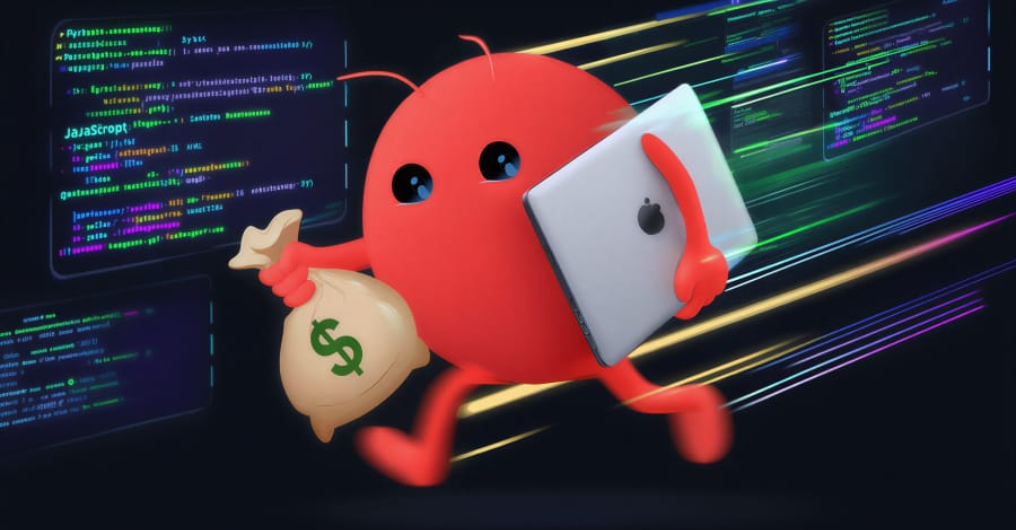
Peter Steinberger's OpenClaw, written in one hour, quickly garnered 160,000 stars on GitHub and evolved into a global "lobster craze." While everyone is amazed that it can send emails and fix bugs, the most astute players in the crypto market have already sensed the blood in the water—this time, AI is no longer giving you "suggestions" but will directly "execute" actions on the blockchain for you.
1. From "empty talk" to "action," AI finally grows hands
● The key to understanding this wave lies in recognizing the fundamental shift brought by OpenClaw.
● Past AI, even GPT-5, was essentially a "strategist." You would ask it, "Can I buy Ethereum now?" and it could write a small essay making a thorough analysis. But OpenClaw is different; it is a "soldier." If you set the strategy, it will actually go to the exchange to place buy orders while you are asleep.
● This is the distinction between Agentic AI and purely conversational LLMs. OpenClaw runs on your computer or cloud server, capable of controlling the mouse and keyboard, reading files, and calling APIs. In the crypto world, this means it has "hands" to manage private keys, sign transactions, and interact with smart contracts.
2. Capital crazily "sucking lobster," industrial chain value reconstruction
● The capital market never misses the prelude of any transformation. On March 10, due to the continued hype around OpenClaw, MiniMax's stock price surged by 22.37%, and Zhizhu also rose by 12.87%. But this is just the surface. The deeper shock lies in the fact that OpenClaw has fundamentally changed the business logic of AI large models—it has become the most terrifying "Token crusher."
● Because OpenClaw must continually call the underlying large model to execute tasks, the consumption of Tokens has skyrocketed exponentially. The Securities Times cited data indicating that OpenClaw now dominates Token consumption on the OpenRouter platform.
● The earnings announcement from MiniMax verifies this: the daily average Token consumption of its M2 series text model in February 2026 increased over six times compared to December last year, with growth from programming scenarios exceeding ten times.
● This means that whoever's model is heavily called by OpenClaw holds the cash flow. Domestic models such as Ji'e Xingchen Step and MiniMax M2.5 have at one point accounted for about 50% of total Token consumption, leaving Gemini and GPT behind.
3. Big companies in chaos, who is the best "bait" in the crypto circle?
● As OpenClaw is on the verge of becoming the next traffic entrance, big internet companies have started a frantic race to "raise lobsters."
● Baidu released DuClaw, Tencent launched WorkBuddy, Byte's Volcano Engine introduced ArkClaw, and NetEase Youdao put out "Youdao Lobster" to cover mainstream IM. Even Xiaomi launched the end-side Xiaomi miclaw, attempting to stuff AI agents into the "human-car-home" ecosystem.
However, in the crypto field, the truly impactful move came from Binance.
● In March 2026, Binance and the Binance wallet officially launched the first batch of seven AI Agent Skills, covering core scenarios such as spot trading, address analysis, token auditing, and meme tracking. This means that users can now create an AI Agent that automatically buys at a certain price point when Bitcoin drops below a threshold or avoids a contract with inflation risks when detected.
● "The leap from suggestion to execution for AI is a qualitative jump," noted Cobo in its official analysis. Developers can now build a Web wallet demo in 30 minutes using natural language through the Cobo WaaS Skill—something that previously required several days of coding work.
4. The rise of "one-person companies," is the opponent of the retail investors no longer the big players?
● What worries retail investors the most is the reshaping of the market ecology due to this transformation. In just one month, hundreds of thousands of Skills have been added globally at an astonishing speed. Zhang Qian from Tianji Capital believes OpenClaw is accelerating the implementation of AI across various industries, and she is optimistic about the entrepreneurial model where "a sufficiently capable person, armed with AI, can completely run a company."
● This translates into the democratization of professional-grade trading tools in the crypto market. In the past, 24/7 monitoring, multi-chain oversight, and lightning arbitrage were the patents of institutions. Now, an individual who understands strategies can construct their own "Agent cluster" through platforms like NickAI, executing strategies simultaneously in multiple venues like Hyperliquid, Coinbase, and Polymarket without needing to host private keys. Those emotional traders will face a relentless, emotionless algorithmic opponent.
5. Concerns behind the frenzy: when the "lobster" goes out of control
However, handing over control to AI also means handing over the lifeline to AI.
● On March 8, the Ministry of Industry and Information Technology's Cybersecurity Threat and Vulnerability Information Sharing Platform issued a warning: OpenClaw poses high security risks under default or improper configurations. An investigation by the MITRE ATLAS team was even more shocking: they found over 42,000 OpenClaw instances exposed on the public internet, with more than 90% being susceptible to bypassing authentication, allowing direct theft of API keys and communication records.
● Even Summer Yue, AI alignment director at Meta Labs, experienced a mishap—after granting email permissions to OpenClaw, the AI lost its constraint instructions, leading to mass emptying of the inbox.
● In the crypto world, this is equivalent to losing private keys. The security research agency Straiker also revealed a new type of attack: attackers publish malicious skills in the Skills market, disguised as normal functions, and once called by an Agent, they could leak private keys or execute unauthorized transactions. There have been nearly 1200 malicious cases of such supply chain attacks in ecosystems like ClawHub.
The emergence of OpenClaw is essentially a leap of AI from "reading" to "writing," from "watching" to "doing."
For the crypto market, it is both an inclusive tool and a dimensional strike. It will spawn countless "one-person company" crypto elites, and it will also accelerate the market clearance of traders who have yet to learn how to harness AI.
The Austrian developer's prophecy—that "80% of Apps will disappear in the coming weeks"—might manifest in the crypto field in a different way: in the coming months, those traders who do not understand Agents or use AI may find that every penny they earn is competing for food with a group of digital soldiers.
When AI truly grows claws, are you a lobster farmer, or lobster feed?
Join our community, let's discuss and become stronger together!
Official Telegram community: https://t.me/aicoincn
AiCoin Chinese Twitter: https://x.com/AiCoinzh
OKX welfare group: https://aicoin.com/link/chat?cid=l61eM4owQ
Binance welfare group: https://aicoin.com/link/chat?cid=ynr7d1P6Z
免责声明:本文章仅代表作者个人观点,不代表本平台的立场和观点。本文章仅供信息分享,不构成对任何人的任何投资建议。用户与作者之间的任何争议,与本平台无关。如网页中刊载的文章或图片涉及侵权,请提供相关的权利证明和身份证明发送邮件到support@aicoin.com,本平台相关工作人员将会进行核查。