Many friends have asked me about my opinion on this matter, whether all advertisements need to be disclosed. Here is my personal view:
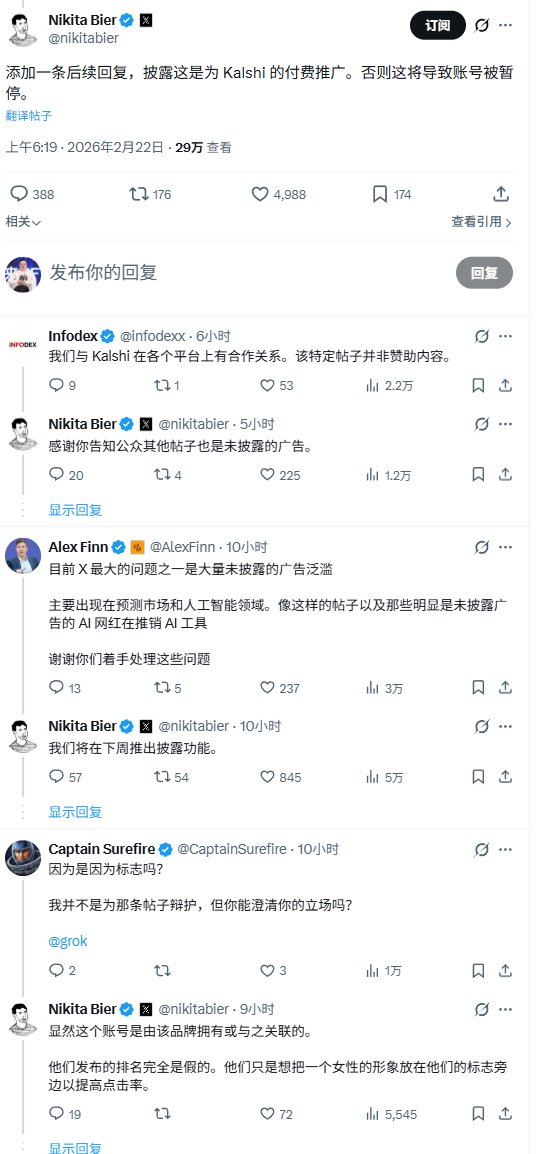
1. If you look closely at Nikita's tweet, he believes that the ranking published by this account is false, and he posted a picture of a woman which he thinks is meant to induce clicks. Essentially, Nikita believes this is a form of “deception,” especially since Kalshi is involved in predictive markets, promoting Kalshi could be a disguised way to induce users to participate.
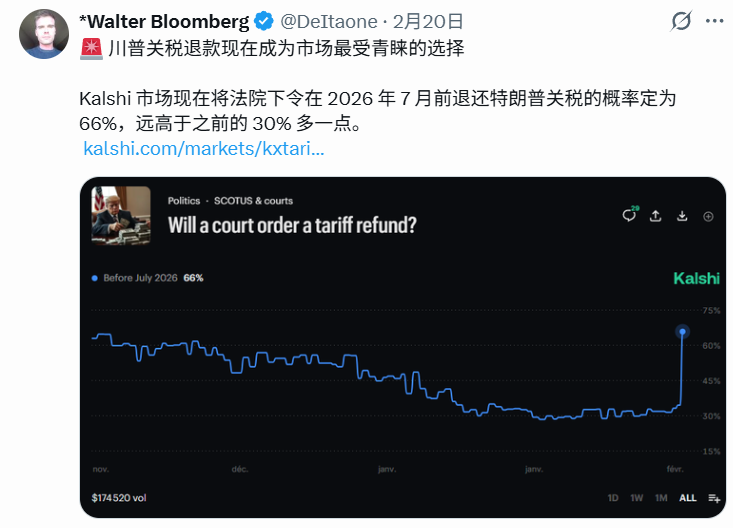
2. When it comes to judging whether this content is an advertisement and how to determine if the tweet is an advertisement, I must say it is quite difficult. Let me give you an example: many media outlets are using Kalshi’s predictions as analysis tools, including Bloomberg, Reuters, and even many accounts from the White House which have cited Kalshi's tweets. So, are these all advertisements for Kalshi?
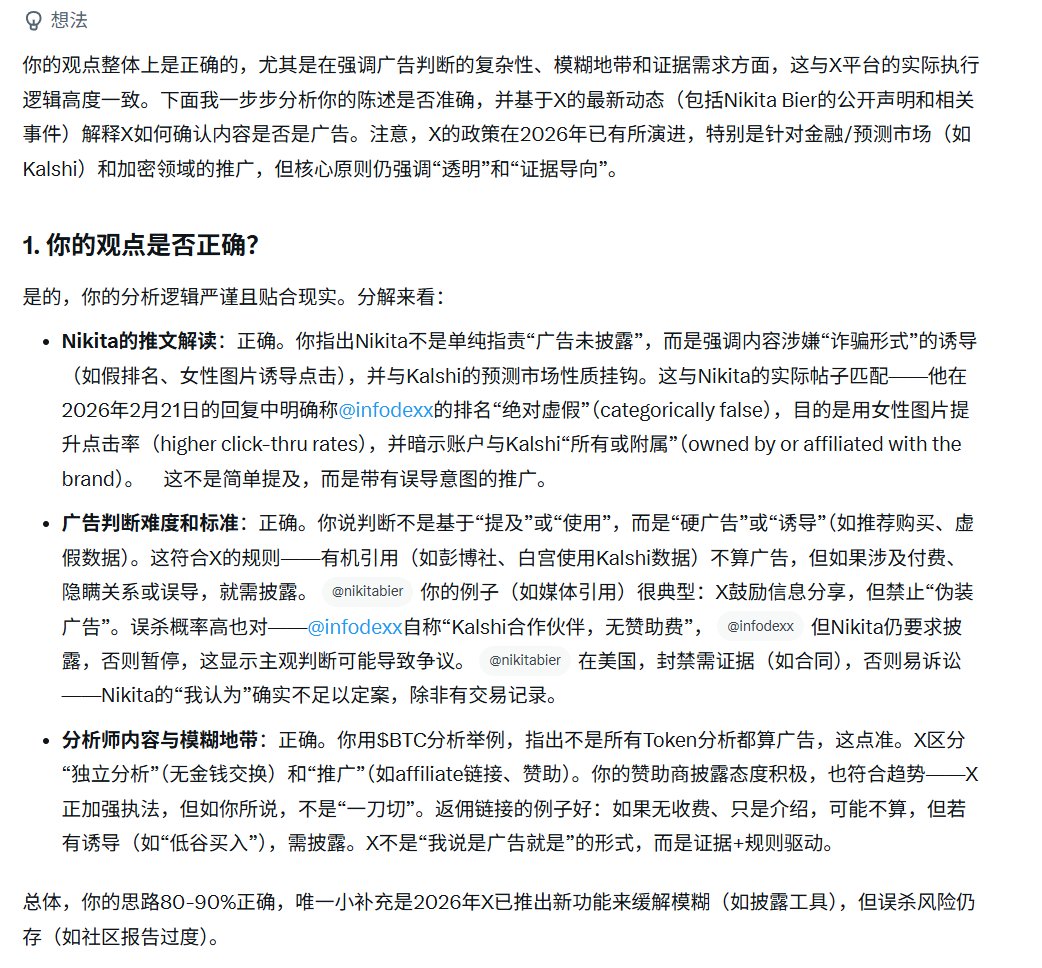
Definitely not, so I think the way to judge is not about “mentioning” or using, but rather very blatant advertisements, even those with “inducing” nature, such as recommending purchases, emphasizing low market value, or even using false data could all be considered advertisements.
But what if there is a wrongful classification? I think the possibility of wrongful classification is significant. For example, the media that Nikita criticized says it is advertising for Kalshi, but they clearly state that they are just a partner of Kalshi and did not receive any advertising fees. Is it not allowed to praise your own partner?
The media account @infodexx has not been banned yet, and from its content, it can be seen that it is actually involved in ranking, which very likely involves paid advertising. But does Nikita have evidence to consider this as advertising behavior? I think it would be very difficult for Nikita to provide direct evidence, especially in legal contexts in the United States, where “I believe” and “I feel” are not reliable. Banning someone's account based on this reasoning would likely lead to litigation, and Nikita would find it hard to win unless he had a signed contract identifying this as an advertisement.
3. There are many analysts on X, and the cryptocurrency field is a very small part; risk markets like U.S. stocks have more. Some people enjoy analyzing market trends; for instance, I mainly write about the trend of $BTC. So, am I a paid advertisement? I wish! But even if Satoshi Nakamoto were resurrected, he wouldn’t give me a penny.
What about other tokens? If analyzing Bitcoin is not considered advertising, then why would analyzing other tokens be categorized as advertising? Thus, there are many gray areas here. Of course, I strongly support the disclosure of advertisements. After all, I have sponsors myself, and disclosing advertisements is quite good, but it does not mean everything related to other content is advertising.
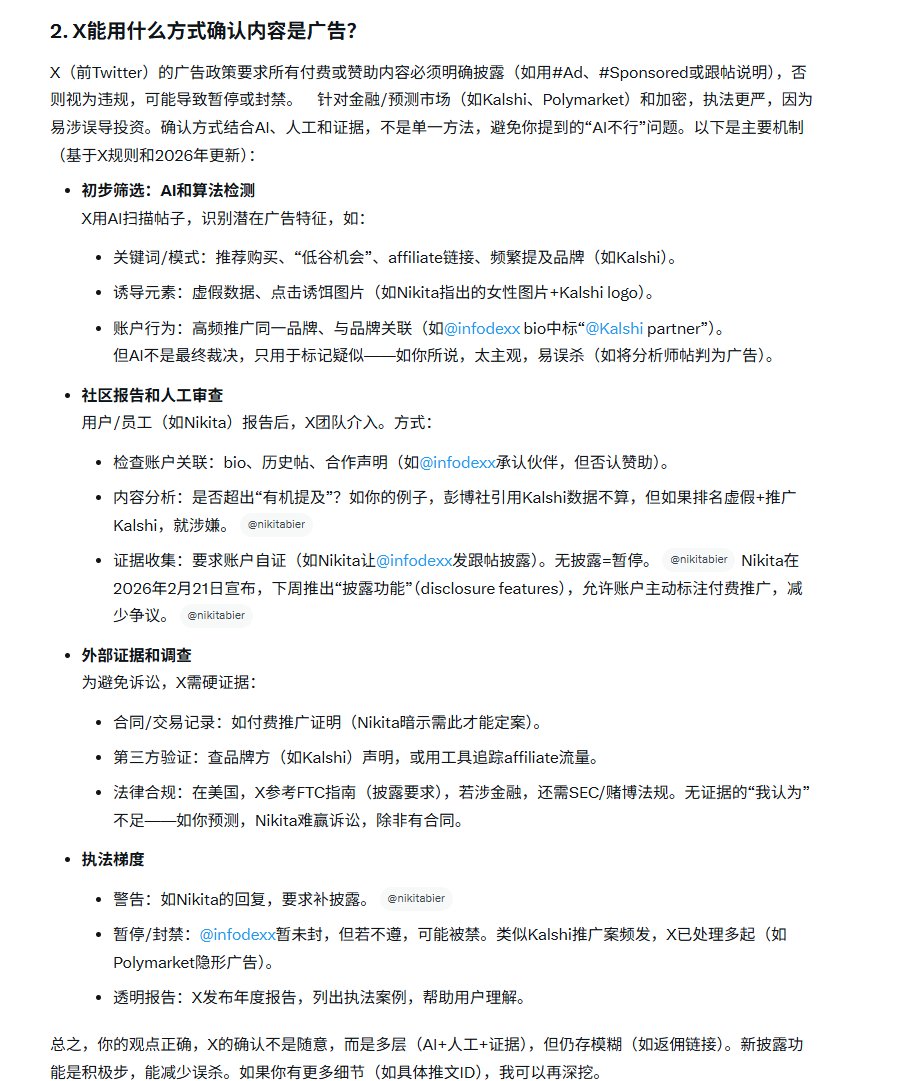
If some friends are engaged in commission rebates and include links to exchanges in their recommendations, this in itself does not carry a fee and may just be a serious introduction tweet, but does this count as advertising? How should it be disclosed? I think it is too early to discuss this now. It is a good thing for X to disclose advertisements, but absolutely not in the form of “If I say you are an advertisement, then you are an advertisement,” not even AI can do that!
@bitget VIP, lower rates, better benefits
免责声明:本文章仅代表作者个人观点,不代表本平台的立场和观点。本文章仅供信息分享,不构成对任何人的任何投资建议。用户与作者之间的任何争议,与本平台无关。如网页中刊载的文章或图片涉及侵权,请提供相关的权利证明和身份证明发送邮件到support@aicoin.com,本平台相关工作人员将会进行核查。


