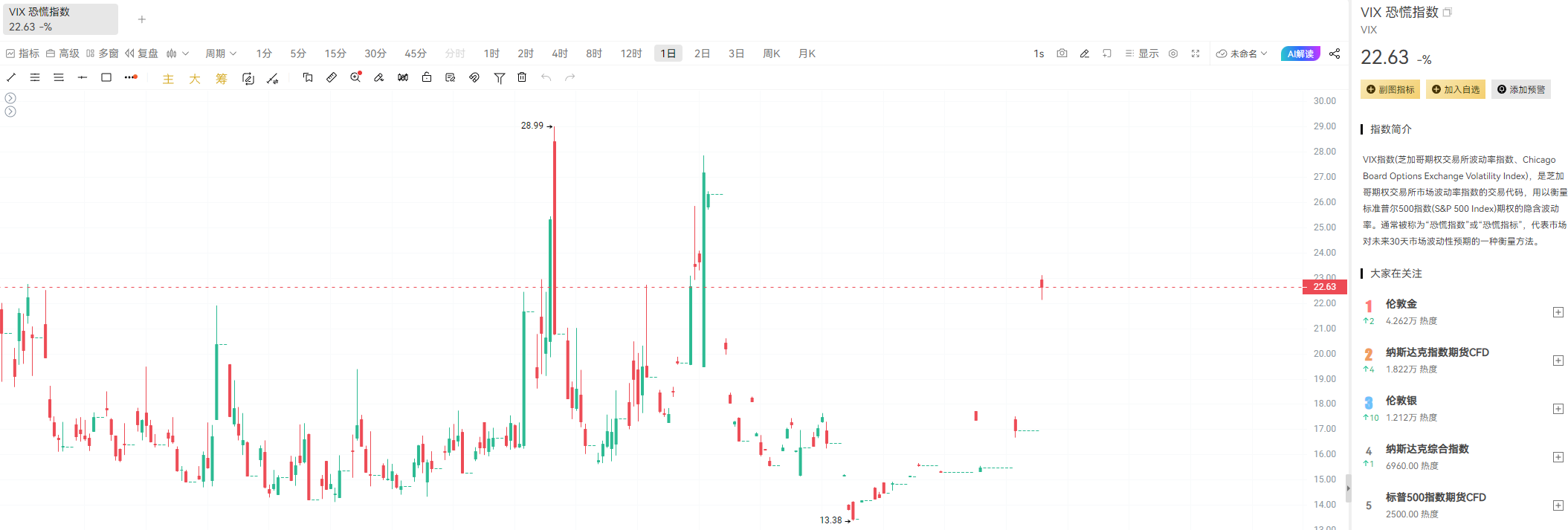
Key data from the United States missed expectations, and Bitcoin sentiment has suddenly cooled.

CN
14 hours ago

On February 11 and February 13, Eastern Standard Time, the U.S. Bureau of Labor Statistics originally planned to release the January CPI and non-farm employment data but announced a delay in publication. This sudden change disrupted the established rhythm of global macro traders and caused the already sensitive cryptocurrency market to collectively adopt a cautious wait-and-see approach at the reopening after the Spring Festival holiday. Bitcoin-related sentiment indicators showed a significant cooling, fear sentiment rose, and at the same time, the funding rates and leverage positions in the derivatives market began to weaken, indicating that a new round of speculation about "whether to bet early or wait for the data" is brewing.

The Moment Key Data Was Paused

● Time and Subject: According to public information, the U.S. Bureau of Labor Statistics was scheduled to release the January CPI on February 11, 2026, and the January non-farm employment data on February 13, but it announced a delay in the publication of these two key macro data points, without providing a specific follow-up timeline. Since CPI and non-farm data are the core references for inflation and employment in global asset pricing, this "missed appointment" immediately became the primary variable on the trading desks of various risk assets.

● Background of the First Delay: Research briefs indicate that this is the first time since 2026 that important economic data has been delayed, marking a break from convention. In the traditional macro framework, U.S. data releases are highly regular, and the market has formed a "monthly rhythm" around CPI and non-farm data. This unexpected interruption not only disrupted the established processes of asset management institutions and quantitative funds but also amplified the sense of "uncertainty" on a psychological level, laying the groundwork for subsequent emotional fluctuations.

● Impact on Bitcoin Pricing Framework: Macro traders typically anchor their projections of interest rate paths on inflation and employment data, thereby calculating the valuation range of risk assets, including Bitcoin. The delay in data means that this chain is temporarily "blind," intensifying the imagination regarding future interest rate environments and liquidity conditions. During such a vacuum period, Bitcoin is more easily viewed as a "purely emotional asset," with short-term funds less willing to aggressively increase positions, and most participants choosing to reduce leverage or wait until new macro coordinates are re-established.

Sudden Shift in Sentiment: Fear Levels Approaching Extreme Areas

● Fear Indicator Approaching Extremes: The brief shows that the Bitcoin Fear and Greed Index has dropped to about 0.45, nearing the historically extreme fear range. Although this reading comes from a single data source and should be approached with caution, it indicates that the market has clearly shifted from a previously neutral or even optimistic stance to a "defensive mode." For traders who have experienced multiple cycles, a reading around 0.45 often means that most are more concerned about losses than missing opportunities.

● Tension Beneath a Calm Surface: Some institutional analysts point out that "data vacuum periods often accompany volatility compression," which is particularly relevant in the current environment. On the surface, Bitcoin's price has shown reduced short-term volatility, with daily fluctuations less severe than usual, but this is more a collective restraint of "holding back": both bulls and bears are reluctant to build large positions in a context of severe information asymmetry, resulting in calm prices and tense emotions, with potential energy accumulating quietly beneath the surface.

● Limitations of Data Sources: It is important to emphasize that both the 0.45 fear reading and the specific scores circulating in the market (e.g., 14 points) currently rely heavily on single or unverified sources. The research brief has clearly marked some specific values as "unverified_additions," so a more prudent approach is to view them as references for emotional direction rather than hard indicators that can be precisely quantified or directly used for modeling; readers should maintain independent judgment when interpreting them.

Negative Funding Rates: The Quiet Retreat of Leveraged Bulls

● Funding Rates Shift from Positive to Negative: As sentiment weakens, the mainstream Bitcoin perpetual contract funding rate has shifted from positive to negative, becoming a key signal of the turning point between bulls and bears. Previously, a positive funding rate indicated that bulls were willing to pay costs for holding positions, reflecting a bullish market sentiment; the current shift to negative indicates that the short side is willing to pay, while the long side begins to contract, reshaping the leverage structure.

● Trajectory of Bull Retreat: A viewpoint from a derivatives trader quoted in the brief states, "negative funding rates indicate that leveraged bulls are retreating." This does not necessarily mean that bearish sentiment holds absolute dominance, but rather that high-leverage bulls are actively reducing their positions: during periods of unclear data, they choose to step back, reducing the risk of passive liquidation and shifting their bets from "direction" to "survival." Such retreats typically occur during periods when trading volume has not significantly increased, resembling a silent transfer of power.

● Cooling Leverage and Resilience of Spot Prices: It is noteworthy that despite the significant cooling of leverage positions in derivatives, the spot price of Bitcoin has not experienced a cliff-like plunge, maintaining a relatively resilient posture. This "divergence between sentiment and price" suggests that structural funds and long-term holders have not yet been driven away by short-term fear, but are more likely reducing short-term leverage exposure while retaining their spot positions. For the market, this reduces the probability of systemic crashes and leaves greater uncertainty for future volatility directions.

Historical Reflection: When Macro Data is Absent

● Reviewing Scenarios of Data Absence: Looking back at Bitcoin's performance over the past few years, although cases of "delayed or absent macro data" are rare, during phases of high uncertainty and severe divergence in expectations, BTC often exhibits similar price behavior: the originally "event-driven" trading around CPI and non-farm data is forced to be postponed, and the market can only repeatedly test between sentiment and technical signals, with daily directional sense weakening and market rhythm elongating.

● Reproduction of Typical Paths: Historical experience shows that when macro signals are unclear, a common path for Bitcoin is "volatility first compresses, then suddenly releases upon the arrival of data or unification of expectations." Initially, prices maintain narrow fluctuations, and volatility indicators decline; once new macro information appears, whether real data or authoritative guidance, causing market expectations to converge again, the positions and emotions accumulated by both bulls and bears will be concentratedly released in a short time, manifesting as a sharp breakout either upward or downward.

● Risk Warning for Current State: Comparing this path to the present, fear sentiment is rising while Bitcoin's short-term volatility is temporarily compressing, aligning with the characteristics of a "compression phase." Combined with negative funding rates and signals of leveraged retreat, it can be inferred that the market is entering a phase of creating space for "the next big volatility." The direction remains uncertain, but whether upward or downward, once CPI and non-farm data return to the trading view, the risks of sharp unilateral price movements or false breakouts cannot be ignored.

The Pull of Global Funds After the Spring Festival Reopening

● Node Overlapping Effect: This round of data delays coincides with the end of the Chinese Spring Festival holiday. As the Asian market re-enters the game after the holiday, the pricing rhythm originally dominated by Europe and the U.S. welcomes a new round of global fund redistribution. For many Asian investors holding coins during the holiday, facing the "absence of key data," the primary task is to reassess position risks rather than immediately chase or sell.

● Differences in Risk Preferences by Time Zone: Long-term observations show that there are significant differences in risk preferences and liquidity demands between Asian and European/U.S. trading time zones. Europe and the U.S. are more accustomed to event-driven trading around macro data and policy expectations, while the Asian market is often more influenced by capital turnover and local sentiment. In the current data vacuum period, European and U.S. funds tend to wait for "official signals" before acting, while some Asian funds may adjust positions earlier for liquidity reasons, deepening the uncertainty in the market rhythm.

● Wait and See or Take a Position First: When "post-holiday capital inflow" and "key data delays" occur simultaneously, the internal market divergence around "wait and see or take a position first" is amplified. Some participants choose to reduce leverage first and wait for data, trading time for safety; others hope to take advantage of the volatility compression period to position themselves early, betting on the direction after the data is released. The tug-of-war between these two forces makes the short-term trading structure more fragmented and reserves ample potential for concentrated volume at a future moment.

Betting and Waiting in a Data Vacuum

Currently, the shift from the Fear and Greed Index sliding into the fear range to perpetual contract funding rates turning negative and leveraged bulls retreating points to a "defensive contraction" rather than a full-blown panic. The spot price has not lost key ranges, indicating that while the market is reducing leverage, it has not yet entered a phase of uncontrollable selling, but rather is reserving buffer space for an uncertain macro environment.

Without presupposing the specific direction of January CPI and non-farm data, investors should focus on the subsequent evolution of volatility and funding rates: if volatility continues to compress and funding rates remain negative, it indicates that defensive sentiment is still strengthening; once volatility and positive funding rates rise in sync, it may signal that the market is beginning to bet on a new trend. In the short term, Bitcoin is likely to maintain a state of "suppressed volatility + accumulated sentiment"; in the medium term, it will face a concentrated release of "directional choice" when the data is officially released and expectations converge again. For participants involved, achieving a balance between betting and waiting may be more crucial than simply predicting the direction.

Join our community to discuss and grow stronger together!
Official Telegram community: https://t.me/aicoincn
AiCoin Chinese Twitter: https://x.com/AiCoinzh

OKX Benefits Group: https://aicoin.com/link/chat?cid=l61eM4owQ
Binance Benefits Group: https://aicoin.com/link/chat?cid=ynr7d1P6Z

免责声明:本文章仅代表作者个人观点,不代表本平台的立场和观点。本文章仅供信息分享,不构成对任何人的任何投资建议。用户与作者之间的任何争议,与本平台无关。如网页中刊载的文章或图片涉及侵权,请提供相关的权利证明和身份证明发送邮件到support@aicoin.com,本平台相关工作人员将会进行核查。

Share To
APP

X

Telegram

Facebook

Reddit

CopyLink