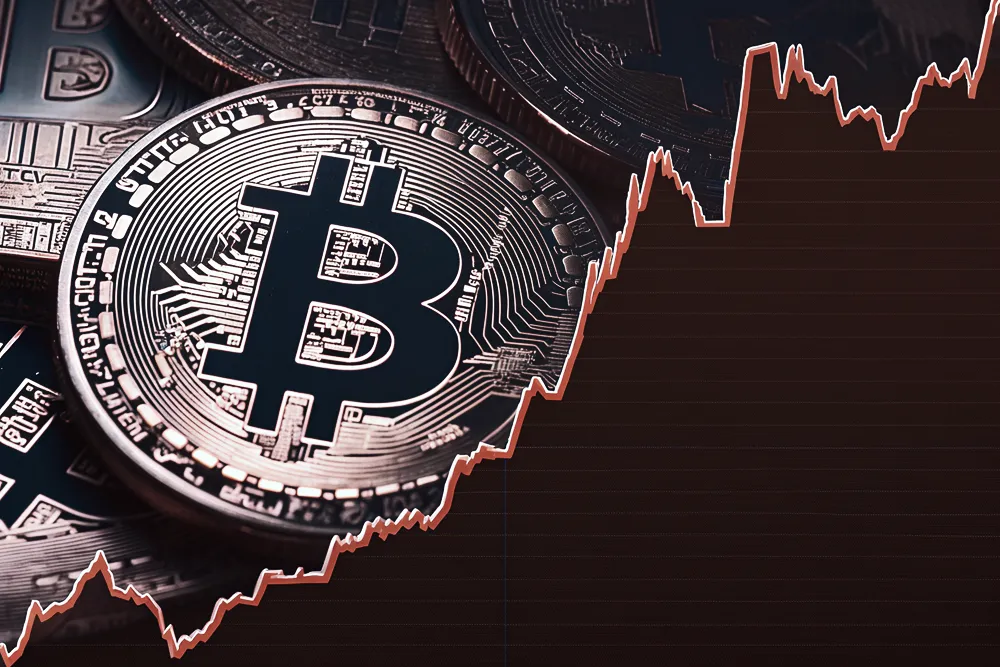
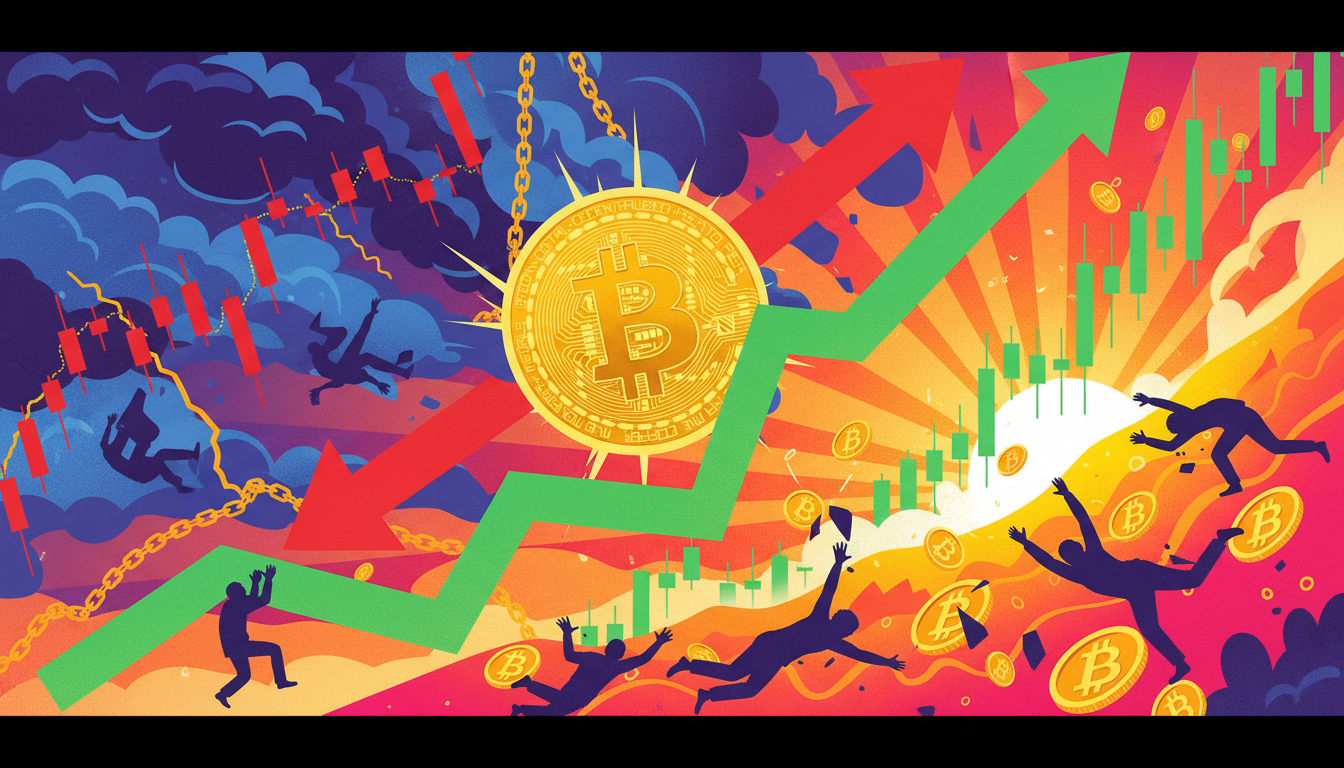
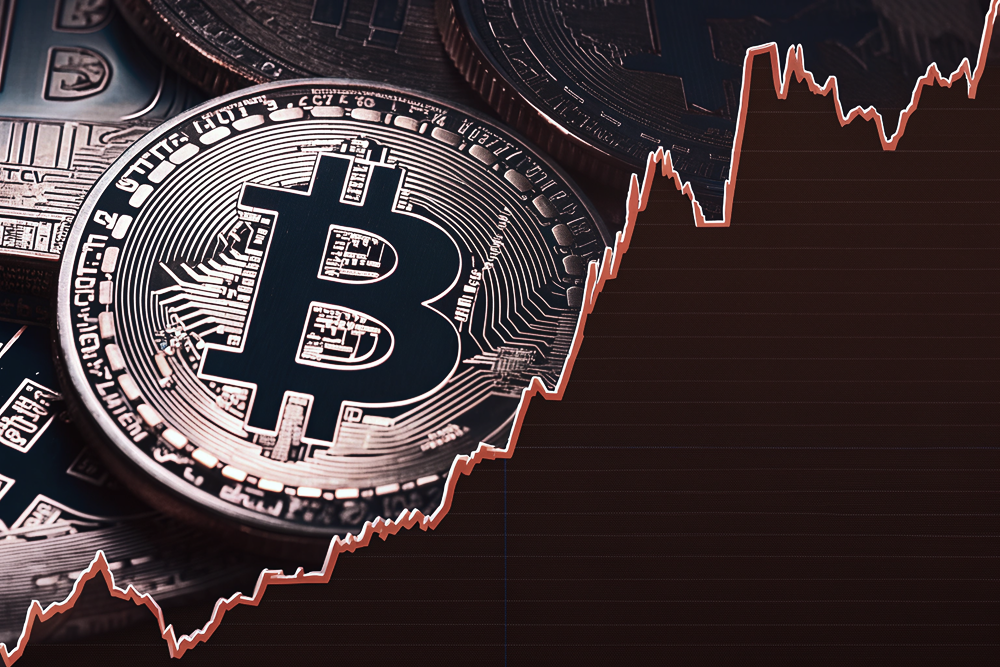
In the Eastern Eight Time Zone this week, after experiencing a sharp decline, Bitcoin quickly surged from around $60,010, with a rebound of nearly 15%, significantly amplifying the daily volatility across the entire cryptocurrency market. During this period, over $2.6 billion in crypto positions were forcibly liquidated, and the spot Bitcoin ETF recorded a net outflow of about $434 million in a single day. However, in contrast, Bitcoin's price showed relative resilience around the $69,000 range. This contrast of "liquidation + capital outflow" and "price holding up" has led to a clear divergence in the market regarding whether the current position represents a greater systemic risk or a medium to long-term investment opportunity after extreme fear and leverage clearing.
Dramatic Price Fluctuations and Emotional Dislocation
● Range rebound rather than precise single point: From the publicly available quotes, Bitcoin rebounded from a low around $60,010 to a high of about $69,000, with a range increase of nearly 15%. During this time, the price exhibited a typical "washout" pattern of rapid decline followed by a V-shaped recovery. However, due to differences in matching and liquidity across platforms, it is difficult to describe this round of volatility with a single precise price point; it is more suitable to characterize the trend features in terms of range and amplitude.
● Exchange price differences reflect volatility intensity: During high volatility periods, the quotes between different exchanges widened significantly. For instance, HTX traded around $69,017 at one point, while OKX had a range of approximately $69,000–$69,048. A price difference of several dozen dollars is not uncommon, but its frequent occurrence in a short time reflects the rush of funds between different platforms, slippage, and liquidity tension, rather than a precise anchor point of a single "authoritative price."
● Divergence of rising prices and declining sentiment: In contrast to the significant rebound in price from the lows, the market sentiment indicator Fear & Greed Index fell back to levels close to those during the FTX incident. This means that even though Bitcoin has not returned to the extreme panic bottom in terms of price, sentiment has already entered a state of "extreme fear." This dislocation of "price moving up while sentiment collapses" leaves room for potential emotional recovery rebounds or further confidence collapse.
Leverage Liquidation and Market "Lightening"
● $2.6 billion forced liquidation exposes leverage vulnerabilities: Statistics show that during this round of volatility, the total amount of crypto positions forcibly liquidated across the market exceeded $2.6 billion, primarily concentrated in high-leverage long positions. The continuous breakdown of key ranges triggered a chain reaction of liquidations, with forced liquidation orders concentrated on multiple exchanges, exacerbating the magnitude and speed of the short-term decline, highlighting the vulnerabilities contained in the large number of "paper long" positions accumulated in the futures market.
● Intense deleveraging concentrated on Ethereum: Jiang Zhuoer mentioned that within approximately 13 hours recently, the market faced concentrated deleveraging pressure of about 220,000 ETH. This large-scale deleveraging in a short time not only indicates that ETH contracts and collateral positions previously accumulated considerable leverage but also means that many long profits that originally relied on leverage amplification were systematically liquidated or passively reduced during this intense fluctuation.
● Mid to short-term effects after leverage clearing: Large-scale concentrated liquidations have a one-time "release" effect on short-term selling pressure, with some potential selling pressure already realized through forced liquidations and passive reductions, leading to a significant decrease in the current market's implied leverage level. Under a "lighter" leverage structure, the probability of triggering a chain liquidation in the event of similar magnitude price fluctuations is relatively reduced, and volatility is expected to converge in stages. However, this also means that the "spring" force of the longs has weakened, and to push prices higher again, more active buying from spot and low-leverage funds may be needed.
ETF Capital Outflow and Price Center of Gravity
● $434 million net outflow in the context of overall capital: The spot Bitcoin ETF recorded a net outflow of about $434 million in a single day, which is relatively large but not extreme in the overall capital inflow rhythm this year. Combined with the previous days of continuous net inflow and position accumulation, this day’s capital withdrawal appears more like a short-term repricing in response to the intense volatility rather than a systemic retreat by institutions from this asset class, but it undoubtedly formed a downward pull on the price center of gravity for that day.
● Institutional reduction and misalignment with other buying: The ETF redemption data reflects the behavior of a portion of medium to long-term, compliant capital, which chooses to reduce positions through ETF channels during periods of increased volatility and decreased risk appetite. However, on-chain and in the market, there may still be behaviors of hedge funds, proprietary trading, and high-net-worth individual investors absorbing at lower levels. Thus, a structural misalignment occurs: while ETF capital reduces positions, other types of capital absorb at different paces, providing a micro explanation for the phenomenon of "ETF outflow, yet prices hold up."
● Mid-term price center of gravity and the threshold for new capital entry: If the net outflow from the ETF continues to exist over a longer time scale, it will slowly depress Bitcoin's mid-term price center of gravity and raise the "cost-performance ratio" required for new capital entry, i.e., lower prices or clearer macro and regulatory benefits. Meanwhile, if volatility, after experiencing concentrated liquidations and capital outflows, fails to attract a new round of incremental capital in a timely manner, it may enter a seesaw-style consolidation at higher ranges, increasing the "waiting cost" for trend traders and medium-term allocators.
Meme Frenzy in a Panic Market
● Local surges in a fearful environment: Against the backdrop of overall market sentiment nearing extreme panic, the market capitalization of the Meme coin KellyClaude on the Base chain surged by about 243.51% within 24 hours, forming a stark contrast to the sharp declines and contract liquidations of mainstream assets. This localized surge highlights that funds will still seek high-leverage speculative stages in specific targets under high-pressure environments.
● The logic of Meme attracting capital during panic: During phases when mainstream coins are under pressure and sentiment is low, some short-term funds, after flowing out of high market cap assets, do not completely exit the market but instead turn to Meme targets with decent liquidity, clear narratives, and concentrated social attention. For these funds, Memes provide a "small position, large volatility" odds structure, and the reinforcement of social media and community consensus makes it easier to form short-term "hot potato" price surges during panic moments.
● Structural differentiation between localized frenzy and systemic deleveraging: On one side, the leverage of the overall market contracts is being concentratedly cleaned out, and the volatility of mainstream assets is amplified; on the other side, individual Meme coins are experiencing short-term frenzies of several times. This structural differentiation reminds investors that while the current market shows a "downgrade" in overall leverage and risk exposure, the high volatility and high uncertainty tail risks in tail assets have not disappeared and may even be amplified due to liquidity concentrating on a few targets.
Large Holder Coordination and Retail Passive
● The implications of 20,000 ETH transferred to Binance: The on-chain action of Trend Research under Yi Lihua transferring 20,000 ETH to Binance has attracted widespread market attention. However, it can currently only be viewed as a significant capital coordination signal, possibly related to hedging, liquidity management, or structural adjustments, and is not sufficient to derive a clear bullish or bearish direction on its own, nor can it be simply understood as a directional bet that "the top or bottom has been confirmed."
● A cyclical perspective of "profits come from bull markets, pullbacks come from bear markets": Yi Lihua mentioned, "profits come from bull markets, pullbacks come from bear markets," which is actually a portrayal of how large funds utilize cyclical fluctuations. For large holders who have already gained substantial unrealized profits in the previous bull market, the current rapid and significant pullback feels more like a window for re-evaluating position structures and adjusting risk exposure rather than a simple panic moment. They are concerned with how to smooth the net value curve before the next trend arrives.
● Large holders "utilizing volatility" versus retail "being utilized by volatility": Compared to large holders actively configuring during volatility and managing pullbacks through capital coordination and hedging strategies, many retail investors often find themselves passively liquidated due to high leverage and lack of risk control during the same round of volatility. The former views volatility as a tool to optimize position costs and structures through position and rhythm control; the latter, due to excessive position amplification, turns the same volatility into a trigger for liquidation and exit. This behavioral difference further highlights the importance of risk management and position control in high-volatility assets.
After Liquidation: How Long Can Price Resilience Last?
The current landscape can be summarized with four keywords: Bitcoin's price shows some resilience around the $69,000 range; leverage on the futures side has been significantly cleared after over $2.6 billion in forced liquidations and concentrated reduction of 220,000 ETH on the Ethereum side; the spot Bitcoin ETF has recorded a phase net outflow of about $434 million; while market sentiment is in an extreme fear range close to the period of the FTX incident. This combination of "price still okay, structure lightening, capital outflow, sentiment extremely cold" leaves two main paths for the subsequent market.
One path is that after the leverage cleaning and emotional panic, if spot and low-leverage funds gradually flow back, and ETF outflows slow down or even turn into net inflows, the previously suppressed buying power may drive a continuation of a "post-panic rebound," with prices once again reaching higher ranges on a lighter leverage structure. The other path is that if institutions and large funds choose to observe for a longer time, ETF continues to net outflow, and sentiment recovery is slow, then Bitcoin may enter a seesaw-style consolidation at relatively high levels, or even complete a "second bottom" deep pullback in the absence of incremental capital support.
For short-term traders, it is crucial to focus on three types of signals at this stage: first, whether the capital flow of the ETF shows a turning point from net outflow to balance or even net inflow; second, the pace and speed of the Fear & Greed Index moving from extreme fear to neutral recovery; third, the frequency and directional changes of large capital inflows and outflows on-chain and in the market. For medium to long-term allocators, it is more important to cautiously assess the current price range's position in their own cyclical perspective, based on preset tolerance for pullbacks and phased capital plans, rather than being swayed by the scale of a single liquidation or daily volatility.
Join our community to discuss and become stronger together!
Official Telegram community: https://t.me/aicoincn
AiCoin Chinese Twitter: https://x.com/AiCoinzh
OKX Benefits Group: https://aicoin.com/link/chat?cid=l61eM4owQ
Binance Benefits Group: https://aicoin.com/link/chat?cid=ynr7d1P6Z
免责声明:本文章仅代表作者个人观点,不代表本平台的立场和观点。本文章仅供信息分享,不构成对任何人的任何投资建议。用户与作者之间的任何争议,与本平台无关。如网页中刊载的文章或图片涉及侵权,请提供相关的权利证明和身份证明发送邮件到support@aicoin.com,本平台相关工作人员将会进行核查。