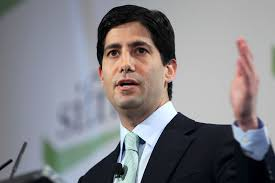
It can be confirmed that Trump has nominated Kevin Warsh as the next Chairman of the Federal Reserve. The congressional process still needs to be followed, but it is highly likely he will take office in June.
Kevin Warsh's policies cannot simply be categorized as hawkish or dovish; many experts mention that his monetary policy is characterized by a simultaneous approach of "rate cuts + balance sheet reduction."
I believe this policy is a clever strategy.

┈┈➤ Alleviating U.S. Treasury Financing Pressure While Controlling Inflation
First, lowering interest rates will directly affect short-term U.S. Treasury yields, reducing the financing costs of U.S. Treasuries, which can be said to alleviate Trump's urgent concerns.
Second, through balance sheet reduction, there can be a real-time and moderate decrease in the supply of dollars to control inflation. Trump actually does not want to see inflation resulting from rate cuts.
Third, it is still through controlling the balance sheet that the exchange rate of the dollar can be maintained. If the dollar depreciates, even if U.S. Treasury yields decrease, the actual rates borne by overseas buyers may not have decreased. However, balance sheet reduction can maintain the dollar's exchange rate to some extent, at least reducing the degree of dollar depreciation.
(So friends who are worried about the depreciation of the USD/CNY exchange rate may be slightly reassured, but it still depends on the actual policies after Kevin Warsh takes office.)
In summary, the simultaneous approach of "rate cuts + balance sheet reduction" is a harmonious, moderate, and flexible policy combination.
┈┈➤ Preventing Inversion of the U.S. Treasury Yield Curve
Lowering interest rates is beneficial for reducing short-term U.S. Treasury yields, while simultaneously reducing the balance sheet will not lead to a decrease in long-term U.S. Treasury yields.
This can prevent the inversion of the U.S. Treasury yield curve and reduce recession expectations.
┈┈➤ Intensifying Market Differentiation
With rate cuts and balance sheet reduction, commercial banks face a situation where base money decreases, but the cost of money decreases.
╰┈✦ Intensifying Differentiation in Commercial Bank Loan Rates
In this situation, commercial banks must decide to utilize their relatively limited funds more efficiently.
For low-risk, relatively high-quality loan recipients, they may offer relatively more loan amounts or lower interest rates.
For high-risk, relatively low-quality loan recipients, they may offer relatively less loan amounts or higher interest rates.
╰┈✦ Intensifying Differentiation in Commercial Bank Deposit Rates
As for deposits, to attract more deposits, the interest rates on large certificates of deposit and corporate deposits decrease less, while the rates on individual demand deposits decrease relatively more.
╰┈✦ Intensifying Differentiation in Fund Flows
Based on the above decisions by commercial banks, funds will flow more towards the real economy, especially industries with good development momentum. Conversely, funds flowing into risk markets will be relatively less.
Strong industries, facing less decrease in deposit rates and more decrease in loan rates, will tend to expand production. Weaker industries will expand production to a lesser extent.
Therefore, the differentiation between strong and weak industries may intensify.
╰┈✦ Differentiation in the Job Market, Overall Employment Still Not Optimistic
Strong industries will see an increased demand for top talent. However, weak industries may reduce their demand for repetitive workers. The job market will also face differentiation.
Overall employment data is indeed difficult to be optimistic about.
┈┈➤ The Crypto Market May Face Challenges in 2026
Previously, the market expected that in the second half of 2026, with a new Federal Reserve Chair, the focus would be on easing.
However, the turning point is that the "rate cuts + balance sheet reduction" policy is a form of structural easing, and crypto clearly does not belong to a strong industry, so the outlook for the second half of 2026 may not be optimistic.
Of course, this cannot be generalized. Strong assets in the crypto market, such as BTC, ETH, SOL, and BNB, may not perform too poorly. On one hand, the first three cryptocurrencies have passed the BTC ETF, and on the other hand, SOL and BNB have certain collaborations with the U.S. So they may perform relatively better.
However, some altcoins, as weaker projects in this weak industry, may continue to weaken in the second half of 2026.
The second half of 2026 may be both an elimination round and a competition to sift through the gold in the crypto market.
┈┈➤ The Crypto Market in 2027 May Be Worth Looking Forward To
From a macro perspective, since the job market in the second half of 2026 is unlikely to strengthen unless the rate cuts significantly exceed the balance sheet reduction. Therefore, in 2027, after inflation is controlled, the Federal Reserve may implement stronger easing policies, which would be beneficial for the crypto market.
On the other hand, strong industries like AI may drive economic development and accelerate M2 growth. With the increase in M2, by 2027, there may be liquidity spilling over into the crypto market.
From the internal perspective of the crypto market, after the eliminations in 2026, what remains are relatively high-quality projects, with fewer tokens accommodating greater liquidity, which may see some growth. Additionally, after the frenzy of issuing tokens in 2025, the market's attitude towards new tokens may be more cautious by 2027. Project teams may also adopt a more cautious approach to issuing tokens.

┈┈➤ In Conclusion
This article interprets the "rate cuts + balance sheet reduction" policy, but it is not certain that Kevin Warsh will implement such a policy.
However, it can be confirmed that even with a new Federal Reserve Chair, there will not be a reckless flood of liquidity, and it is temporarily not advisable to have overly high expectations for the second half of 2026. We can only hope it does not turn out to be as deep a bear market as in the second half of 2018 and 2022.
免责声明:本文章仅代表作者个人观点,不代表本平台的立场和观点。本文章仅供信息分享,不构成对任何人的任何投资建议。用户与作者之间的任何争议,与本平台无关。如网页中刊载的文章或图片涉及侵权,请提供相关的权利证明和身份证明发送邮件到support@aicoin.com,本平台相关工作人员将会进行核查。