The U.S. government will shut down again, will the crypto market be hit again?

CN
1 hour ago

Written by: Jaleel Jia Liu

Last October, the U.S. government was shut down for 43 days, leading to a tightening of global financial liquidity and a significant drop in the cryptocurrency market.

Many people still vividly remember that time. And at the end of this month, a similar situation may occur again.

Three days ago, Trump stated in an interview in Davos, "I think we are in trouble again, and we are likely to face another government shutdown caused by the Democrats." Although lawmakers are working hard to finalize a funding agreement, with the deadline of January 30 approaching, the U.S. government has only 4 working days left, making another shutdown seem difficult to avoid.

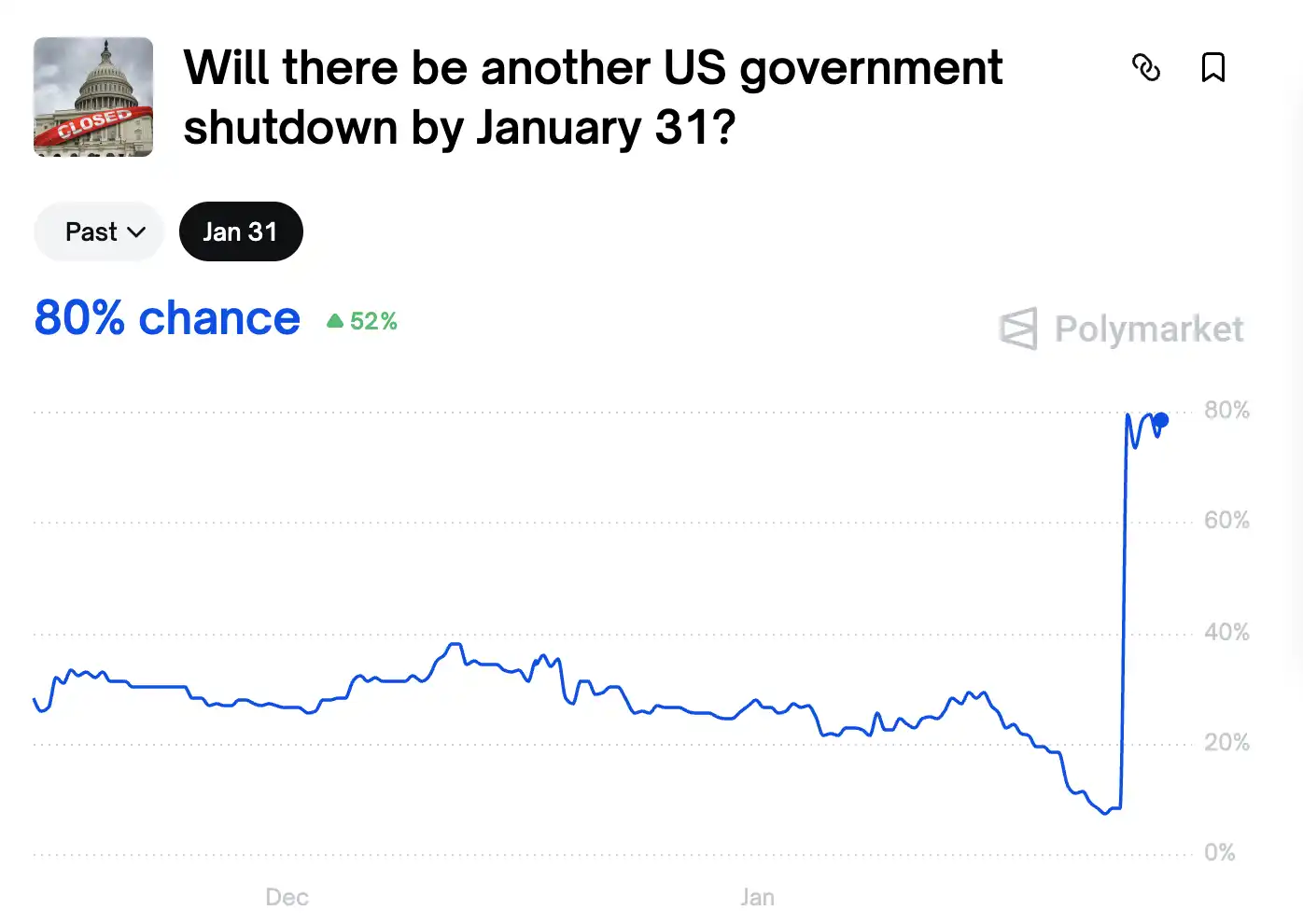
The probability on Polymarket regarding "Will the U.S. government shut down again before January 31?" has surged to 80%.

Currently, the main points of contention between the two parties revolve around funding for ICE and funding for the Affordable Care Act. These are also long-standing contentious topics in the electoral battle between the two parties: immigration policy and social welfare. To further understand why the government may shut down, we need to start with one of the largest welfare fraud cases in U.S. history that occurred in Minnesota.

It All Starts in Minnesota

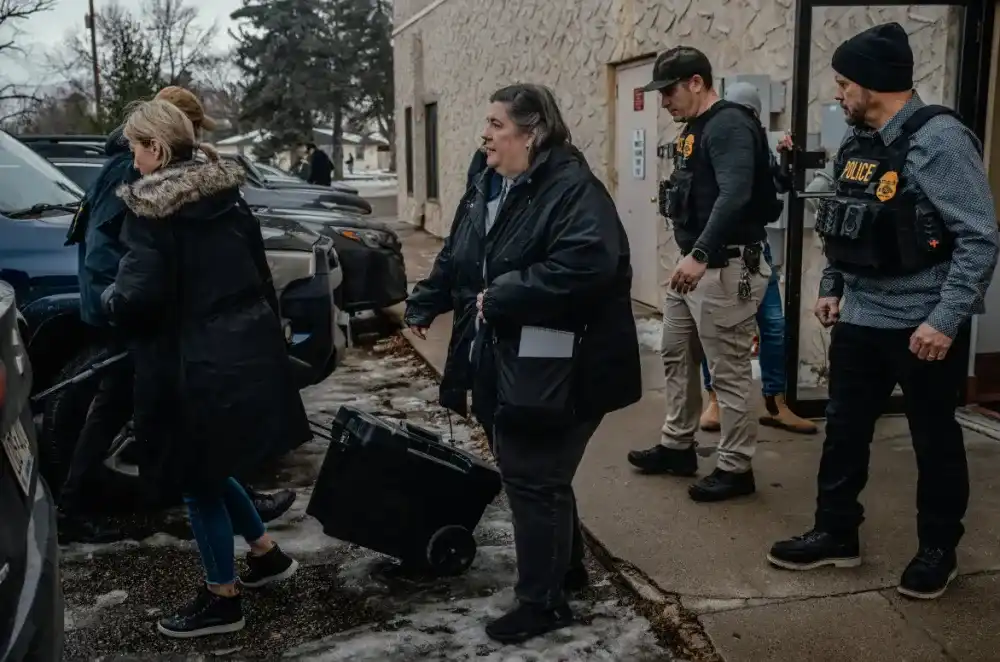
Federal agents investigating a fraud case in Minnesota

The story begins with the outbreak of the pandemic in 2020. The U.S. has a traditional welfare policy that provides free lunches to children from low-income families. Before the pandemic, this benefit was strictly regulated; children had to eat together at schools or formal community centers, and attendance was taken to prevent fraud. But when the pandemic hit and schools closed, children stayed home. Thus, Congress made a sweeping change, allowing meals to be packaged and taken away without strict verification. As long as you were a registered nonprofit organization claiming to have distributed meals, the government would provide funding with no upper limit.

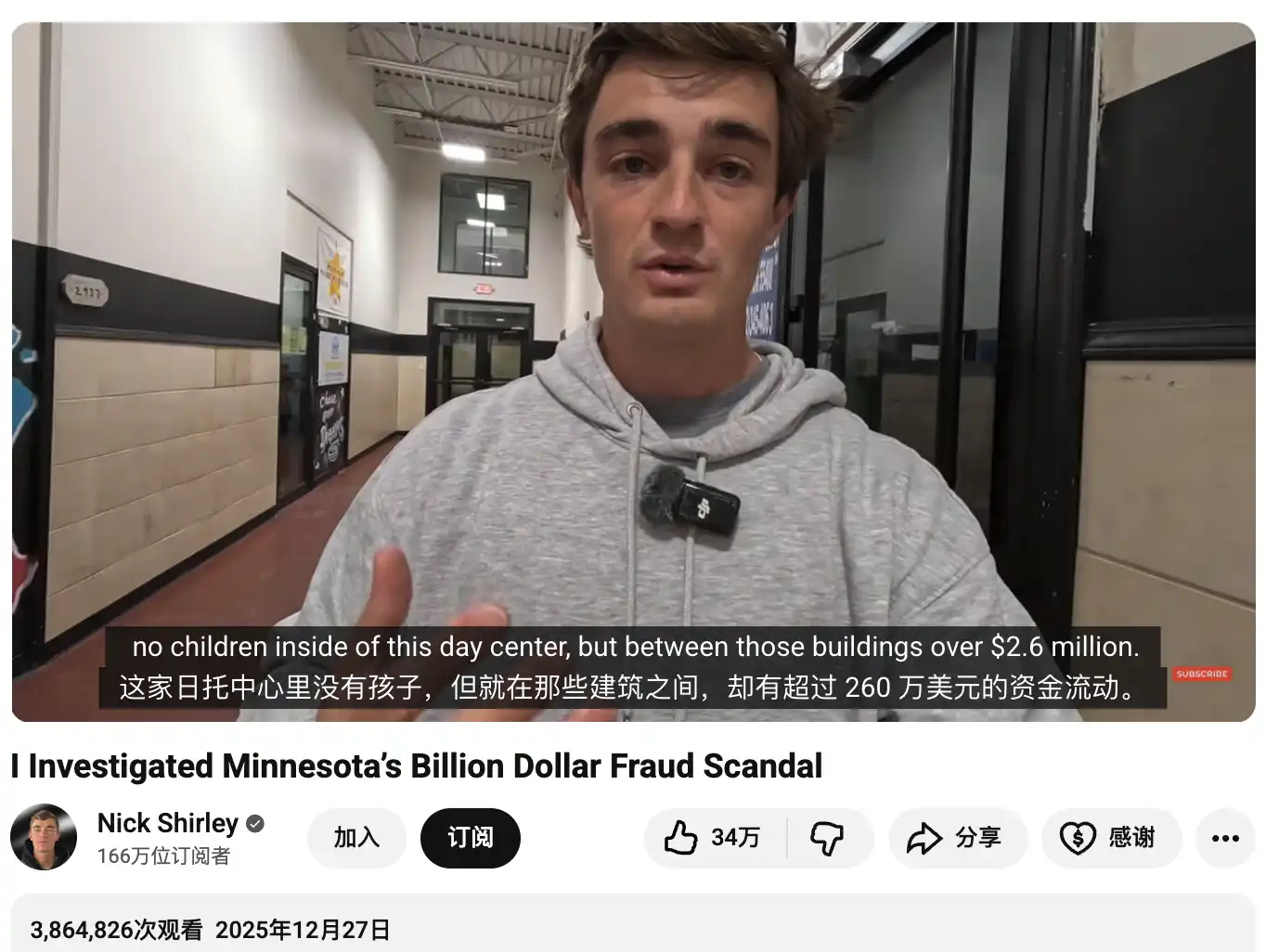
This loophole set the stage for the Minnesota welfare fraud case, which was exposed by a U.S. social media influencer, Nick Shirley.

In December 2025, Nick Shirley released a 42-minute investigative video that "went viral overnight." In the video, he revealed a number of nonprofit organizations operating under the banners of "child nutrition" and "assistance for vulnerable groups," which applied for funds from state and federal governments, claiming to serve thousands of clients, while in reality, many of the children did not exist, and the meals for children were also nonexistent. The so-called public welfare projects were merely shells used to siphon off government funds.

After the video was released, it quickly spread, garnering tens of millions of views within the first 24 hours, and with various short video clips and shares, the overall reach exceeded 100 million. Following the incident, investigations by the Department of Homeland Security (DHS) and the Federal Bureau of Investigation (FBI) revealed that since 2018, the federal government had allocated a total of $18 billion to 14 public projects in Minnesota, with the amount involved in the fraud reaching as high as $9 billion. It is one of the largest welfare fraud cases in U.S. history.

What makes this case politically explosive is that it occurred in Minnesota.

Minnesota has long been a stronghold for the Democratic Party, and the Democratic governor was once a running mate of Harris. It is also a state that heavily relies on welfare programs and has a dense network of nonprofits. The welfare system here has formed a structure of "outsourced governance" over the past decade: the government does not provide services directly but delegates many public functions to nonprofit organizations. In theory, this is for efficiency and community autonomy; but in reality, it has created an extremely lax, poorly regulated gray area with highly entangled political relationships.

Many of the organizations involved in the case have close ties to the local Democratic political ecosystem. There is evidence that a significant portion of the funds obtained through welfare fraud has flowed into Democratic campaign contributions.

At the same time, Minnesota is also a highly immigrant state, with a large population of Somali immigrants. The Minnesota Attorney General's office stated that among the 92 defendants charged in this case, 82 are Somali Americans. This intertwines immigration enforcement, welfare distribution, and public safety issues, hitting the core topics of long-standing opposition between the Democratic and Republican parties, and is a key policy commitment repeatedly emphasized by Trump and the Republican Party during the campaign.

Since someone handed them a knife, the Republicans naturally chose to plunge it in deeply.

The biggest "internet celebrity" in America, Trump, along with Musk, frequently shared related content, harshly criticizing Minnesota's handling of the situation and linking these opaque, potentially abused subsidy policies to the Democratic Party's long-term expansion of social welfare.

Due to the exposure of the Minnesota welfare fraud case, Trump significantly increased immigration enforcement efforts in Minnesota. The DHS and FBI dispatched numerous agents to continue investigations and sweep operations against illegal immigrants, with ICE (Immigration and Customs Enforcement) as the main force in this operation.

However, the sudden increase in enforcement intensity quickly led to serious consequences.

On January 7, ICE agents accidentally shot and killed a 37-year-old woman, Renée Good, during a local enforcement operation, drawing national attention. Just 17 days later, on January 24, another American citizen, Alex Pretti, was shot and killed by federal immigration enforcement personnel in the area.

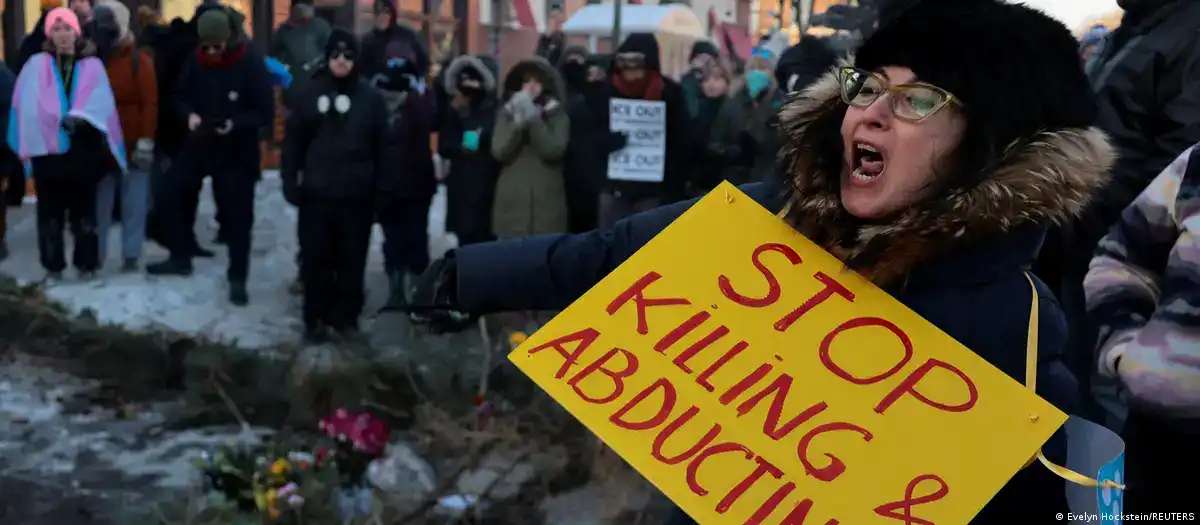
These two consecutive fatal shootings caused the situation in Minnesota to spiral out of control. Large-scale protests and riots erupted locally, and the National Guard was even deployed to maintain order. The Democratic Party quickly seized this opportunity, using the fatal shootings by ICE in Minnesota as irrefutable evidence of the agency's out-of-control enforcement methods.

Citizens spontaneously mourning the victims shot by law enforcement

So, why does this matter for the U.S. government shutdown on January 31?

In the U.S. constitutional system, the purse strings are held by Congress, and the executive branch cannot unilaterally decide to continue spending. Each fiscal year, Congress must pass 12 annual appropriations bills, corresponding to 12 policy areas: defense, homeland security, agriculture, transportation, housing, etc. These appropriations bills determine how much each department can spend at most during that fiscal year and where the money can be spent. If the appropriations proposals are not passed, or if the legal authorization for the fiscal year expires and Congress has not passed new authorization in time, that department will have no budget and must shut down. This is what is known as a government shutdown.

The normal process starts on October 1 for the fiscal year. If an agreement is not reached before October 1, Congress first passes a temporary appropriations bill to keep the government running, setting a new deadline. The date we are currently focusing on, January 30, is the expiration date of this temporary bill. By that day, if the formal appropriations bill has not been passed and the temporary bill has not been extended, the U.S. government will shut down, or partially shut down.

Passing these appropriations bills requires both the House of Representatives and the Senate to approve them in succession. Currently, the House has completed its approval, but the process is stalled in the Senate.

The U.S. Senate requires 60 votes to pass government appropriations bills. The current Senate seat structure is: 53 Republican seats, 45 Democratic seats, plus 2 independent senators allied with the Democrats, giving the Democratic camp a total of 47 votes. Even if the Republicans "unanimously agree," they only have 53 votes and cannot unilaterally gather the 60 votes needed to end debate.

This means that as long as the Democrats choose to collectively obstruct, the Republicans must seek at least 7 votes from the Democratic camp to allow the appropriations bill to proceed to a final vote, thereby avoiding a government shutdown. This is also why Trump has been advocating for the abolition of the "60-vote" procedural threshold for over half a year.

In this context, the current funding negotiations involving the risk of a government shutdown have made the budget for the Department of Homeland Security, including ICE, the most controversial and difficult to reach consensus on.

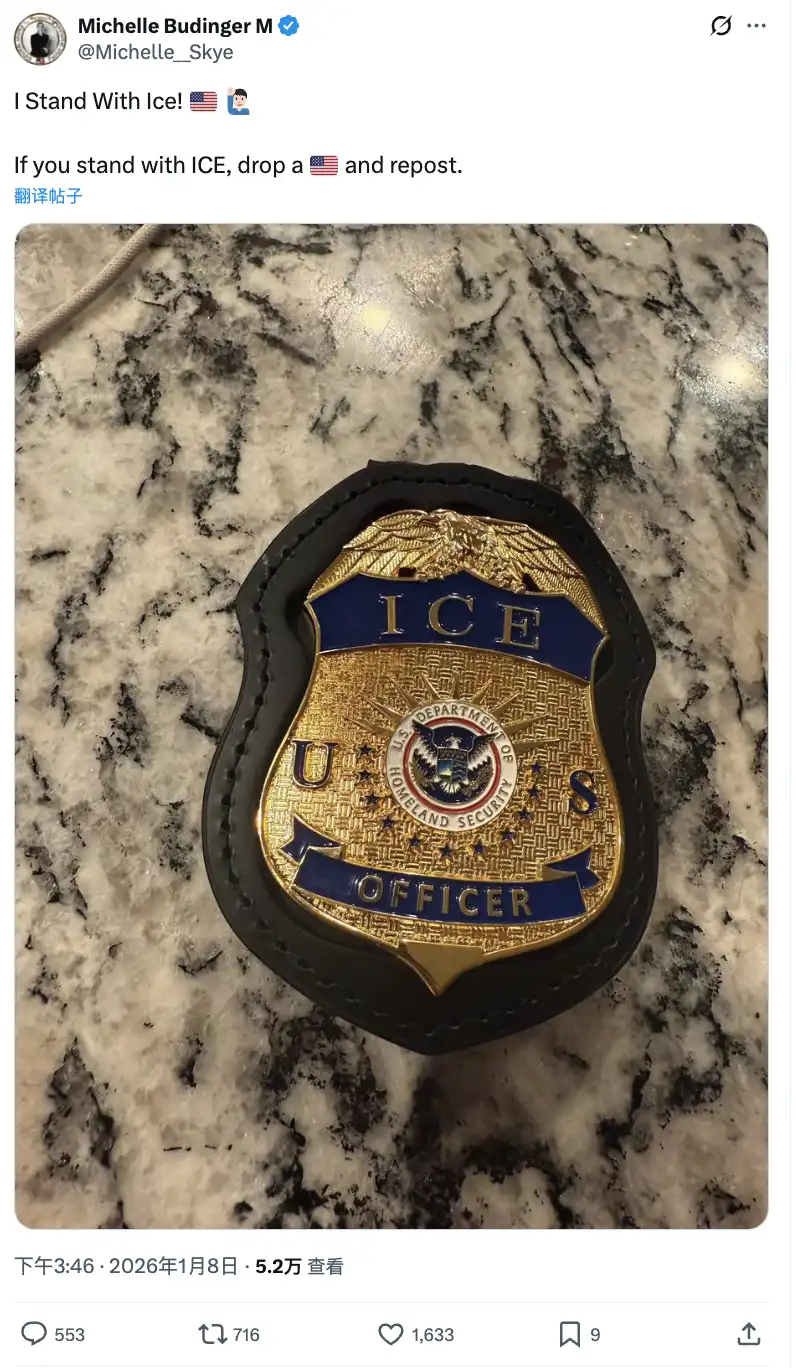
There are many voices on social media supporting ICE enforcement agencies

The Democratic logic is clear: ICE caused two deaths in Minnesota, which proves that the agency's enforcement methods have serious problems. Why should we continue to fund it without substantial reforms to ICE and the addition of strict limitations? The Democrats are calling for a reduction in the size of ICE or at least the addition of strict restrictions.

The Republican stance is sharply opposed: the Minnesota welfare fraud case involves $9 billion, and most of the defendants are Somali, which precisely indicates the need to strengthen, not weaken, immigration enforcement. ICE is a key force in combating illegal immigration and welfare fraud and must be adequately funded.

This opposition has directly led to the appropriations bill for the Department of Homeland Security, which includes ICE funding, being stalled in Congress. This topic may even serve as a "munition" for party conflict that continues until the midterm elections at the end of the year, becoming one of the core battlegrounds.

The Old Chestnut of "Obamacare"

Beyond ICE funding, the issue of healthcare subsidies constitutes the second and more "structural" point of divergence in the current risk of a U.S. government shutdown. This controversy is also a lingering issue that was temporarily shelved during the last government shutdown and has not been truly resolved: whether to continue increasing the subsidy budget for the Affordable Care Act (ACA), commonly known as Obamacare.

These subsidies were initially introduced as temporary measures during the COVID-19 pandemic, significantly reducing the actual costs of health insurance for low- and middle-income individuals through tax credits. They were not made permanent after the pandemic and officially expired at the end of last year. Due to the failure of the Democrats and Republicans to reach an agreement on funding authorization, this issue was "frozen" during the last government shutdown but did not disappear; it has simply been dragged into the present.

The Democrats hope to increase the budget; if the subsidies are not renewed, millions of Americans will see their health insurance premiums rise sharply in the short term, and some may be forced to exit the insurance system entirely. However, the Republicans' opposition is also related to the background and reasons for the Minnesota welfare fraud case, as the healthcare subsidy system during the pandemic has already bred systemic fraud. The ACA subsidies are not just a financial burden issue but a "gray funding pool" abused by local nonprofits, insurance companies, and even political networks.

Politics affects people's livelihoods, and people's livelihoods also influence politics.

The struggle between the two parties over the determination of this healthcare budget is intricately linked to many highly discussed events on the internet.

For example, the recently discussed "American Kill Line" theory in the Chinese community: many American families are not destitute; they have jobs, income, and health insurance, but their financial security margins are extremely low. Once they encounter unemployment, serious illness, accidental injury, or when health insurance subsidies expire and premiums rise, their family cash flow can "run dry" in a very short time, plunging them into a situation from which they cannot recover. Mortgage defaults, credit card delinquencies, and skyrocketing medical bills almost happen simultaneously. It's like a character in a game; when health points drop to a critical value, no combo is needed—just one critical hit will lead to an instant "knockout."

The ACA subsidies are precisely the last buffer that many families have to avoid triggering this "kill line." They do not make people wealthy, but they prevent individuals from falling out of the system after a single illness or layoff. This is why the Democrats describe the subsidy issue as an "affordability crisis" rather than "welfare expansion."

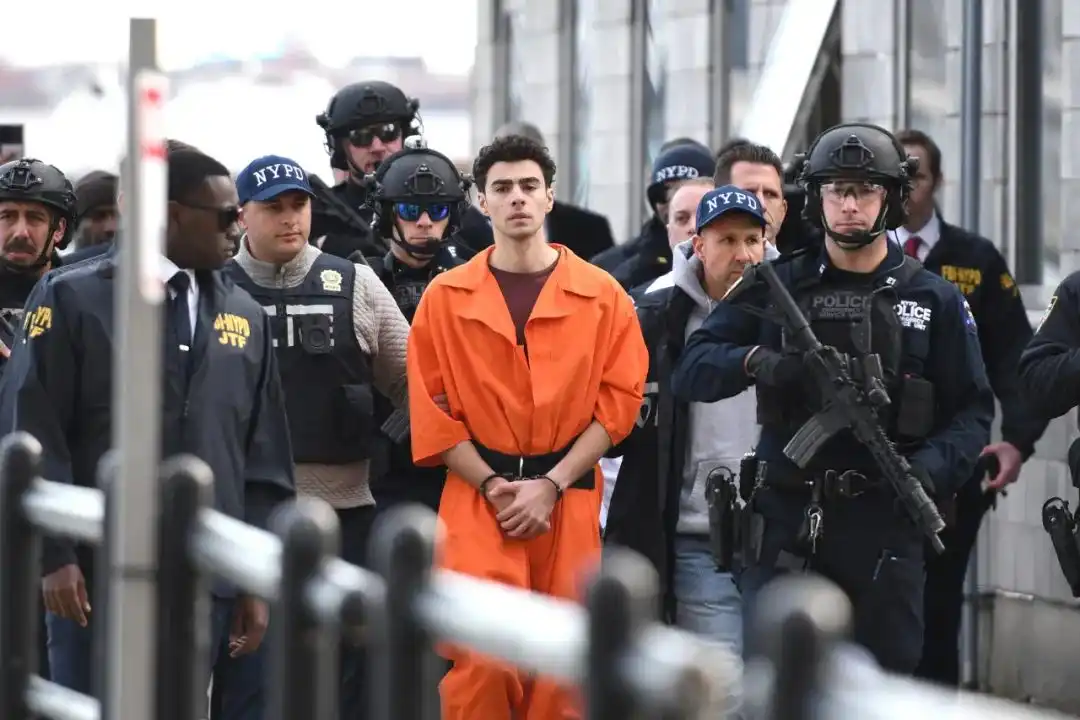
It is also against this social backdrop that the case, which once ignited public opinion—a 26-year-old heir to a wealthy family and Ivy League graduate who shot the CEO of the largest insurance company in America—satisfies the American public's imagination of a modern "folk hero."

The suspect in the CEO shooting, Luigi

The symbolized insurance company CEO became a victim. Medical issues are no longer just policy debates; they are eroding the foundational sense of security in society.

When people begin to express their despair over a system through extreme events, it indicates that the discussion space around that system has become severely imbalanced. The struggle over ACA subsidies has been pushed to the intersection of Congress, elections, and government shutdowns in this state of imbalance.

Will This Shutdown Hit the Crypto Market Again?

So, will the impact of this U.S. government shutdown cause a crash in the crypto market like the last time?

I believe there will still be negative effects, but the extent may not be as severe as last time.

The main reason is that Congress has already passed 6 out of the 12 annual appropriations bills. This means that if an overall agreement is not reached by the end of January, the shutdown will be a "partial shutdown" rather than a complete one. Compared to the shutdown in October 2025, this is a fundamental difference.

The last shutdown was due to a complete failure of the budget system, lasting 43 days and setting a historical record; whereas this time, even if it occurs, it will mainly target the Department of Homeland Security and a few departments that have not yet received approved funding. Currently, it seems that the crypto market has already anticipated this and has declined in advance. Related reading: "Why Bitcoin Keeps Falling."

Additionally, the impact of this government shutdown on the crypto industry may also manifest at the institutional level.

Once the budget impasse continues, all political energy in Congress will be forced to focus on the minimum priority goal of "avoiding a complete shutdown," while other issues—especially those requiring bipartisan coordination and involving complex technical details—will be systematically shelved. The most critical of these is the "Clarity Act," which is highly anticipated by the crypto industry.

The significance of this bill lies not in short-term stimulation but in institutional certainty: clarifying whether digital assets are classified as securities or commodities, delineating the regulatory boundaries between the SEC and CFTC, and providing compliance anchors for exchanges, DeFi projects, and institutional capital.

The bill has already passed the House in July and was originally expected to enter the Senate for review in January. However, if the government falls into a shutdown state again, this timeline is likely to be pushed back once more.

This will not immediately depress cryptocurrency prices, but it will delay the pace of institutional capital entering the market, weakening the certainty of mid- to long-term narratives.

Overall, even if the U.S. government faces another shutdown in January, its direct impact on financial markets, especially cryptocurrency prices, is unlikely to replicate the magnitude of the previous shock. The current risk of a shutdown has been highly anticipated, and its scale is more limited.

However, we can see more "preludes" to the midterm elections at the end of the year in this U.S. government shutdown event.

Whether it is the ICE funding, ACA healthcare subsidies, or the tug-of-war surrounding welfare fraud and healthcare affordability, these controversies are closely tied to voters' daily lives and can easily be transformed into clear, oppositional, and communicable political narratives. The government shutdown is evolving from a budget failure event into a political battleground where both sides are laying the groundwork for the upcoming midterm elections, setting the tone for the political and policy direction in the coming months.

免责声明:本文章仅代表作者个人观点,不代表本平台的立场和观点。本文章仅供信息分享,不构成对任何人的任何投资建议。用户与作者之间的任何争议,与本平台无关。如网页中刊载的文章或图片涉及侵权,请提供相关的权利证明和身份证明发送邮件到support@aicoin.com,本平台相关工作人员将会进行核查。

Share To
APP

X

Telegram

Facebook

Reddit

CopyLink