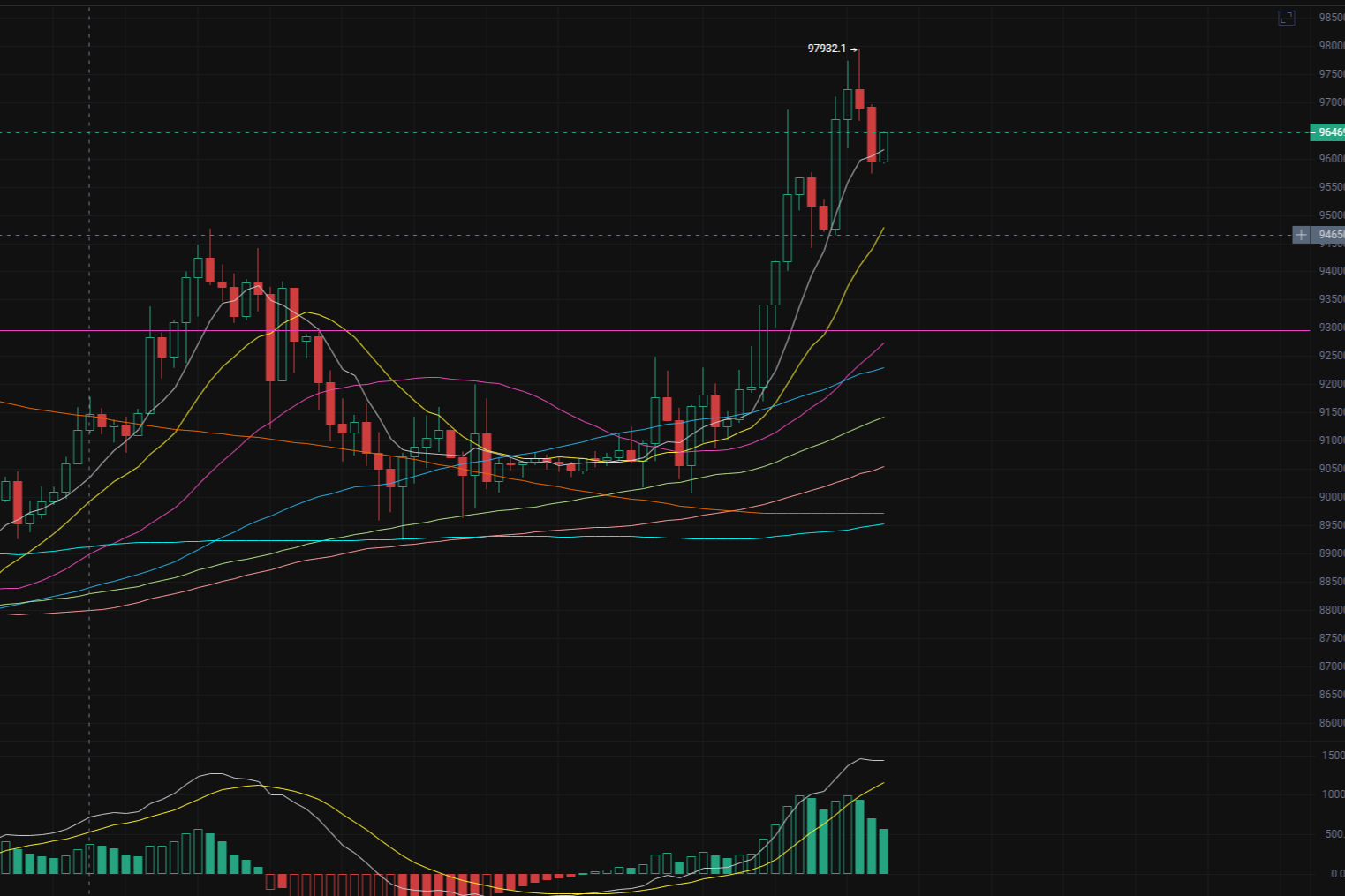
On January 15, 2026, Eastern Standard Time, former BitMEX CEO Arthur Hayes made his latest judgment: if U.S. dollar liquidity strengthens again around 2026, Bitcoin is expected to usher in a new round of price increases. He clearly identifies the core driving forces of this market cycle as the expansion of the Federal Reserve's balance sheet, the recovery of bank credit, and the decline in mortgage rates, all of which signal liquidity. As this viewpoint has been widely reported by professional media such as TechFlow, discussions in the market about whether "liquidity can reignite Bitcoin" have rapidly intensified. The focus of current debates revolves around when and how the Federal Reserve will shift its stance, and whether a looser dollar environment will inevitably push up risk assets. This macro narrative is not only about Bitcoin itself; it is quietly reshaping investors' pricing framework for a broader range of crypto assets: whether to continue viewing Bitcoin as a singular safe-haven tool or to place it within the high Beta asset spectrum of the global liquidity game has become a question the market must readdress.
From BitMEX Figure to Macro Narrative Driver
In the early days of the crypto market, Arthur Hayes was well-known as the co-founder and CEO of BitMEX. His radical innovations in contract product design and leveraged trading models once made BitMEX the storm center of the futures market. Following changes in the exchange landscape and his personal role, Hayes gradually transitioned from a front-line operator to a continuous outputter of macro viewpoints. Through blogs, interviews, and social media, he has shaped himself into a "narrative architect" attempting to explain the crypto cycle through macro logic. This identity transformation has turned him from a "builder" into a "storyteller," pushing him onto a larger public stage. After years of deep involvement in derivatives and crypto trading, Hayes's sensitivity to market sentiment, leverage structure, and liquidity environment is seen as an important reference by many investors, which is why a judgment about the U.S. dollar liquidity and Bitcoin's trajectory in 2026 is enough to attract widespread attention. More critically, under the dissemination chain of media like TechFlow, his viewpoints often undergo a clear information diffusion loop: the original viewpoint is published, interpreted and repackaged by professional content teams, then amplified by social media, KOLs, and communities, ultimately settling as a "market consensus candidate" in ordinary investors' daily discussions. In this mechanism, Hayes is no longer just expressing personal opinions; he is participating in shaping the entire market's macro narrative framework.
Federal Reserve Balance Sheet Expansion and Dollar Liquidity Uncertainty
Expectations surrounding the Federal Reserve's potential balance sheet expansion around 2026 have been brewing within the market for some time. After the previous round of interest rate hikes and balance sheet reduction, more and more institutions are betting that the Federal Reserve may ultimately restart more accommodative operations in the context of slowing economic growth and tightening financial conditions, in order to avoid credit contraction evolving into systemic risk. According to public reports, some analysts have already noted signs of a mild increase in the Federal Reserve's balance sheet at certain points, improvements in bank loan growth rates, and a relative decline in mortgage rates, interpreting these as early signals of a marginally looser liquidity environment. However, the current public information comes from only a few single sources, and there is no consistent data verified by multiple parties regarding the specific scale of balance sheet expansion or the quantifiable extent of bank loan growth, which means that any deductions based on "precise numbers" carry significant uncertainty. Even so, the decline in mortgage rates and the recovery of bank credit activity are still viewed by many macro traders as a "barometer" for the recovery of U.S. dollar liquidity: lower rates alleviate the financing cost pressures on households and businesses, and banks are more willing to expand their asset sides under controlled risk judgments. This credit generation process has historically often preceded the systemic revaluation of asset prices. Therefore, when these signals are included in discussions, whether the Federal Reserve will consolidate this trend through more direct balance sheet expansion around 2026 becomes a core variable that the market repeatedly contemplates.
How Hayes Rewrites the Liquidity Flood into the Bitcoin Narrative
In Arthur Hayes's narrative, the logical chain is relatively clear: once U.S. dollar liquidity strengthens again, the first to be revalued is the overall global risk asset, with Bitcoin expected to be one of the high-sensitivity targets benefiting from liquidity overflow, enjoying more intense price elasticity. He views the Federal Reserve's policy shift, balance sheet expansion, increased bank loans, and declining rates as different links in the same chain, believing that this chain will ultimately complete a loop in an environment of rising risk appetite. Historically, the relationship between loose liquidity and Bitcoin's price increase has both resonance and a clear time mismatch: during the last round of easing, abundant U.S. dollar funds did not immediately embrace crypto assets but first pushed up traditional stock markets and certain tech growth sectors. It was only when the market sought new high-yield vehicles that Bitcoin appeared to have a strong synchronization with liquidity expansion at specific stages. Because of this, while Hayes emphasizes liquidity-driven dynamics, he also acknowledges that this is not a linear transmission but a form of "delayed resonance." From this perspective, Bitcoin is no longer just a traditional "digital gold" or a singular safe-haven tool; it resembles a high Beta asset in the global liquidity cycle: when the monetary environment tightens and risk aversion prevails, it will face more severe adjustments; conversely, when funds flood in and yield-seeking sentiment spreads, it often exhibits higher elasticity and stronger price imagination among various assets. Hayes attempts to expand the narrative of Bitcoin from "fighting inflation" to "absorbing liquidity," forcibly binding the macro monetary cycle with the crypto market cycle.
Market Sentiment and Media Amplification: The Collision of Consensus and Skepticism
After media outlets like TechFlow concentrated on reporting Arthur Hayes's liquidity expectations for 2026, market sentiment experienced a significant amplification effect. With the support of the dissemination chain, discussions that originally belonged to a few macro traders quickly evolved into a perceptible "annual main narrative candidate" at the community and retail level. Some investors rapidly regarded it as the core basis for their allocation decisions over the next two years, believing that "waiting for the dollar to loosen again and betting on Bitcoin to become the biggest beneficiary of liquidity re-inflation" would be the most attractive storyline before 2026. In their view, this narrative not only aligns with historical experiences but also provides a more optimistic long-term anchor for the current sideways or adjusting price trends. However, another group of participants remains notably cautious, questioning the simplicity of binding liquidity expansion to Bitcoin's price increase in the absence of specific quantitative data and clear policy pathways, which easily leads to the "post hoc attribution" narrative trap. Due to the lack of precise disclosures regarding the scale of balance sheet expansion and the specific extent of bank loan growth in public information, the market can only fill the gaps in the macro picture using fragments of past cycle experiences, marginal changes in individual economic data, and snippets from media reports. This method of "piecing together the big picture with experience and fragmented data" itself exacerbates information asymmetry and cognitive bias: the less detail available, the more easily emotions and imaginations can rapidly expand in the gaps of the narrative, making it harder to form a truly solid consensus among different participants.
If the Dollar Loosens Again, Where Might Bitcoin Go?
Assuming that U.S. dollar liquidity indeed expands significantly around 2026, what truly determines Bitcoin's performance is often not the single proposition of "whether there will be loosening," but rather "at what pace and under what macro environment will the loosening occur." If the pace of balance sheet expansion and credit recovery is relatively moderate, the market will have time to digest valuation increases and rising risk appetite, and Bitcoin's price may exhibit a more "stair-step revaluation" trend, accompanied by multiple rounds of pullbacks and turnover to complete the redistribution of chips; conversely, if a large amount of liquidity is released in a short time, combined with a calming of risk aversion and a rapid decline in yields, risk assets may face a more drastic revaluation, and Bitcoin, as a high Beta asset, will see its price volatility correspondingly amplified. Furthermore, macro easing never occurs in isolation; it often intertwines with variables such as regulatory attitudes, geopolitical conflicts, policy coordination among countries, and even technological events, all of which profoundly affect the transmission path of liquidity from the traditional financial system to crypto assets. For instance, in a tightening regulatory environment, new liquidity may remain more in compliant financial assets rather than flowing directly on-chain; in the context of geopolitical tensions or tightening capital controls, crypto assets may be endowed with stronger cross-border asset allocation attributes. Therefore, equating macro easing simply with "Bitcoin must rise" logic easily overlooks the mismatch in the time dimension: policy expectations, execution pace, and market pricing often do not synchronize, and the climax of the narrative and the turning point of prices frequently appear misaligned. For investors, viewing a single macro factor as an "unconditional bullish signal" not only amplifies emotional fluctuations but may also lead to overlooking more subtle yet critical structural risks within the cycle while waiting for the "loosening to materialize."
What Investors Should Really Care About Before Betting on Macro Stories
In summary, the strong appeal of Arthur Hayes's narrative surrounding U.S. dollar liquidity and Bitcoin lies in its provision of a sufficiently grand long-term story for the current somewhat lackluster market environment: it connects with real variables such as the Federal Reserve's balance sheet, bank credit, and mortgage rates, while resonating with the collective memory of "liquidity floods driving risk assets to soar" in history. However, the limitations of this narrative are equally evident: key numbers have not been disclosed, policy details have not been finalized, and there are significant gaps regarding the scale and pace of balance sheet expansion, the true growth quality of bank loans, and the specific time window for the Federal Reserve's future policy shift. Under these premises, any "price roadmap" for Bitcoin can only be viewed as a hypothesis rather than a script, reflecting more of market sentiment and positions than a mechanically replicable path. For ordinary investors, a more realistic insight may be: when a macro narrative begins to feel crowded, and media, KOLs, and communities repeatedly reinforce the same story, retaining a degree of independent judgment and risk buffer space is more important than simply choosing to "believe or not believe a certain influencer." This means that when assessing the "2026 liquidity mainline," one needs to actively acknowledge the incompleteness of information, use scenario analysis rather than a single outcome to understand possible futures, and reserve room in position management, leverage use, and duration allocation for narrative failure, rhythm mismatch, or even macro reversals. After all, stories can be rewritten repeatedly, and liquidity will migrate between different assets; only a sufficiently robust risk framework can allow investors to truly have the opportunity to stay at the table in the macro tide and witness those cycles that are foretold, often arriving in unexpected ways.
Join our community to discuss and grow stronger together!
Official Telegram community: https://t.me/aicoincn
AiCoin Chinese Twitter: https://x.com/AiCoinzh
OKX Benefits Group: https://aicoin.com/link/chat?cid=l61eM4owQ
Binance Benefits Group: https://aicoin.com/link/chat?cid=ynr7d1P6Z
免责声明:本文章仅代表作者个人观点,不代表本平台的立场和观点。本文章仅供信息分享,不构成对任何人的任何投资建议。用户与作者之间的任何争议,与本平台无关。如网页中刊载的文章或图片涉及侵权,请提供相关的权利证明和身份证明发送邮件到support@aicoin.com,本平台相关工作人员将会进行核查。