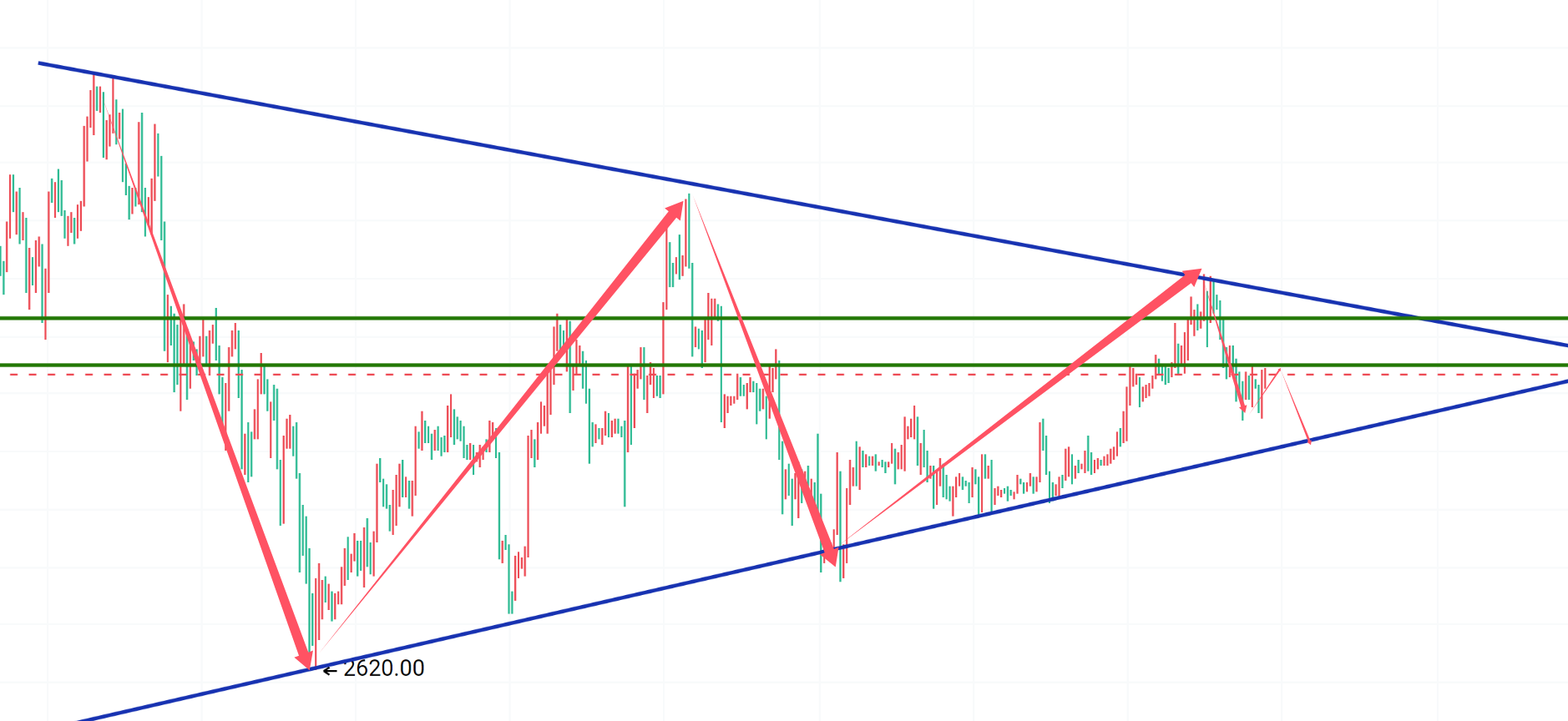
In December 2025, the trading data from mainstream centralized exchanges poured cold water on the entire industry: according to a single source, the spot trading volume in that month decreased by approximately 35% month-on-month, while perpetual contract trading volume also fell by about 26% month-on-month. Against the backdrop of this general decline in trading volume, the previous speculative cycle driven by price, leverage, and narrative clearly showed signs of fatigue, and the market entered a new narrative vacuum period. At this moment, discussions around the deep integration of prediction markets, AI, and cryptocurrency around 2026 rapidly heated up, creating a mix of excitement and unease among developers, investors, and regulators: on one side, technical experiments under the banner of "truth consensus" attempted to reconstruct the ways of information discovery and risk pricing, while on the other side, the red lines regarding the boundaries of "gambling," "securities," and "derivatives" under various national legal frameworks began to glow ominously. The direct clash between technological innovation and legal order started to brew a storm with greater political and social sensitivity at the seemingly quiet end of this trading cycle.
After the Sharp Decline in Trading Volume: Capital is Seeking the Next Narrative
In January 2026, looking back at December 2025, single-source data showed that mainstream CEX spot trading volume decreased by approximately 35% month-on-month, while perpetual contract trading volume fell by about 26% month-on-month. This set of data, which awaits further cross-validation from more channels, at least outlines a clear profile: the phase dominated by high-frequency leverage and simple price games is cooling down, and relying solely on old stories of "bull market cycles" and "halving events" is unlikely to continue attracting new capital. As trading activity declines, capital begins to withdraw from high-frequency speculation and instead bets on longer-term directions. Developers also step back from the repetitive stacking of market-making, aggregators, and yield farming, starting to look for application forms that can open up new market spaces and even touch on real-world issues.
During this vacuum period, prediction markets returned to the spotlight. Its position in the DeFi narrative has always been quite subtle: on one hand, it continues the on-chain native trading logic—pricing the future by issuing contract-based "event shares"; on the other hand, it is more imaginative than simple price derivatives, as the underlying can expand from cryptocurrency prices to sports outcomes, policy directions, and even geopolitical conflict results. For this reason, prediction markets are often seen as a highly elastic track: once a suitable narrative and compliance path are found, capital can converge in a very short time, forming a new market experiment that combines financial leverage and public opinion amplification effects. After traditional narratives weaken and trading volumes plummet, the imaginative space of "using the market to price reality" begins to be re-examined.
From Guessing Prices to Betting on Reality: The Expansion and Sensitivity of Prediction Markets
If we trace the evolution path of on-chain prediction markets, we find that it did not start out "grand." Early products mostly revolved around simple propositions such as cryptocurrency price trends and single asset price ranges, where users were essentially making directional bets on another interface, which is fundamentally no different from traditional options and contracts, except that settlement and fund custody were moved on-chain. As infrastructure matured and oracle technology gradually became widespread, projects began to attempt to expand the underlying from on-chain prices to off-chain events: outcomes of sports matches, results of important economic data releases, and whether specific indicators would be achieved before a certain date gradually became targets for capital pursuit. "Prediction markets" took the first step from guessing prices to "betting on reality."
With the overlay of AI and cryptocurrency, this path has been endowed with greater ambition. For many practitioners, prediction markets are no longer just a betting field but a macro event pricing platform that can be influenced by AI models, on-chain participants, and financial incentives. Policy directions, election results, and even the probability of certain geopolitical events occurring are envisioned as objects that can be "priced" in real-time within the market: AI is responsible for filtering signals and generating opinions from vast amounts of information, while the on-chain market provides collective judgments through trading depth and price fluctuations. This conception implies that from currency prices to national governance, from corporate profits to social issues, more realities are treated as documented "bets" to be split, traded, and circulated in secondary markets.
However, betting on reality itself directly amplifies social influence and regulatory sensitivity. The closer the event targets are to public policy, elections, and macro risks, the more likely prediction markets are to influence public opinion trends or even behavioral decisions: prices not only reflect expectations but may also shape expectations in return. In extreme situations, large bets surrounding a sensitive event may be interpreted as market-based intelligence or seen as signals of manipulation, incitement, or even funding certain behaviors. This expansion from "guessing prices" to "betting on reality" has rapidly transformed prediction markets from a marginal financial experiment into a highly sensitive domain that spans financial regulation, media ethics, and public safety.
The Proposal for Truth Consensus: Letting Machines and Markets Co-Price Reality
Under this expansion logic, how to define "truth" has become a core issue that prediction markets cannot avoid. In January 2026, a16z crypto research advisor Andy Hall proposed that the deep integration of prediction markets with AI and cryptocurrency requires a new "truth consensus" mechanism. What he emphasized is not the traditional notion of on-chain consensus as ledger consistency, but rather how to form credible and recognized result determinations in a complex information environment when the market betting objects are real-world events.
This vision of "truth consensus" attempts to address three long-standing pain points that have troubled prediction markets. The first is the proliferation of rumors and false information: in the narrative-fueled crypto world, project parties, KOLs, and even anonymous accounts can easily amplify certain viewpoints, while market prices respond to these noises with amplified feedback, creating an echo chamber effect. The second is information asymmetry: for policies and macro events, a minority may possess information closer to the truth but find it difficult to distinguish "professional judgment" from "interest-driven manipulation" in an anonymous environment. The third is the limitations of traditional oracles: oracles can bring off-chain results on-chain but cannot answer more fundamental questions like "who defines the results" and "whether the data source itself is manipulated."
For this reason, discussions about "truth consensus" have so far remained at the problem and goal level. Currently, publicly available information does not provide specific technical details of this mechanism, such as how to design protocol architecture, what token model to adopt, who will govern it, or how to connect with existing oracle systems, nor is there a verifiable complete roadmap. Therefore, when discussing this concept, one can only emphasize the direction it points to—constructing a relatively robust fact confirmation and dispute resolution framework in prediction markets involving AI and cryptocurrency—without arbitrarily completing its technical solutions or fabricating protocols or token designs that have not yet emerged. Truth consensus currently resembles a collection of questions rather than ready-made answers.
The High-Pressure Line from a Chinese Perspective: A Misstep Could Lead to Criminal Issues
If we shift the perspective back to the Chinese legal domain, the technical imagination of prediction markets will quickly encounter a clear high-pressure line. Lawyer Jin Jianzhi pointed out, after systematically sorting out the relevant legal framework, that in the Chinese legal context, the actual operational form of blockchain prediction markets is highly similar to "operating a casino." This judgment is not based on the technical form but on the essence of the behavior: organizing unspecified members of the public to participate with money or quasi-money assets, betting on uncertain event outcomes, and collecting fees or commissions from it.
Under this framework, any attempt to operate a prediction market within China aimed at local users may touch multiple risk boundaries. On the criminal level, once identified as organizing gambling or operating a casino, relevant responsible persons will face severe criminal consequences; on the administrative level, even if it does not reach the threshold for criminal prosecution, it may trigger regulatory constraints on broadly defined financial activities, leading to forced shutdowns, fund freezes, and other measures. Since the brief did not provide specific case details, it is not appropriate to extend to individual case analysis, but it can be confirmed that the technical form does not automatically change the legal attributes of behavior; labels like "on-chain" and "smart contracts" cannot serve as risk exemptions.
This creates a fundamental structural conflict with the inherent anonymity and global reach of on-chain systems. On one hand, prediction market protocols can be deployed anywhere in the world, the front end can continuously migrate or be distributed in a decentralized manner, and participants can bypass geographical restrictions using multiple anonymity tools; on the other hand, Chinese regulators maintain a high-pressure stance on gambling and financial activities, emphasizing the substance of behavior and its actual impact on domestic users rather than whether the interface is on foreign servers. The more technology emphasizes decentralization and resistance to censorship, the more this tension is amplified: once a protocol is seen as providing high-risk betting services to Chinese users in a way that circumvents regulation, the teams involved in its development and operation may inadvertently cross the boundary from compliance gray areas to criminal red lines.
Global Multi-Jurisdictional Game: Some See Financial Innovation, Others View it as a Gambling Platform
Expanding the perspective globally, most jurisdictions do not have a consistent characterization of blockchain prediction markets. Some are more inclined to approach it from the perspective of securities or derivatives, focusing on whether event contracts constitute some form of financial instruments, and thus attempt to incorporate them into capital market or commodity futures regulatory frameworks; others focus more on its characteristics of "betting on uncertain outcomes for profit," equating it with gambling activities, requiring licensing or outright banning; while some regions are in a wait-and-see state, maintaining flexible handling space for such applications through broad financial or internet regulatory principles. In the absence of unified rules and sufficient public cases, regulatory practices in various countries or regions exhibit a highly fragmented characteristic.
For project parties, this means that when choosing a registration location and product design, they must carefully navigate the gray areas. On one hand, teams tend to choose jurisdictions that are regulatory-friendly and have relatively clear rules to establish entities, hoping to reduce the risk of future accountability through "compliance packaging"; on the other hand, in specific product forms, they often deliberately downplay the "betting" aspect and emphasize narratives like "information market," "research tool," and "prediction signal aggregator" to avoid being directly classified under gambling regulation. At the same time, front-end access restrictions, KYC, and geographical blocking measures are increasingly incorporated into design considerations to delineate formal boundaries with users from high-risk jurisdictions.
In this process, a continuous tug-of-war triangle game has formed between technical teams, regulatory agencies, and users. Technical teams hope to retain enough space for innovation, allowing the market to truly reflect participants' judgments and risk preferences; regulatory agencies, starting from risk and responsibility, focus on who bears the potential costs of money laundering, fraud, and social negative impacts; users wish to enjoy high volatility and high return opportunities but do not want to become a link that is "nowhere to appeal" when regulatory crackdowns occur. Each iteration of prediction markets seeks a new balance in the power dynamics among these three parties, and the addition of AI and cryptocurrency has made this game more technically complex and politically sensitive.
Technological Frenzy and Legal Slowdown: Who Ultimately Prices the Truth?
In summary, under the dual support of AI and cryptocurrency, prediction markets stand at a highly tense crossroads. One possible future is that it truly breaks through in the direction of "truth consensus": leveraging AI's ability to filter and structure information, combined with transparent on-chain incentives and penalties, allowing dispersed individual judgments to coalesce into an effective information discovery engine, helping society identify risks earlier and more accurately estimate event trajectories. Another equally realistic possibility is that it slides into a global gambling network driven by high leverage, high anonymity, and high emotions, packaging grand narratives and complex political events into tradable chips, amplifying information bubbles and extreme group behaviors.
In the next one to two years, it is highly likely to be a key window period for the gradual formation of the prototype of the truth consensus mechanism and compliance paths, but it is also full of uncertainties: whether technological exploration can improve the reliability of fact determination without sacrificing privacy and decentralization; whether regulators in various countries can find clearer boundaries between risk prevention and innovation; and whether market participants are willing to bear the costs for higher transparency and accountability. For developers, the bottom line is not complicated: they must face the fundamental differences in prediction markets across different legal jurisdictions, not use "decentralization" as an excuse to evade legal risks, and consider geographical compliance and user appropriateness in product design in advance. For investors and ordinary users, it is equally important to be wary of those products that, under the guise of "AI + prediction markets + cryptocurrency," essentially carry high risks and are difficult to exit, and not to overlook the most basic legal and economic common sense due to innovative narratives.
When prediction markets collide with AI and cryptocurrency, "who decides the truth" is no longer an abstract philosophical question, but a real choice concerning the safety of funds, personal freedom, and even public order. Technology can run wild, but it ultimately has to operate on the tracks built by laws and systems; and before these tracks are laid down, maintaining restraint and respect may be more worthy of attention than rushing to bet on the next trend.
Join our community to discuss and become stronger together!
Official Telegram community: https://t.me/aicoincn
AiCoin Chinese Twitter: https://x.com/AiCoinzh
OKX benefits group: https://aicoin.com/link/chat?cid=l61eM4owQ
Binance benefits group: https://aicoin.com/link/chat?cid=ynr7d1P6Z
免责声明:本文章仅代表作者个人观点,不代表本平台的立场和观点。本文章仅供信息分享,不构成对任何人的任何投资建议。用户与作者之间的任何争议,与本平台无关。如网页中刊载的文章或图片涉及侵权,请提供相关的权利证明和身份证明发送邮件到support@aicoin.com,本平台相关工作人员将会进行核查。