Hundred Billion Dollar Tariff Case, U.S. Jobs and Inflation Face a Choice

CN
AiCoin
Follow
1 day ago

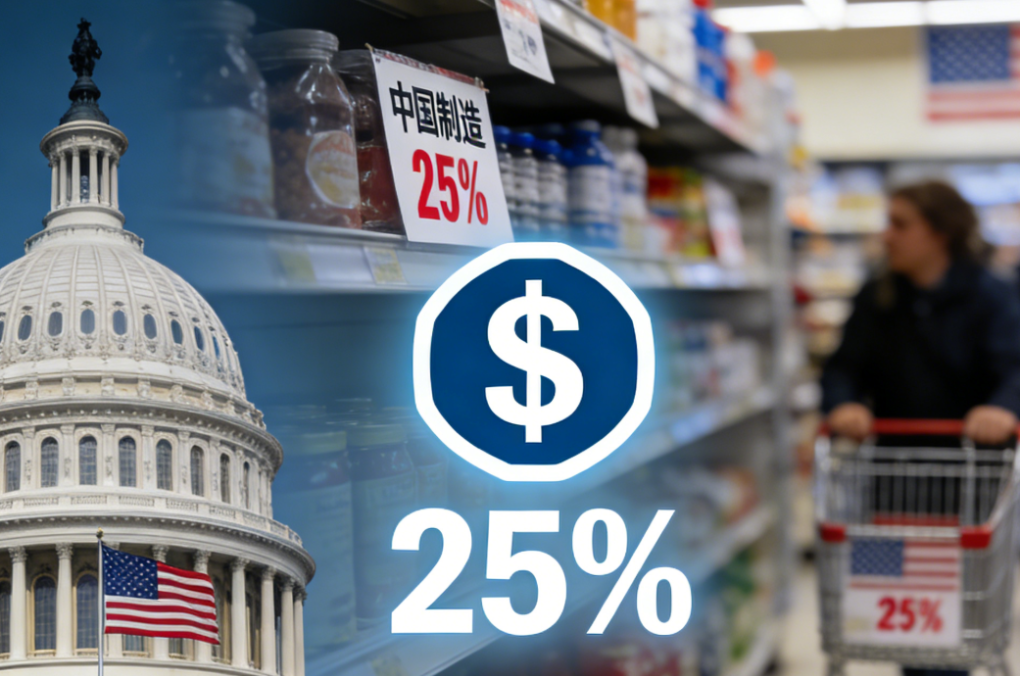
The U.S. Supreme Court is set to make a final ruling on January 9 regarding the legality of the president's imposition of tariffs, a decision that will determine the fate of over a hundred billion dollars in tariffs and influence global trade trends in 2026.

In January 2025, the Trump administration invoked the International Emergency Economic Powers Act to implement a series of tariff increases through executive orders. After the U.S. Court of Appeals for the Federal Circuit and the U.S. Court of International Trade ruled these tariff policies illegal, the Trump administration appealed to the Supreme Court.

I. Case Background

The U.S. Supreme Court announced it will make a final ruling on the tariff issue on January 9, 2026. This ruling will determine the legality of the tariffs imposed by the Trump administration under the International Emergency Economic Powers Act.

● At the end of August 2025, the U.S. Court of Appeals for the Federal Circuit ruled that the law invoked by Trump to impose tariffs on multiple countries did not grant him the authority to collect these taxes. The court noted that the International Emergency Economic Powers Act allows the president to take economic measures in response to "unusual and extraordinary threats" in emergencies, but does not permit the president to take comprehensive tariff actions.

● The Trump administration officially appealed to the Supreme Court on September 3, 2025, seeking to overturn the lower court's ruling.

● U.S. Treasury Secretary Basant warned in submitted documents that if the ruling is delayed until June 2026, the tariff amounts collected will reach between $750 billion and $1 trillion, and returning these tariffs "could cause significant chaos."

II. Two Possible Rulings

● If the Supreme Court upholds the lower court's "illegal" ruling, the Trump administration may need to refund the tariffs collected under the International Emergency Economic Powers Act, with potential refunds exceeding a hundred billion dollars.

● Although the Trump administration may use other tools to continue imposing tariffs, it is expected that these will only partially replace the tariffs collected under the International Emergency Economic Powers Act, resulting in a revenue decrease of about one-third.

● Alternatively, if the Supreme Court issues a ruling favorable to the Trump administration, it will maintain the existing tariff policies. According to Deloitte economists, the average effective tariff rate in the U.S. has risen from about 2.5% at the beginning of 2025 to over 10% by August of that year. It is predicted that the tariff rate may further rise to around 15% by early 2026.

III. Economic Ripple Effects

● An analysis by the Peterson Institute for International Economics in June 2025 indicated that Trump's tariff policies have triggered a market reassessment of the risks associated with U.S. assets. Following Trump's announcement of tariff increases in April 2025, U.S. stock and bond prices plummeted, and the dollar unexpectedly depreciated, reflecting investors' demands for higher risk premiums.

● Analysis shows that even in the lowest tariff scenario, U.S. real GDP will still be 2.1% lower than the baseline by 2026, with durable manufacturing output and employment expected to decline by 12% and 10%, respectively, and agricultural output projected to shrink by 10% by 2034.

● The World Trade Organization's forecast report released in August 2025 downgraded the expected growth of global goods trade in 2026 from 2.5% predicted in April to 1.8%.

● The report warned that recent tariff adjustments will negatively impact the global trade outlook, with the high "reciprocal tariffs" effective on the 7th of the month expected to weigh down U.S. imports and suppress exports from U.S. trading partners in the second half of 2025 and into 2026.

IV. Impact on the Job Market

● JPMorgan's forecast in December 2025 indicated that the U.S. job market is expected to show weakness in early 2026, primarily due to trade uncertainties, stricter immigration policies, and companies' cautious attitudes toward investments in artificial intelligence.

● Michael Feroli, chief U.S. economist at JPMorgan, stated: "It is difficult to formulate long-term and short-term business plans, with both layoff and hiring rates remaining low."

● A research report from Shenwan Hongyuan Securities in December 2025 analyzed that since mid-2025, new non-farm employment in the U.S. has experienced a "cliff-like" decline, increasing the risk of unemployment. The report believes that the supply and demand in the U.S. job market have both weakened, reflected in "low hiring and low layoffs." The decrease in net inflow of illegal immigrants may explain about half of the decline in new employment numbers.

V. Tariff Revenue Below Expectations

● The U.S. Congressional Budget Office significantly revised down its long-term fiscal revenue estimates from Trump's tariff policies in November 2025, plummeting by $1 trillion compared to three months prior. According to the latest calculations, the fiscal revenue from increased tariffs between 2025 and 2035 will cumulatively reduce the budget deficit by $2.5 trillion. Without the implementation of tariff policies, the deficit would have been even larger.

● Congressional Budget Office Director Phillip Swagel explained: "About two-thirds of the downward revision is due to adjustments made based on new data." The adjustments to tariff rates since August "also lowered the estimated impact on the deficit."

● The actual U.S. tariff rate has increased by about 14 percentage points from 2.5% a year ago, while the estimate in the Congressional Budget Office's August report was 18 percentage points.

VI. Inflation and Economic Growth Outlook

Due to the impact of tariffs, the U.S. Consumer Price Index rebounded from 2.3% in April 2025 to 3% in September; the unemployment rate rose from 4.1% in June to 4.6% in November.

● If the Supreme Court issues a ruling favorable to the Trump administration, U.S. importers may further pass on tariff costs to consumers, leading to a new wave of price increases and increasing inflationary pressure.

● Currently, most observers and research institutions expect that U.S. economic growth will accelerate in 2026. Goldman Sachs and Bank of America predict that U.S. economic growth rates will rise to 2.6% and 2.4%, respectively, while the median forecast from Federal Reserve officials is 2.3%.

● However, JPMorgan believes that U.S. economic growth will continue to hover around 1.8%, while the World Economic Forum, Deloitte, and Ernst & Young all believe that U.S. economic growth will slow in the new year.

The Supreme Court's ruling will determine whether the Trump administration's imposition of tariffs exceeds the authority granted by the International Emergency Economic Powers Act. If deemed illegal, the hundred billion dollar tariff barrier could collapse.

U.S. importers have largely depleted their stockpiles and are expected to have to re-import at the beginning of 2026. The ruling will determine whether they will pay tariffs at the new high rates or wait for new trade rules.

Regardless of the Supreme Court's final ruling, this legal battle over presidential tariff powers has already left a deep imprint on U.S. economic data.

Join our community to discuss and grow stronger together!

Official Telegram community: https://t.me/aicoincn
AiCoin Chinese Twitter: https://x.com/AiCoinzh

OKX benefits group: https://aicoin.com/link/chat?cid=l61eM4owQ
Binance benefits group: https://aicoin.com/link/chat?cid=ynr7d1P6Z

免责声明:本文章仅代表作者个人观点,不代表本平台的立场和观点。本文章仅供信息分享,不构成对任何人的任何投资建议。用户与作者之间的任何争议,与本平台无关。如网页中刊载的文章或图片涉及侵权,请提供相关的权利证明和身份证明发送邮件到support@aicoin.com,本平台相关工作人员将会进行核查。

Share To
APP

X

Telegram

Facebook

Reddit

CopyLink