On December 3, the price of Bitcoin briefly surpassed the $93,000 mark, with a 24-hour increase of over 6%, and the market capitalization returned to over $1.8 trillion. This surge was not coincidental but rather the result of multiple favorable factors coming together. Against the backdrop of increasing global economic uncertainty, Vanguard lifted its ban on crypto ETFs, BlackRock's IBIT ETF saw explosive trading volume, the U.S. banking system showed support for crypto assets, MicroStrategy maintained its firm holding strategy, and industry leaders expressed optimistic forecasts for future highs, all contributing to a reshaping of market confidence. These events not only stimulated short-term trading enthusiasm but also provided institutional support for the long-term value anchoring of Bitcoin.
Vanguard's Policy Shift
As the world's second-largest asset management company, managing over $11 trillion in assets, Vanguard's attitude towards crypto assets has long been seen as a bellwether for the industry. On December 1, 2025, Vanguard announced a significant policy reversal: starting December 2, its brokerage platform would allow clients to trade ETFs and mutual funds holding mainstream cryptocurrencies such as Bitcoin, Ethereum, XRP, and Solana. This marked the end of Vanguard's nearly two-year "crypto ban," during which the company had explicitly prohibited clients from purchasing such products through its platform even when Bitcoin spot ETFs were approved in January 2024.
The backdrop to this shift is the sustained high demand from institutions. Since the launch of Bitcoin ETFs, these products have cumulatively attracted tens of billions of dollars in funding. Vanguard's concession is not isolated but rather a response to the calls from retail and institutional investors—many of its over 50 million brokerage clients have expressed interest in digital assets through other channels. After the policy adjustment, Vanguard emphasized that it would only support crypto funds that meet regulatory standards and treat them as "non-core asset classes."
Vanguard's entry is significant. It not only provides conservative investors with a low-threshold exposure channel to Bitcoin but may also trigger a domino effect. Analysts point out that Vanguard's client base primarily consists of middle-class and retirement funds, and its platform's opening will further bridge traditional finance and the crypto world, with expectations of injecting at least $50 billion in new funds into Bitcoin ETFs by 2026. This event highlights the gradually friendly regulatory environment: from the SEC's ETF approvals to the current inclusivity of major platforms, Bitcoin is transitioning from a fringe asset to a mainstream reserve.
Institutional Capital Flooding In
BlackRock's iShares Bitcoin Trust (IBIT) ETF witnessed a historic moment: within just 30 minutes of opening, trading volume surged to $1 billion. This figure is more than double IBIT's average daily trading volume, directly driving the rebound in Bitcoin's price. As the world's largest Bitcoin ETF, IBIT has accumulated over $70 billion in assets since its launch in January 2024, with an average daily trading volume exceeding 76 million shares.
This explosive trading volume is not coincidental but an immediate response to Vanguard's lifting of its ban. Bloomberg ETF analyst Eric Balchunas commented, "Vanguard's clients are clearly eager; they are even more 'adventurous' than we imagined." Previously, IBIT's trading peak occurred in November 2024 after Trump's victory, reaching $1 billion in just 20 minutes, but this event is more symbolic—it marks the transition of Bitcoin ETFs from "high-risk toys" to "standard investment tools." Data shows that on December 2, IBIT traded nearly 32 million shares, valued at over $1.04 billion, far exceeding other Bitcoin ETFs like Fidelity's FBTC ($464 million).
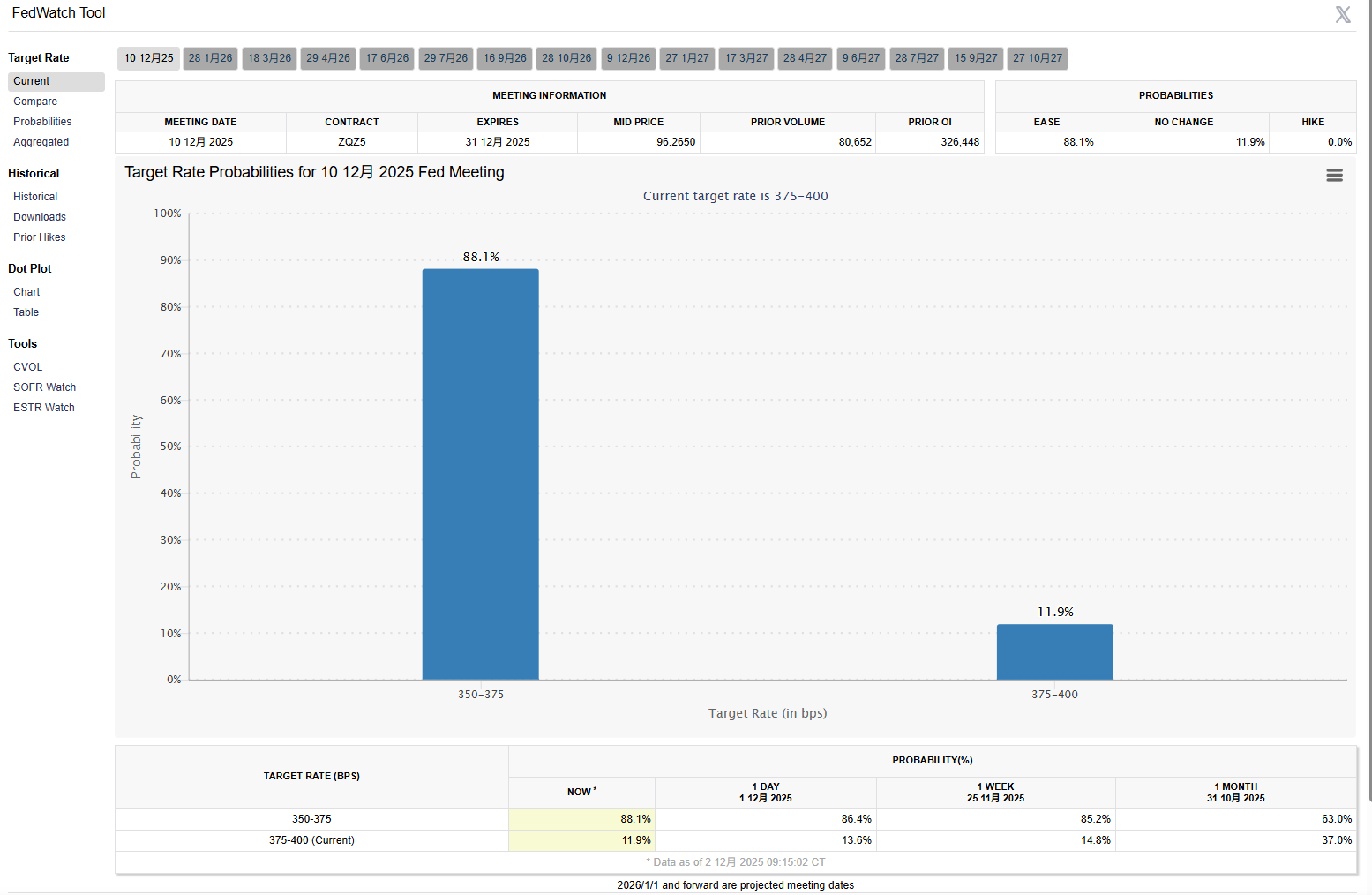
BlackRock CEO Larry Fink has stated that Bitcoin ETFs have become the company's top revenue source, with assets nearing $100 billion. The success of IBIT is attributed not only to its low fees (0.25% annual fee) and brand effect but also to the reinforced narrative of Bitcoin as "digital gold." Ahead of the Federal Reserve's December FOMC meeting, the market anticipates that further interest rate cuts will stimulate risk asset allocation.
Regulatory Green Light Illuminates Compliance Path
Another major driver of Bitcoin's rebound is the increasing support from the U.S. banking sector for crypto assets. 2025 has become a turning point, with multiple regulatory measures providing banks with a clear compliance framework, avoiding the previous "gray area" risks.
On November 18, the Office of the Comptroller of the Currency (OCC) issued Interpretation Letter No. 1186, clarifying that national banks can hold a certain amount of crypto assets to pay for blockchain network fees. This regulation allows banks to retain a "reasonably foreseeable" amount of cryptocurrency on their balance sheets to support transaction processing and platform testing, while emphasizing risk assessment and control requirements. Previously, banks without such holdings faced the risk of service interruptions; now, this "de minimis" exemption paves the way for institutional-level crypto operations.
U.S. Bank resumed Bitcoin custody services on September 3, expanding to Bitcoin ETFs and providing secure storage solutions for institutional investment managers. This service is sub-custodied by NYDIG, marking a shift from traditional banks being passive observers to actively positioning themselves.
The support from banks reduces the perception of Bitcoin as an "illegal asset," enhancing its legitimacy as a payment and reserve tool. It is expected that by 2026, U.S. bank crypto custody assets will exceed $1 trillion, driving Bitcoin's transition from speculation to practicality.
Corporate Holdings Build Confidence Pillars
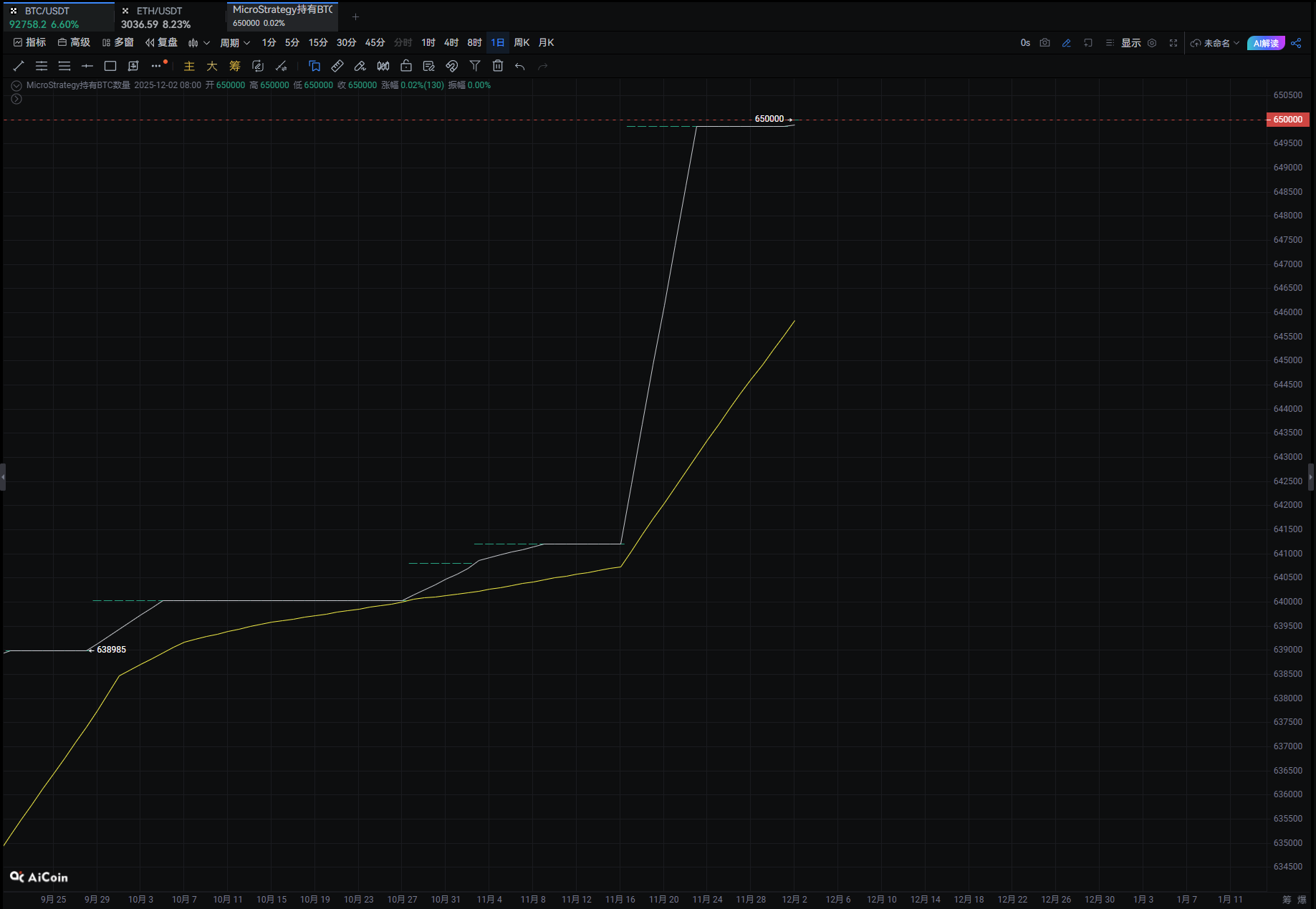
MicroStrategy stands out with its aggressive Bitcoin holding strategy. The company currently holds 650,000 Bitcoins, valued at approximately $59 billion, with an average purchase price of $74,431 per coin, totaling over $48 billion in costs.

Founder Michael Saylor views Bitcoin as "digital property," with the core of his strategy being to accumulate BTC through equity financing and low-interest debt, forming a "Bitcoin treasury." Despite Bitcoin's pullback from its October highs, MicroStrategy's market value briefly fell below the value of its BTC holdings, yet the company remained steadfast. Saylor emphasized that reserves are an extension of the "digital credit" strategy, aimed at strengthening the company's position as a Bitcoin proxy.
MicroStrategy's holdings account for 3.1% of Bitcoin's total supply, and each purchase (such as 8,178 coins on November 17) amplifies market signals. In 2025, the company has accumulated over 100,000 BTC, with a yield of 24.6%. During the rebound, MicroStrategy's stock price rose in tandem, proving that corporate holdings have become a "stabilizer" for Bitcoin's price.
Future: More New Highs on the Horizon
Binance founder Changpeng Zhao (CZ) has not spoken recently, but his long-term view consistently emphasizes Bitcoin's cyclical upside potential, predicting several new highs before the end of 2025, echoing Saylor's narrative of "reaching $21 million within 21 years." More broadly, market consensus points to the Federal Reserve's interest rate cuts and the pro-crypto policies of the Trump administration, which will drive Bitcoin back above $100,000.

Join our community to discuss and grow stronger together!
Official Telegram community: https://t.me/aicoincn
AiCoin Chinese Twitter: https://x.com/AiCoinzh
OKX benefits group: https://aicoin.com/link/chat?cid=l61eM4owQ
Binance benefits group: https://aicoin.com/link/chat?cid=ynr7d1P6Z
免责声明:本文章仅代表作者个人观点,不代表本平台的立场和观点。本文章仅供信息分享,不构成对任何人的任何投资建议。用户与作者之间的任何争议,与本平台无关。如网页中刊载的文章或图片涉及侵权,请提供相关的权利证明和身份证明发送邮件到support@aicoin.com,本平台相关工作人员将会进行核查。