This month alone, there have been at least three serious real-world robbery cases in the cryptocurrency industry.
For criminals, it is clearly faster and easier to force someone to reveal their cryptocurrency wallet password than to rob them of all their cash or bank card details at home.
Worse still, the lifestyle habits of cryptocurrency enthusiasts are inherently "high exposure": flaunting wealth on Twitter, appearing at conferences, being named in articles, using unsecured Wi-Fi, or even just attending an industry event… all of these leave clues in the shadows, indicating which "cryptocurrency millionaires" are worth targeting.
Sam Altman's Ex-Boyfriend Robbed at Home
The streets near Mission Dolores in San Francisco are communities belonging to Silicon Valley capital and tech elites. Zuckerberg once owned a $31 million mansion just off a nearby corner. The recent home invasion occurred in this neighborhood of tech elites.
Surveillance footage from that day shows, a man dressed in a dark hoodie, wearing sunglasses and gloves, slowly walked towards the door carrying a white cardboard box along the clean sidewalk. His steps were steady and natural, like a regular package delivery person.
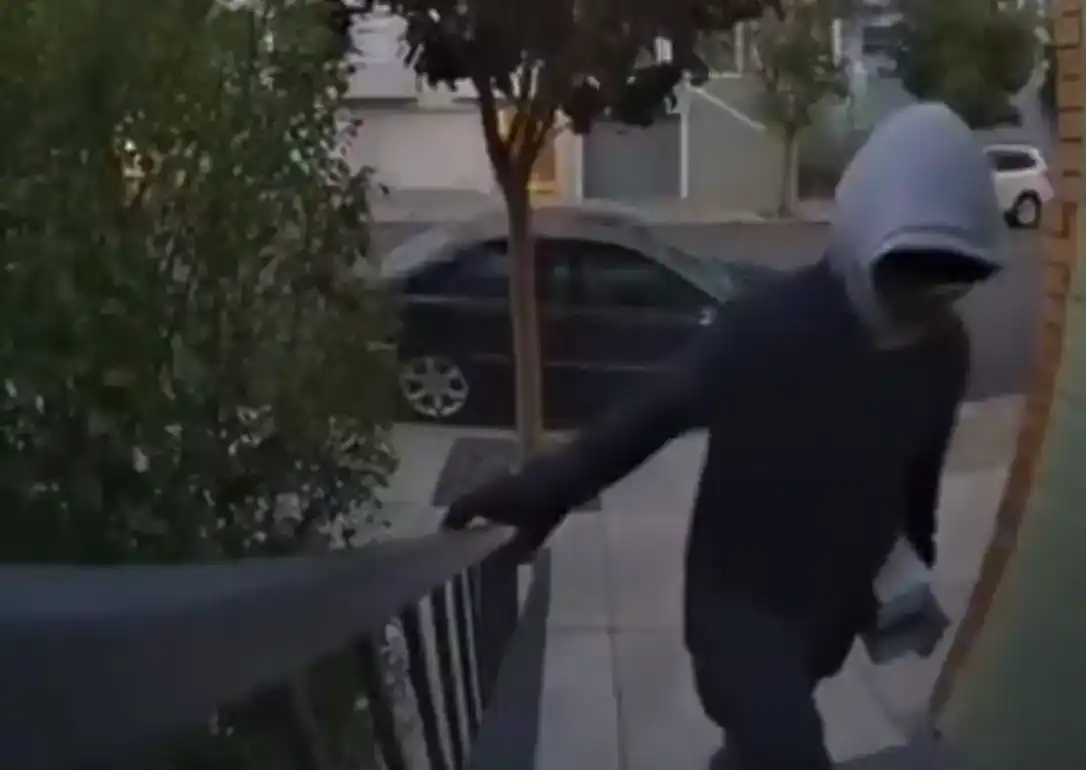
Suspect captured on the homeowner's surveillance footage, source: The New York Times
Only one detail in the surveillance footage revealed something unusual: as he approached the camera, he deliberately turned his head to keep his face in shadow, and the doorbell rang twice.
"I'm looking for Joshua, there's a package that needs to be signed for," the suspect said in a calm voice, without any emotional fluctuation.
The homeowner opened the door upon hearing the voice, and the suspect continued with the script: he patted his pockets, pretended to be unable to find a pen, and casually asked, "Could I borrow a pen from you?" It was during this seemingly ordinary action that he took the opportunity to step inside as the homeowner turned around.
The police later wrote in their report with restraint: the suspect brandished a gun, bound the victim with tape, and threatened him to hand over access to his cryptocurrency wallet.
The actual events were far more brutal than this official wording suggests. According to insiders, the suspect did not just threaten. After binding the victim, they activated a speakerphone, allowing another accomplice with a foreign accent to read out the victim's personal information one by one. Meanwhile, the armed suspect physically assaulted the victim to confirm whether he was providing the "correct password." This was a meticulously designed form of torture—ensuring the victim was too terrified to lie.
For a full ninety minutes, the suspect used this method to empty all of the victim's cold and hot wallets. The suspect made off with the victim's phone and computer, ultimately transferring about $11 million in cryptocurrency before fleeing.
When the police arrived, the homeowner was bruised all over but still conscious.
But as we mentioned earlier, those living in this neighborhood are not ordinary people. With media involvement, the identity of the victim surfaced. The homeowner was 31-year-old Lachy Groom, a former executive at payment company Stripe, and seemingly a billionaire. He was also the ex-boyfriend of OpenAI co-founder Sam Altman, with whom he had a low-key relationship before Altman's marriage in 2024.
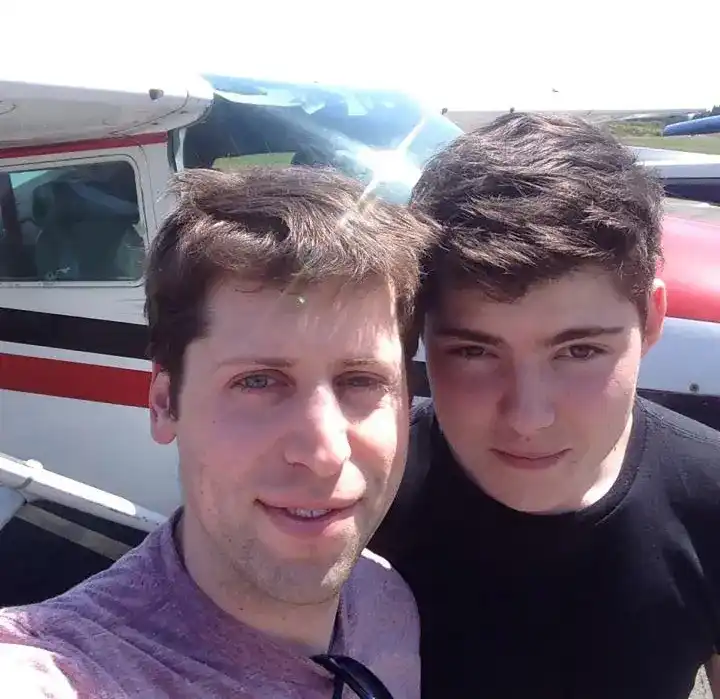
Sam Altman and Lachy Groom in a social media photo from 2014
The house where Lachy Groom currently resides was purchased for $1.8 million from Sam Altman's brother in 2021. Media confirmed that Joshua, the name mentioned by the suspect for the package recipient, also lived in this four-bedroom house and was an investor in Silicon Valley.
Thus, this was clearly a planned, precisely targeted "physical attack." The suspect evidently had knowledge of the homeowner's name, address, daily routine, and even the assets that might be stored inside the house.
This case gained attention after a friend of the victim, Y Combinator CEO Garry Tan, posted the residential surveillance video on social media, which received significant exposure. He wrote, "Time is of the essence, we must find him." Although the tweet was quickly deleted, the discussion it sparked rapidly spread through the tech and cryptocurrency circles in San Francisco.
Robbery at a Trading Platform Office with Fake Grenades
Robbing a bank is a common plot, but robbing an office of a trading platform is something most people have rarely seen.
November in St. Petersburg is usually wetter and colder than other months. On the evening of November 22, a cryptocurrency trading platform located in an apartment hotel building had a low foot traffic when a 21-year-old young man pushed open the door.
He was dressed ordinarily, carrying a bulging bag, looking more like a casual customer coming for OTC exchanges.
Until the door closed, he quickly pulled out two realistic-looking "grenades" from his bag, and then "bang, bang" echoed in the narrow space. Immediately after, a smoke bomb was ignited, and the choking white smoke quickly spread, enveloping the entire office in chaos.
Through the thick smoke, his voice was anxious and trembling: "Transfer all the crypto assets on the platform… to this wallet address!"
Fortunately, these fake grenades exploded like firecrackers, scattering plastic beads, and the walls rattled, but they were not lethal.
However, the staff were forced between their seats and the walls, unable to see if he had any real weapons, nor could they determine if there was something more dangerous behind the smoke bomb. Seconds felt like minutes, the computer screens flickered in the smoke, displaying backend asset balances, while the air was filled with only two sounds—the hissing of the smoke bomb and the suspect's rapid breathing.
From later police descriptions, this young man was from Leningrad Region 47, unemployed, and had no clear accomplices. He had evidently premeditated to some extent before rushing into the office, possibly even confirming the office hours and floor location in advance. Local residents speculated more bluntly: he might have suffered severe losses in the crypto market, and this attempt to "recoup his principal" seemed both reckless and desperate.
Fortunately, the chaos lasted only a few minutes. Before the smoke had dissipated, St. Petersburg police and the National Guard rushed to the floor, quickly sealing off the entire area. The suspect was subdued on the spot, with no further injuries inflicted, and he had no chance to force the staff to execute the transfer. Two other unexploded fake grenades were also found in his backpack.
When the bomb squad arrived on the scene, they confirmed that the items he used were "tactical props" for real-life soft air games. These devices could not cause substantial harm but could create enough intimidation and smoke effects. In other words, this was a robbery relying on "fake weapons" and "real panic," but he did not wait for the panic to take effect before being taken down by the police.
The 21-year-old man was subsequently investigated under Article 162 of the Russian Criminal Code (robbery) and remained in custody. The Ministry of Internal Affairs and local media did not disclose the specific name of the trading platform involved, but a public map record showed that a cryptocurrency trading platform named Yzex was indeed located in the building where the incident occurred.
The smell of smoke in the hallway had not dissipated by the next morning, and some plastic beads scattered by the explosion could be seen rolling in the corners. It was a robbery that was not very professional but absurd enough to make cryptocurrency industry practitioners, especially employees of trading platforms, feel alert.
Highjacking on the Road Outside Oxford
In November, the days are short and the nights long in the UK, and the dampness outside Oxford often settles before dusk, clinging to car windows like a thin mist. On the afternoon of the 4th, a car traveling from Oxford towards London was moving along the rural stretch between Kidlington and Yarnton.
There were five people in the car: three women and two men. They were all heading to London from the university town, and according to plan, they should have arrived before evening, but the atmosphere in the car was still relaxed just minutes before the attack.
Until a black BMW saloon suddenly approached from behind. At first, no one paid attention, thinking it was just the usual impatience of British drivers. But the next second, another blue Hyundai Ioniq cut in from the side, forcing them to slowly edge towards the roadside. As soon as the car stopped, several dark figures burst out from the side door of a silver Mercedes-Benz Vito.
In the instant the car door was yanked open, the air was filled with heavy fear. The attackers were dressed in black, their faces covered, without a word, their movements as if rehearsed countless times. In less than thirty seconds, they were already seated in the victims' car.

The location of the robbery incident
The robbers forced the driver to turn towards a more secluded area near Five Mile Drive. The space inside the car was so cramped it was hard to breathe. Phones were taken one by one and tossed into the robbers' bags, with shouts and suppressed sobs intertwining in the confined space. One woman tried to stay calm, while another man nodded continuously, almost instinctively complying with all commands, just hoping not to provoke the masked men.
The robbers had a clear target, far more professional than a typical road robbery. They first snatched a high-end watch worth £450,000, and just the weight and craftsmanship of the watch made it clear it was a luxury item. They also stole the phones of the other terrified victims.
Then, a person who seemed to be the leader held up a phone in front of the victims: "Unlock your wallet. Now." The victims had no choice but to enter their mnemonic phrases, verification codes, and transfer confirmations, each step needing to be completed under the robbers' watchful eyes. The victim's fingers trembled slightly from fear, the screen's light reflecting on his face, sweat trickling down his cheek.
The entire process lasted a long thirty minutes, during which approximately £1.1 million (about $1.44 million) in cryptocurrency was forcibly transferred to a designated wallet.
After the confirmation sound of the money being transferred rang out, the robbers said nothing more. They had the car stop, opened the doors, and pushed the five individuals out one by one. The location was the Five Mile Drive area in Oxford, surrounded by low residential houses and the gray-blue twilight. The robbers then abandoned the car and got into another vehicle, leaving so quickly that it was hard to realize the ordeal was over.
As the five victims stood by the roadside, their legs were still trembling. Some immediately called the police, their voices shaking to the point of being almost inaudible.
In the following days, police actions were swift and intensive. Based on surveillance footage, phone records, and vehicle trajectories, the Thames Valley Police began simultaneous searches in London, Kent, and Birmingham. The black BMW, blue Ioniq, and that silver Mercedes-Benz Vito all became key subjects of investigation.
In just a few days, four suspects had been arrested, all of whom have since been released on bail, but the police continue to investigate. This includes digital forensics, tracking the flow of cryptocurrency, license plate recognition records, and comparing a large amount of CCTV footage around the crime scene.
This method of crime has been defined in internal police reports in the UK as a "new type of organized high-value robbery."
免责声明:本文章仅代表作者个人观点,不代表本平台的立场和观点。本文章仅供信息分享,不构成对任何人的任何投资建议。用户与作者之间的任何争议,与本平台无关。如网页中刊载的文章或图片涉及侵权,请提供相关的权利证明和身份证明发送邮件到support@aicoin.com,本平台相关工作人员将会进行核查。


