Preview of this week (1.29-2.4): The Fed interest rate decision and the release of non-farm payroll data are both happening this week. Behind the decline in Grayscale's BTC holdings to below 500,000 c

CN
2 years ago
  • Title: AICoin Weekly Research Report

Table of Contents for this Week's Research Report:

I. Preview of Key Macroeconomic Data and Events in the Cryptocurrency Market this Week;

II. Review of Key News in the Cryptocurrency Industry;

III. Community Interaction and Sharing;

IV. Interpretation of Important Events, Data, and Research Institute Analysis;

V. Institutional Perspectives and Overseas Views;

VI. Ranking of Cryptocurrency Market Gains and Selection of Community Hot Coins from Last Week;

VII. Attention to Project Token Unlocking Negative Data;

VIII. Ranking of Cryptocurrency Market Concept Sectors;

IX. Summary of Global Market Macroeconomic Analysis;

X. Research Institute's Future Market Judgment.

I. Preview of Key Macroeconomic Data and Events in the Cryptocurrency Market this Week:

January 29 (Monday): Dallas Fed's Business Activity Index for January in the United States; Monetary Policy Statement by the Monetary Authority of Singapore; Revision of Google's Cryptocurrency-related Advertising Policy.

January 30 (Tuesday): Unemployment Rate for December in Japan; Preliminary Quarterly GDP for the Eurozone; Speech by Thomas Jordan, Chairman of the Swiss National Bank; Earnings releases from Google, Microsoft, and AMD. Sepolia testnet to implement Dencun upgrade; Starknet to undergo stress testing.

January 31 (Wednesday): ADP Employment Change for January in the United States; Summary of Opinions of the Bank of Japan's Monetary Policy Meeting Committee Members. UniSat to follow the Jubilee upgrade, with the white paper set to be released; TGE time for JUP confirmed; Frame to initiate the second round of activities.

February 1 (Thursday): Federal Reserve Interest Rate Decision; Press conference by Jerome Powell; Speech by Christine Lagarde, President of the European Central Bank, after the Monetary Policy Meeting; Earnings releases from Apple, Amazon, and Meta.

February 2 (Friday): Unemployment Rate for January in the United States; Nonfarm Payrolls Change for January in the United States; Final Value of December Durable Goods Orders in the United States; Monthly Factory Orders for December in the United States; Final Value of the University of Michigan Consumer Sentiment Index for January in the United States; Speech by Fabio Panetta, Member of the Executive Board of the European Central Bank.

Projects unlocking this week include DYDX, OP, NYM, SUI, ACA, EUL, and TORN.

II. Review of Key News in the Cryptocurrency Industry (Exclusive Compilation):

Data Aspect:

Recent reduction in Bitcoin holdings, with Grayscale's Bitcoin holdings decreasing from 620,000 to 502,000 in less than 3 weeks. The total market capitalization of cryptocurrencies has also returned to above $1.7 trillion, with BTC's market share at 48.6%. In addition, Bitcoin's trading volume has increased, with the CoinShares report showing that last week's Bitcoin trading volume reached $11.8 billion, 7 times the average weekly trading volume in 2023.

Project and Platform Aspect:

Google has updated its advertising policy to allow advertisements for Bitcoin and cryptocurrency trusts. Meanwhile, the number of new addresses on the Solana network has exceeded 10 million in January. In addition, there has been abnormal purchasing activity for SUI, with a purchase value of approximately $166 million. The Dencun upgrade is also planned to be deployed on the Ethereum mainnet at the end of February or early March.

Macro Policy and Regulatory Aspect:

Republican members of the U.S. House of Representatives are optimistic about the prospects for new cryptocurrency legislation in 2024. However, the CFTC has urged investors to be cautious of cryptocurrency assets arbitrage algorithms created by AI. In addition, the Chairman of the U.S. CFTC stated that a spot Bitcoin ETF would bring risks and believed that federal legislation should be enacted as soon as possible. Recently, the U.S. government has decided to sell Bitcoin worth $130 million related to the Silk Road. The probability of the Fed maintaining the interest rate unchanged in its February decision is 97.4%. Meanwhile, the Chairman of the U.S. SEC stated that the approval of a spot Bitcoin ETF is limited to this non-securities commodity and should not be overly interpreted.

Institutional Research Reports and Perspectives:

Some experts are optimistic about the future of the cryptocurrency market. The founder of SkyBridge believes that the price of Bitcoin will reach at least $170,000 after the halving. However, some analysts predict that ETH will experience a significant pullback to below $1,000. Regarding the redemption of GBTC, some analysts believe that it has slowed down, while JPMorgan also stated that funds may accelerate from GBTC to cheaper spot Bitcoin ETFs. Furthermore, JPMorgan also believes that the profit-taking of GBTC has basically ended, and there is limited downward pressure on Bitcoin.

Overall, from a data perspective, the decrease in Grayscale's Bitcoin holdings may reflect fluctuations in market confidence in Bitcoin. However, the total market capitalization of cryptocurrencies has returned to above $1.7 trillion, indicating that the overall market size is still expanding. In terms of trading volume, last week's Bitcoin trading volume surged to $11.8 billion, highlighting the market's activity and investors' attention to Bitcoin. Despite regulatory pressure and uncertainty in the cryptocurrency market, the overall market size is still expanding, and investor attention and trading volume are increasing. New project dynamics are constantly being updated, bringing new opportunities and challenges to the market. Faced with various viewpoints and analyses, we need to make cautious decisions.

III. Community Interaction and Sharing:

What is TWAP Investment Strategy?

The TWAP investment strategy is a trading strategy aimed at evenly buying or selling a certain asset over a set period of time through algorithms to minimize slippage. This method is mainly used to execute large batch orders. Specifically, TWAP evenly divides the trading time and submits equally split orders at each division point. For example, if you want to buy 1 million shares of stock over 3 hours, with a purchase every 10 minutes, there would be a total of 18 trades, with the total quantity divided by 18 to determine the quantity for each trade.

The advantage of the TWAP investment strategy lies in its simplicity and applicability to markets with good liquidity and small order sizes. However, its limitation is that market trading volume fluctuates, and evenly distributing a fixed quantity is not reasonable, with significant intraday impact. If the order size is large, the quantity for each trade will also be large.

In addition, there is also the VWAP (Volume-Weighted Average Price) strategy. This is one of the most popular algorithmic trading strategies in the market and serves as a prototype for many other algorithmic trading models. This model calculates the average price of securities over a period of time weighted by trading volume, representing the average price of all trading activities in the market over that time period.

IV. Interpretation of Important Events, Data, and Research Institute Analysis:

According to official data from Grayscale, as of January 29, the Bitcoin holdings of its spot Bitcoin ETF GBTC had fallen below 500,000.

Our research institute believes that the phenomenon of the decline in GBTC's Bitcoin holdings under Grayscale can be analyzed from multiple perspectives. Firstly, from the perspective of market trends, the decrease in GBTC's Bitcoin holdings may be a result of market adjustments due to the volatility of the cryptocurrency market. Given the significant fluctuations in Bitcoin prices, investors may adjust their investment portfolios according to market trends, leading to a decrease in the quantity of Bitcoin held by GBTC.

Secondly, from the perspective of GBTC's operations, the decline in its holdings may be related to its operational strategy. As an ETF, GBTC needs to maintain a certain level of liquidity to meet investor redemption demands. If GBTC perceives a reduced demand for Bitcoin in the market, it may actively reduce its Bitcoin holdings to maintain liquidity. Additionally, GBTC also needs to consider the secure storage and custody of Bitcoin to ensure the safety of investors' assets.

Furthermore, attention should also be paid to the circulating share count and the per-share holdings of GBTC. Currently, GBTC has 555,700,100 shares in circulation, with each share holding approximately 0.0008936 BTC. This means that each share of GBTC represents a relatively small amount of actual Bitcoin, which may affect investors' trust and willingness to invest in the Bitcoin ETF. Therefore, for GBTC, increasing the per-share holdings or the actual quantity of Bitcoin held would help enhance its credibility and attractiveness.

Finally, it is also important to consider the potential impact of the U.S. government's plan to sell $118 million worth of Bitcoin related to the Silk Road on the market. While many believe that the scale of this auction is relatively small and will not have a significant impact on the Bitcoin market, caution should still be exercised regarding possible market reactions and potential effects.

In summary, the phenomenon of the decline in the Bitcoin holdings of Grayscale's spot Bitcoin ETF GBTC requires analysis and understanding from multiple perspectives. This will help investors better understand market trends and GBTC's operational strategies, and make wiser investment decisions.

About Coinbase's Plan to Charge Fees for USDC to USD Conversion Transactions Exceeding $75 Million

Our research institute believes that Coinbase recently announced a new fee policy for USDC to USD conversion. From the perspective of institutional clients, this policy will undoubtedly have an impact on institutions that conduct a large volume of transactions using USDC. We have conducted an in-depth analysis of this policy.

Coinbase has clearly defined three fee tiers, and this tiered fee structure means that the larger the trading volume of institutional clients, the higher the fees they will need to pay. This brings more stable revenue to Coinbase, as large institutions typically have higher trading volumes. At the same time, Coinbase offers free USDC conversion services to certain super clients. This preferential policy is aimed at maintaining relationships with large institutions, especially those clients holding a large amount of assets on the platform. It also encourages institutions to participate more in Coinbase's exchange liquidity program.

This new policy may prompt institutional clients to reassess their trading strategies on Coinbase. For institutions whose monthly USDC conversion volume approaches or exceeds the thresholds of each tier, they may consider trading on other platforms or through other means to avoid paying high fees. It may also trigger responses from other cryptocurrency exchanges. For example, competitors may attract these large institutional clients by offering more favorable or free conversion services. Therefore, this policy may also intensify competition among cryptocurrency exchanges.

Given the volatility of the cryptocurrency market, the demand for stablecoins from large institutions may continue to grow. Therefore, Coinbase may continue to adjust its fee strategy to adapt to market changes. For other small or new cryptocurrency exchanges, this may be an opportunity to attract institutional clients by offering more flexible and favorable services. For investors, this policy may not have a significant impact on individual small-scale transactions, but for institutions planning to conduct large-scale transactions on Coinbase, they may need to reassess their trading strategies or consider finding other more suitable trading platforms.

V. Institutional Perspectives and Overseas Views:

Summary: The price prediction and trend of Bitcoin have always been a focus of attention. From the analysis and predictions of multiple experts, the future trend of Bitcoin's price is full of uncertainty. While some experts predict an increase in price, others hold a pessimistic view. For investors, caution is needed when investing in Bitcoin, considering the risks and making wise decisions. Here are the detailed contents:

Anthony Scaramucci, founder and CEO of SkyBridge Capital, stated that after the halving in April, with the reduction in newly circulating Bitcoin, the price of Bitcoin (BTC) will soar to at least $170,000. As for his long-term price target, Scaramucci predicts that Bitcoin could easily reach half the market value of gold, which would bring its price to around $400,000. Scaramucci previously revealed that he was the first external investor in the BlackRock spot Bitcoin ETF.

Markus Thielen, research director at 10x Research, correctly predicted the recent pullback. He stated that the 5th wave of Bitcoin's impulse wave has begun, and the price may surpass $50,000 by the end of the first quarter. Levels above $43,000 are suitable for new bullish bets on BTC. As reversal indicators indicate that the tradable low point has arrived, we should focus on the long side. From a risk management perspective, once Bitcoin breaks through $43,000, new long positions should be established.

According to the latest on-chain data, on January 27, 2024, a wallet established on August 28, 2013, transferred 115.50 Bitcoins, worth $4.84 million, marking the first activity in over a decade. In addition, two dormant addresses from 2017 also executed transactions on Saturday, transferring a total of 218.49 Bitcoins, worth $9.16 million.

Steven Lubka, director of Swan Bitcoin, and many others believe that the planned auction of $118 million worth of Bitcoin by the U.S. government is "insignificant" compared to the outflow of funds. Lubka stated on X platform: "The morning outflow from GBTC is 4 times this." It is reported that the last known sale operation by the U.S. government was in March 2023, selling 9,118 Bitcoins.

Adam, a macro researcher at Greeks.live, pointed out on X platform that the cryptocurrency market has been relatively weak this week, and the approval of the Bitcoin spot ETF in the United States has directly caused recent selling pressure from Grayscale to crush the market. However, the selling pressure from Grayscale is becoming weaker, with decreasing volatility, a significant drop in the main term IV, and some end-term IV dropping below 40%. At the same time, the PCR has dropped significantly this week, indicating a reduction in active bearish strength, with most traders mainly selling bullish positions and very few actively buying bullish positions. Over 30% of options expired and settled last week, and the released margin may once again suppress IV, leading to a return to the option term structure of Bitcoin.

Data from last week shows that since the start of trading of the spot ETF in the United States on January 11, Bitcoin has fallen by nearly 19% to $39,770. Some crypto whales have been buying on the dip on the digital asset exchange Bitfinex, causing the Bitcoin trading price on the exchange to have a premium of $100 compared to the global average price, significantly higher than other exchanges such as Coinbase and Binance. Analysis found that whales on Bitfinex have been continuously buying Bitcoin using the TWAP investment strategy for three consecutive days, with the cumulative spot trading amount reaching approximately $50 million.

Caroline Mauron, co-founder of Orbit Markets, stated that the recent price adjustment of Bitcoin reflects the positioning and technical factors surrounding the expansion of the Grayscale ETF, which should dissipate in the medium term. Technical analysis using chart patterns indicates that Bitcoin may find support in the $36,000 to $38,000 range, and if these levels hold, the price of Bitcoin may even rise again.

Ki Young Ju, founder of CryptoQuant, analyzed on social media that Bitcoin has entered a futures-driven market, and the impact of spot selling from GBTC is not significant. The recent decline in Bitcoin is due to selling in the derivatives market, not from GBTC, and the OTC market remains very active, with no impact on prices. Accumulating Bitcoin like institutional investors, once off-chain trading and spot ETF activity decrease, accumulation will resume, and the bull market will begin.

Arthur Hayes, co-founder of BitMEX, expressed a pessimistic view on the future price trend of Bitcoin (BTC) on social media. According to the Bitcoin price chart he shared, Hayes stated that Bitcoin looks very heavy and believes its price will fall below the $40,000 mark. As a result, he has started shorting and purchased put options with a strike price of $35,000 expiring on March 29. Hayes further speculated that the decline in Bitcoin may continue until the U.S. Treasury's quarterly refunding announcement on January 31. He also commented on the divergence in the trends of Bitcoin (BTC) and the S&P 500 Index (SPX) on social media. He pointed out that since the launch of the spot Bitcoin ETF in the United States, the two no longer have synchronized upward trends. Hayes stated that the downward trend of Bitcoin may indicate future liquidity problems.

Anson Funds Management: The excitement over the approval of the spot Bitcoin ETF this year is expected to fade. Anson Funds Management's (Anson Funds Management) main strategy return rate last year was 18.2%, but Anson's short positions in a basket of cryptocurrency stocks (including exchanges and cryptocurrency miners) dragged down the fund's performance. However, Chief Investment Officer Moez Kassam believes that this theme will contribute to this year's returns. By 2024, we not only expect the excitement over the approval of the ETF to fade, but also the Bitcoin halving event in April will significantly reduce miners' income, thereby undermining the economic benefits of the current Bitcoin price.

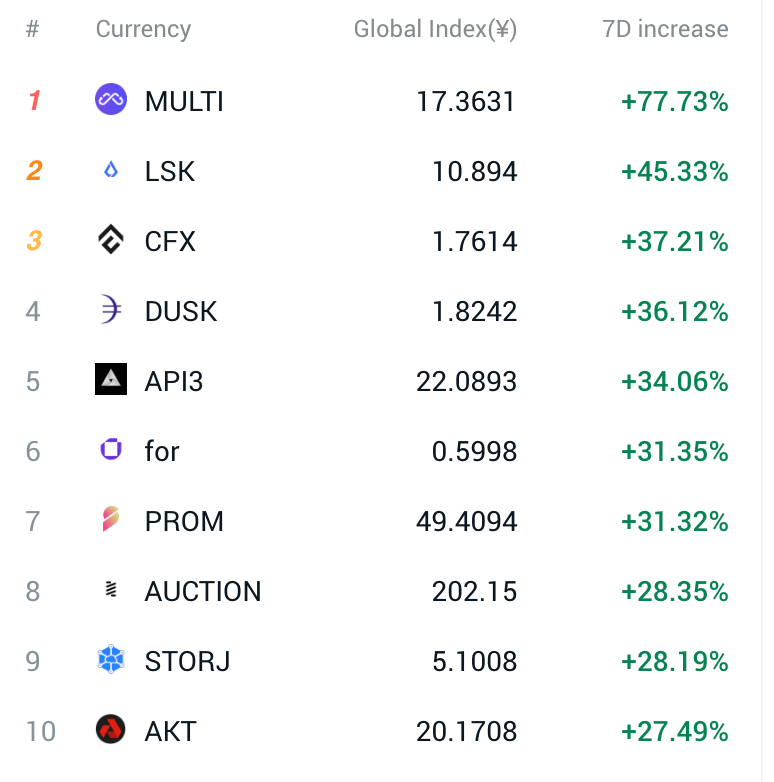
VI. Ranking of Cryptocurrency Market Gains and Selection of Community Hot Coins from Last Week:

Cryptocurrency Market Gains and Community Hot Coins

Seven, Project Token Unlock Negative Data Focus:

According to Token Unlock data, tokens worth over $215 million will be unlocked this week (January 29 to February 4), including DYDX, OP, NYM, SUI, ACA, EUL, and TORN.

The top two in terms of value are DYDX and OP. dYdX (DYDX) will unlock 33 million DYDX tokens on February 1, worth approximately $92.67 million, accounting for 10.63% of its circulating supply. Optimism (OP) will unlock 24.16 million OP tokens on January 30, worth approximately $75 million. Other projects include NYM ($9.48 million), SUI ($45.56 million), Acala (ACA, $2.11 million), Euler (EUL, $380,000), and TornadoCash (TORN, $150,000).

This week, pay attention to the negative effects brought by the unlocking of these tokens, avoid spot trading, and seek shorting opportunities in contracts. Among them, the unlocking magnitude of DYDX is relatively large, so pay close attention.

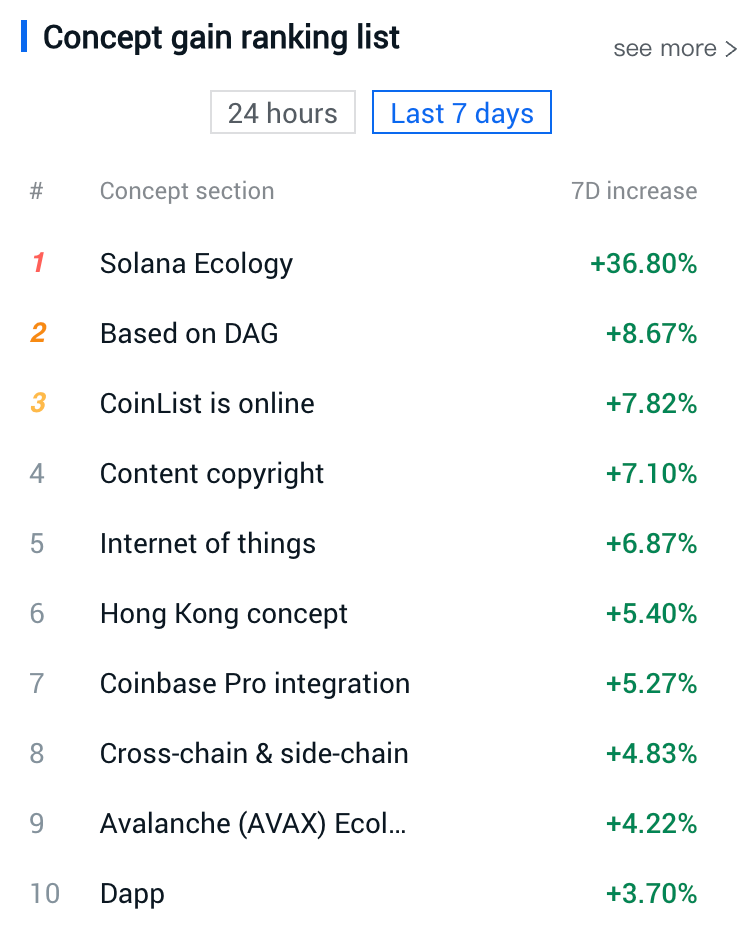
Eight, Last Week's Concept Sector Performance Ranking:

Cryptocurrency Market Gains and Community Hot Coins

In the past week, the concept sectors performed as shown above. Based on the percentage change, the sectors with the highest gains in the last seven days include the Solana ecosystem, social communication, DAG-based projects, CoinList listings, and Avalanche (AVAX) ecosystem. Pay attention to the rotational speculative market of the above-mentioned sectors with significant gains.

Nine, Global Market Macro Analysis Overview:

Last week, global stock markets were relatively active, with different regions and markets showing varying performances. From our research institute's perspective, we observed the market dynamics of A-shares, H-shares, and U.S. stocks last week and looked ahead to the major events in the market for the coming week.

A-share market: The A-share market ended three consecutive weeks of decline last week and saw a rebound. The Shanghai Composite Index rose by 2.8% in a single week, and the trading volume marginally increased to around 810 billion yuan. Northbound funds returned to a net inflow of approximately 12.1 billion yuan after a three-week absence, indicating a partial recovery of foreign investors' confidence in A-shares. In terms of industries, real estate, petroleum and petrochemical, and construction industries, catalyzed by policy expectations, led the market, while the electronics, pharmaceutical, and power equipment industries performed poorly. This shows that the market has different expectations and preferences for different industries. In the coming week, attention needs to be paid to China's official manufacturing PMI data for January, which will reflect the prosperity and production of the manufacturing industry. In addition, attention should also be paid to domestic policy dynamics, especially policy adjustments related to the real estate and construction industries, to assess their impact on the market.

H-share market: Last week, major indices in the H-share market showed significant gains, with the Hang Seng Index, Hang Seng China Enterprises Index, and MSCI China Index rising by 4.2%, 4.5%, and 3.4% respectively. The energy and telecommunications sectors led the gains, while the healthcare and information technology sectors lagged behind. This may be related to the cyclical nature of the energy and telecommunications industries and the volatility of the healthcare and information technology industries. In the coming week, in addition to paying attention to data releases from China and the United States, attention should also be paid to local data and policy dynamics in Hong Kong. Furthermore, the strengthening of margin trading supervision and the comprehensive suspension of restricted stock lending may have a certain impact on the market, so it is necessary to pay attention to risk control for relevant investment products.

U.S. stock market: Last week, all three major indices in the U.S. stock market rose, with the S&P 500, Nasdaq Composite, and Dow Jones Industrial Average rising by 1.06%, 0.94%, and 0.65% respectively. From an industry perspective, the media, energy, diversified financials, and hardware industries performed well, while the automotive, food and beverage, and medical equipment services industries performed poorly. This may be related to the profitability of different industries and the macroeconomic environment. In the coming week, as the U.S. earnings season deepens, the market will pay more attention to corporate earnings and performance guidance. The financial reports of tech giants such as Apple, Google, Microsoft, and Meta will be highly anticipated. In addition, the monetary policy meeting of the Federal Reserve will also have a certain impact on the market, so attention should be paid to the potential policy adjustments by the Federal Reserve and their impact on the U.S. stock market.

Overall, in the coming week, major global events will continue, and it is necessary to focus on the impact of key factors such as data releases, policy adjustments, and corporate earnings reports on the market. Based on this, combined with market trends and valuation levels, a reasonable investment strategy should be formulated. At the same time, attention should be paid to risk control and the rationality of asset allocation.

Ten, Future Market Judgment:

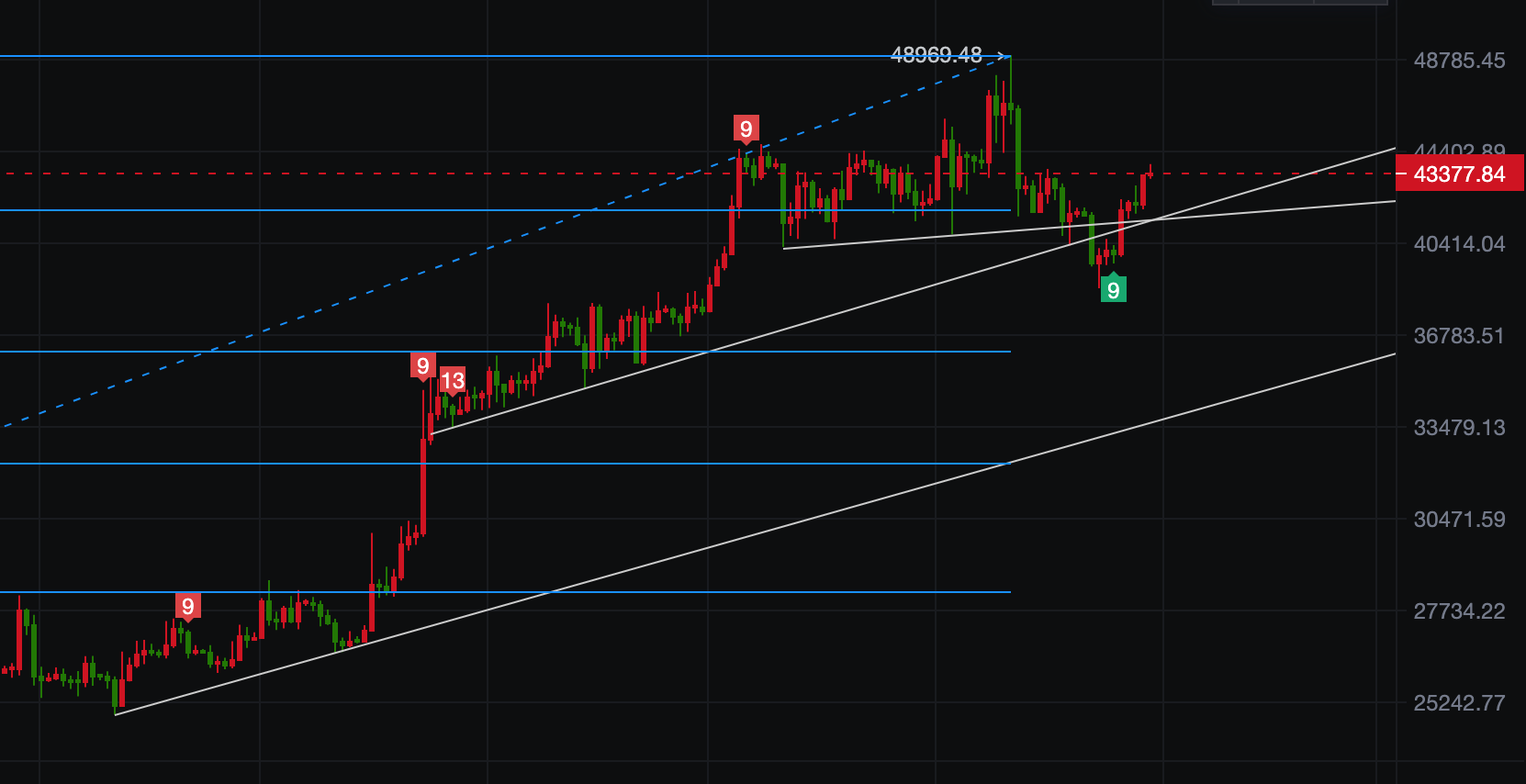
BTC Daily Chart

BTC daily chart: The ETF has been approved for over half a month. According to our previous analysis from early January to mid-January, the market was expected to experience a small increase followed by a decline. The market encountered resistance and fell back near the $48,555 level, with support around $38,400. The actual market high was $48,970, and the low was $38,555, which closely matched our previous prediction. However, after breaking the upward trend line in early January, if it is tested again later, the support may weaken.

Currently, the market has rebounded to around $43,790, slightly surpassing the Dow's point of $43,580 during the previous decline, indicating a temporary strength. It is expected that the market will run in a biased oscillation in the next phase, with resistance around the Fibonacci rebound level of approximately $44,900 and the previous high point of $45,880. Currently, the long and short positions have returned to normal levels, which is conducive to maintaining the rebound in the short term. It is necessary to pay attention to whether the market will be pressured to fall back after encountering resistance in the future. The lower support continues to be around $40,250 and $38,400. Below $40,220 is a vacuum zone, and if it falls below, it is highly likely to test the previous high-density trading area around $34,800 to $38,000.

Follow us: Lao Li Mortar

January 29, 2023

免责声明:本文章仅代表作者个人观点,不代表本平台的立场和观点。本文章仅供信息分享,不构成对任何人的任何投资建议。用户与作者之间的任何争议,与本平台无关。如网页中刊载的文章或图片涉及侵权,请提供相关的权利证明和身份证明发送邮件到support@aicoin.com,本平台相关工作人员将会进行核查。

Share To
APP

X

Telegram

Facebook

Reddit

CopyLink